
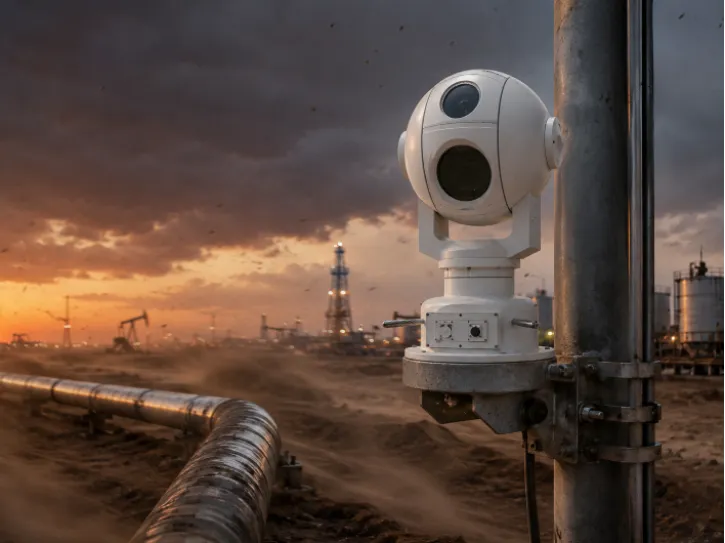
Oil fields, oil depots, and pipeline routes are rarely built in easy spots. Instead, they sit in tough places. You often face wide open dirt, heavy wind, and very bad light. There are long fences to watch. A guard car just cannot get there in five minutes. A normal CCTV camera might do fine at the front gate.
However, it fails when you try to spot a person, a truck, or strange acts far away in the dark. For this reason, your oil field surveillance camera and pipeline security camera must handle long distances. They need good night vision. They must track targets and work well outside.
Why Do Oil and Gas Sites Need More Than Standard CCTV?
Guarding oil and gas is not just about staring at a TV screen. You must see things early so you can act fast. Stealing, breaking parts, sneaking in, and tiny leaks often start very quietly. Soon, they cost a lot of money. Out in the real world, the main issue is simple. The camera sees too little, and it shows you too late.
Large Areas Create Real Blind Spots
A pipeline might stretch across empty dirt, roads, rivers, or steep hills. An oil depot holds many parts. It has tank farms, loading zones, and long fence lines. You will also find pump spots and dirt back roads. These places look super calm by day. But at night, they turn dangerous. A tough pipeline security camera lets you watch these weak spots. You will not have to send your workers into every single dark corner.
Night and Weather Make the Job Harder
Normal cameras have a hard time in the dark. Fog, smoke, rain, and thick dust block their view. We know that basic cameras lose clear details when the weather turns bad or the sun goes down. Meanwhile, thermal imaging spots people and cars using their body heat. Because of this, a long-range night vision camera is not just a fancy toy. It is a must-have tool for basic site safety.
What Should an Oil Field Surveillance Camera Do?
An oil field surveillance camera must help your team spot danger, check it, and stop it. Just having a nice picture in the daytime is not enough. The camera must work great when the light is awful. It has to see targets that are miles away. Also, the guards using it must be able to zoom in super fast.
Cover Distance Without Losing Detail
When you watch huge spaces for oil field surveillance, you need special tools. A long focal length and optical zoom really matter. Steady PTZ movement is key, too. Long-distance camera setups use strong lenses and laser lighting. They also have heavy-duty pan-tilt heads. These parts help watch huge areas over more than 5 kilometers. That huge reach changes everything. It helps a lot when a strange truck parks near a lonely well at 2 a.m.
Track Targets Instead of Only Recording Them
PTZ stands for pan, tilt, and zoom. In simple words, the camera can turn left or right. It can look up or look down. It can also zoom right at a target. A thermal PTZ camera links up with your alarm rules. So, if a guy or a truck crosses a drawn line, the camera moves right to that threat. You guess less. You check much faster.
How Can a Pipeline Security Camera Reduce Leak, Theft, and Intrusion Risk?
A pipeline security camera does its best work inside a bigger pipeline surveillance system. It shows guards live video when an alarm rings. This is super helpful. Pressure sensors, shake alarms, and fence wires only tell you that a change happened. But a live video lets you see exactly what is going on out there.
For Leak Verification
A camera cannot take the place of real leak sensors. Even so, a long range thermal imaging camera helps spot weird heat shapes. It sees smoke, strange moves, or unsafe acts near the pipes. When you pair it with alarms, the control room gets a very quick first look at the danger.
For Theft and Tampering
Bad guys steal oil, thick cables, and expensive gear. This mostly happens in empty places. Thieves think no one is looking. A visible perimeter security camera with long-range night vision scares off these bad guys. If they still try to steal, the camera records great proof to catch them later.
Why Choose Shuoxin for Long-Range Oil and Gas Monitoring?
When you pick an oil and gas security camera, you want one made just for tough jobs. You do not want a weak camera forced to fit. Shuoxin makes smart security cameras. Their gear is used for guarding borders, ships, and big airports. They also watch highways, power lines, and forest fires. These are very hard outdoor jobs. This rich background fits oil and gas work perfectly.
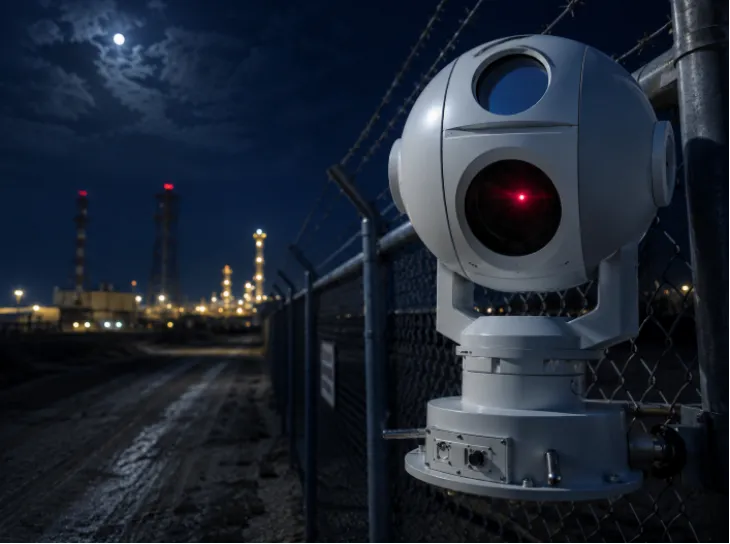
In this field, long reach, bad weather, and staying online are huge deals. The Shuoxin spherical photoelectric high-definition PTZ camera mixes normal video, thermal imaging, and laser night vision. This mix makes it perfect for medium and long-range night checks. It is great for oil fields, oil depots, and oil pipeline surveillance.
Key Features That Match Field Concerns
The system spins in a full 360° continuous pan rotation. It has preset spots, cruise paths, and fog-beating powers. It also offers remote control and smart tripwire or restricted-area alarms. It comes with a strong IP66 protection rating. The camera fights off salt spray and lightning strikes. It also works in very hot or very cold weather. All these parts answer one big buyer question. Will this camera stay alive outside after months of hot sun, thick dust, hard rain, and shaking? Yes, it will.
Where Should You Install Pipeline Monitoring Cameras?
You should put a pipeline monitoring camera where danger and clear views meet. Great spots are valve stations and pump stations. You also want them near storage tanks, fence corners, and loading zones. Do not forget dirt access roads and tall towers. Never just watch the front gate. Bad trouble usually sneaks in through the quiet side road that nobody ever checks.
When you place an oil depot security camera, focus hard on the tank farms and truck loading spots. These spots face big safety and money risks. A long-distance surveillance camera scans huge spaces quickly. At the same time, a night vision surveillance camera proves things are moving in the dark. It does this without needing any bright yard lights.
FAQ
Q1: What Is the Best Oil Field Surveillance Camera for Remote Sites?
A: The best oil field surveillance camera for remote sites needs to give you long-range night vision and thermal imaging. It must have PTZ control and a strong optical zoom. The camera also needs a tough weatherproof case and easy remote access.
Q2: Why Does a Pipeline Operator Need a Pipeline Security Camera?
A: A pipeline security camera helps you spot bad guys, stopping theft and damage. It spots weird events along the pipeline paths, valve yards, and pump spots.
Q3: Can a Long-Range Night Vision Camera Help With Leak Detection?
A: Yes, a long-range night vision camera supports checking for leaks. It gives guards a live video feed. This helps a lot when used with pressure, gas, or heat alarms.
Q4: Is a Thermal PTZ Camera Useful in Bad Weather?
A: Yes. A thermal PTZ camera sees heat shapes in pitch-black dark. It looks right through fog, smoke, and light rain. A normal camera would easily miss these important clues.
Q5: Where Should an Oil Depot Security Camera Be Installed?
A: An oil depot security camera must watch the tank farms, loading spots, and big gates. Put them on fence lines and secret zones. Also, cover any dirt road used by work trucks or lost cars.