
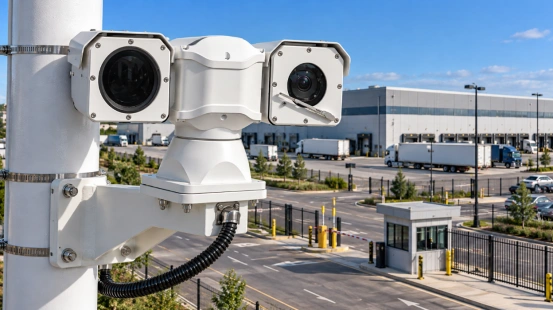
A top location for a PTZ camera is elevated and firm. It requires a direct view of primary entrance routes. Check that the device has physical clearance. It must pan and tilt freely.
Proper spacing is also necessary. This lets the optical zoom focus correctly. Reliable power cables and control links are strictly required. Face the lens away from harsh sunlight. Shield the equipment from rain, wind, and physical impacts. A parking lot presents different viewing challenges than a factory yard. A patrol car is different, too.
Where Is the Best Place to Install a PTZ Camera?
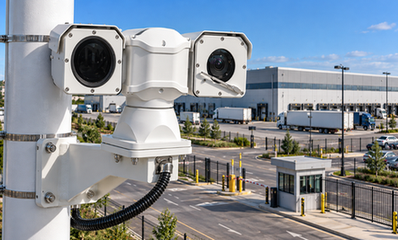
Begin by looking at critical walkways. A steel pole, tall tower, or brick building corner serves well. Mount the unit to monitor multiple gates. It should watch overlapping roads simultaneously. Ensure branches, brick walls, or parked vehicles do not hide the view. The camera requires physical space to rotate. Keep steel brackets and wooden beams out of its path. Leave an extra gap. Technicians need to reach it for future repairs.
Route the network cables securely. The bracket must support the heavy camera tightly. It has to survive heavy wind gusts. If you only need basic detection, pick a wide view. For face identification, switch to a narrow angle. Always set the camera’s default home position facing the highest-priority security zone.
What Determines the Right PTZ Camera Position?
Look at your site closely before you drill any holes.
Define the Observation Target
Write down what the guard needs to do. Finding a moving person or reading a car plate takes different angles. Trace how cars drive through the site. Pointing the lens straight down a road keeps a car in view much longer. Watch gates and narrow paths. These tight spots give better video than an empty yard.
Check Distance and Optical Zoom
PTZ cameras use motors to move and zoom. Optical zoom changes the lens focal length. This helps you see clear details far away. A wide shot helps you find a person. A zoomed shot lets you inspect them. Measure the exact distance from the mount to the target. If you put a long lens too close, you will miss fast cars. If you put a short lens too far away, things just look blurry.
Check Lighting and Night Range
Keep bright sun and headlights behind the lens. Shiny metal creates bad glare. Test the video when the sun is brightest.
Night video needs a separate test. Check the real infrared or laser distance. Rain and fog can lower this range quickly. Thermal imaging spots heat in pitch black. Visible cameras show colors for easy identification.
Check Power, Network, and Control
The spot must have the right wire connections. Many setups use Ethernet and PoE. Others need a normal power supply, Web control, or RS485 lines. Keep cords away from the spinning motors. Outdoor gear needs an IP-rated box, wipers, and heated glass. Vehicle setups demand DC power and soft shock mounts.
Where Should You Put a PTZ Camera in Different Locations?
Parking lot: Use a pole or building corner to track cars. Watch out for light poles.
Perimeter fence: A tall tower works best. Check the blind spot right under the pole.
Road or highway: Pick a steady mount along the road. Heavy shaking is the main risk here.
Industrial yard: A central pole watches gates well. Tall cranes can block your view.
Mobile command vehicle: A flat roof platform works nicely. You must handle road bumps and moving cables.
How High Should You Mount a PTZ Camera?
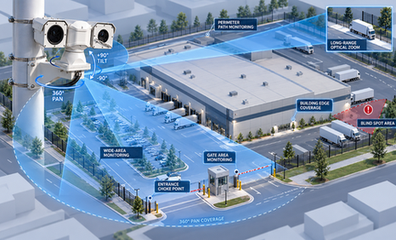
A good starting height outdoors is 8 to 12 feet. The exact height depends on your target distance and face angles. If it hangs too low, vandals can grab it. If it hangs too high, you just see the tops of heads. Find the lowest safe spot. For tall poles, set a downward preset to watch the ground below. Test the view with a lift before you bolt the unit down.
How Can You Reduce PTZ Camera Blind Spots?
A PTZ camera only looks one way at a time. If it looks back, it misses the front. Plan fixed cameras for paths that must stay on screen.
Set a default home view facing the main gate. Save presets for other spots like loading bays. Add fixed cameras where constant video matters. Overlap the views so people do not vanish between screens.
Which PTZ Camera Features Affect Placement?
The camera’s build changes where it can go. Shuoxin models show these needs well.
The 150M Night Vision Vehicle PTZ Camera has a 2MP visible camera and 33× optical zoom. It packs 150 m IR illumination, 360-degree endless rotation, ONVIF support, DC12V power, shock absorbers, and an IP66 enclosure. These specs fit patrol cars perfectly.
The 500M Night Vision LASER Vehicle PTZ Camera mixes a 2MP visible camera and 33× optical zoom with a listed 500 m laser night-vision distance. It offers 360-degree endless rotation, ONVIF and SDK integration, Web or RS485 control, shock absorbers, and IP66 protection. You need a long, open view to use this range.
The bi-spectral long-range PTZ has a visible and thermal channel. The listed WL-TX30-HD-RCX model packs a 640 × 512 thermal detector, 360-degree endless rotation, ONVIF/SDK support, a wiper, and IP66 protection. It works great for forest-fire prevention and border defense.
PTZ Camera Placement Checklist
Before you install, check:
The target and required video action.
Main approach routes and gates.
Distance, field of view, and optical zoom.
Sun glare, rain, and night lighting.
Free pan and tilt movement space.
Bracket strength for wind and weight.
Power, network, and control wire setups.
Fixed-camera coverage for blind spots.
About Shuoxin
Shuoxin builds intelligent security monitoring equipment. Their line includes vehicle, highway, marine, heavy-load, dome, and long-range thermal imaging PTZ cameras. They handle forest-fire prevention, public security, and border defense. They hold ISO9001 certification. Their gear is tested by the Security and Police Electronic Products Quality Testing Center of China’s Ministry of Public Security.
FAQ
Q1: Where is the best place to put an outdoor PTZ camera?
A: Pick a high, steady spot looking at a main gate or road. Ensure it has power and room to spin.
Q2: How high should a PTZ camera be mounted?
A: Start at 8 to 12 feet. Change it based on your target distance and tamper risk.
Q3: Can one PTZ camera cover an entire parking lot?
A: It can zoom at cars across the lot, but it cannot watch two places at once. Use fixed cameras for constant viewing.
Q4: Should a PTZ camera be mounted on a wall, pole, or vehicle?
A: Walls watch fixed areas. Poles fit open borders. Vehicles need flat platforms to handle road bumps.
Q5: What is the main use of a PTZ camera?
A: It lets a guard pan, tilt, and zoom to track moving targets while fixed cameras hold steady views.