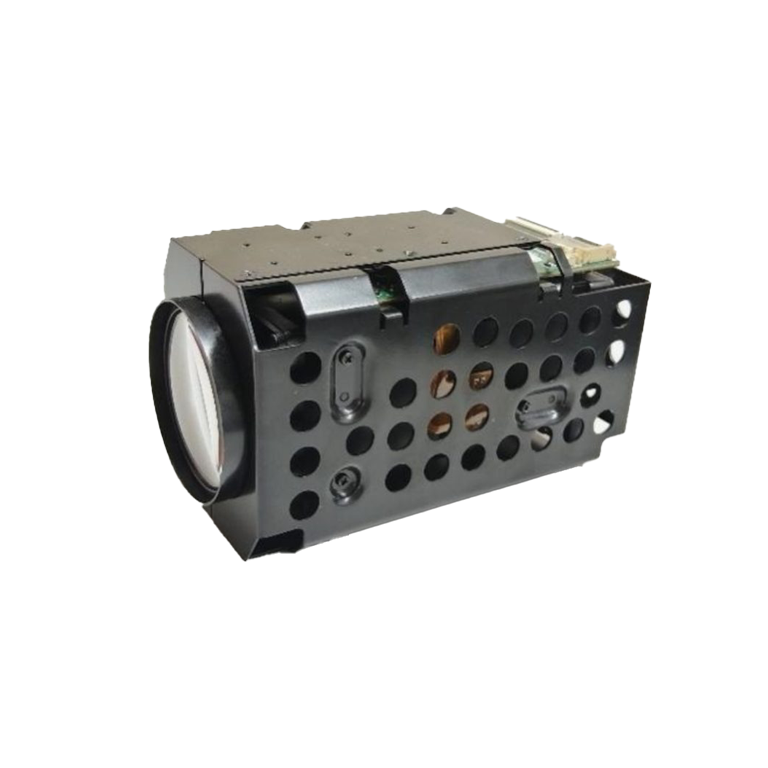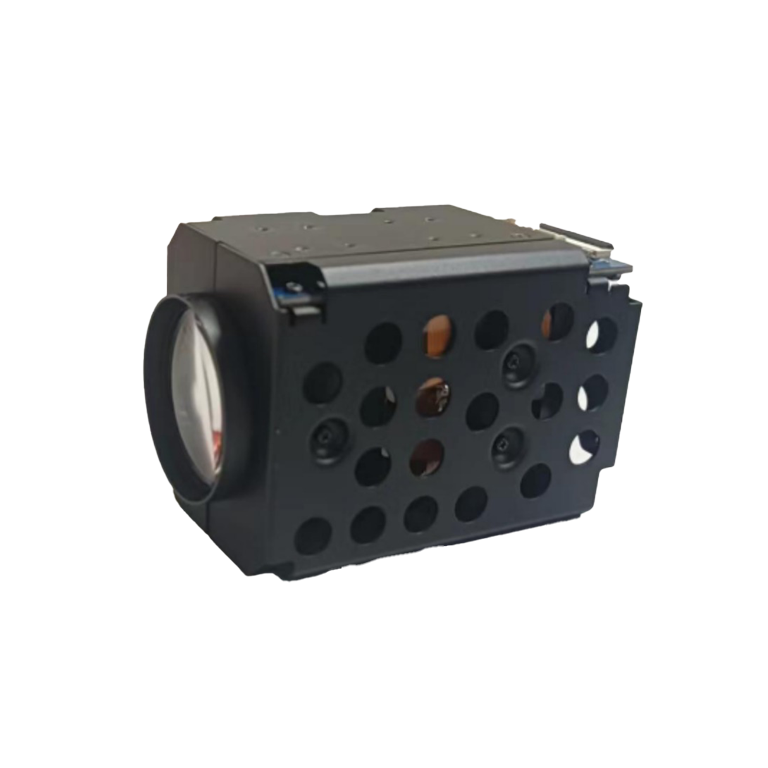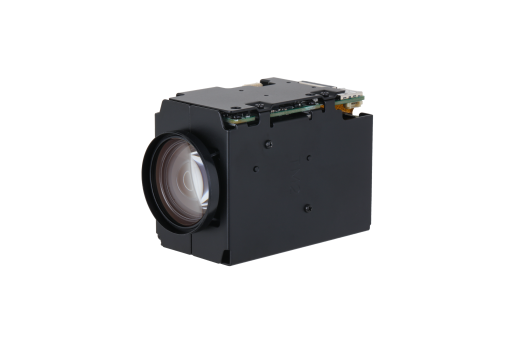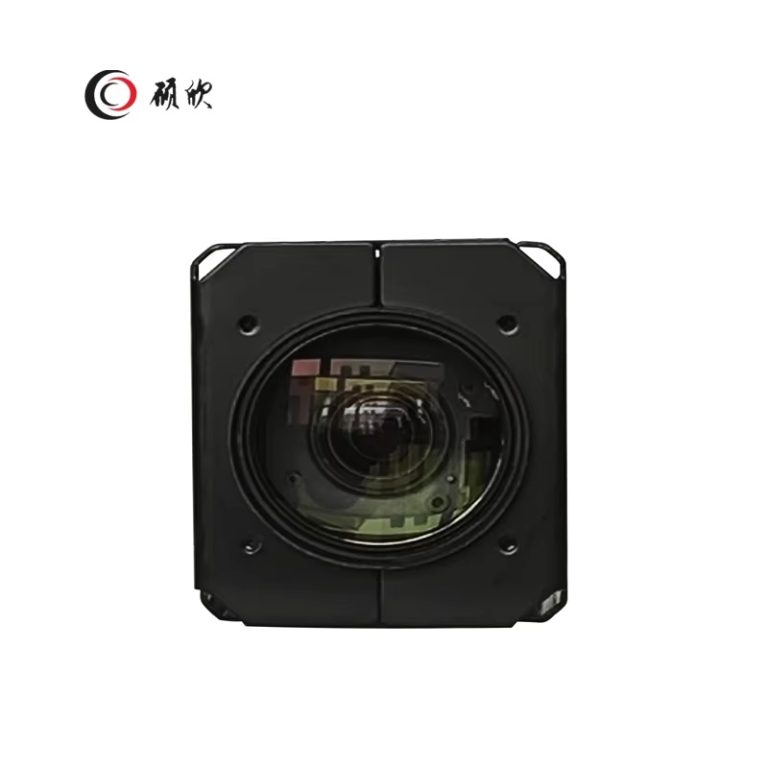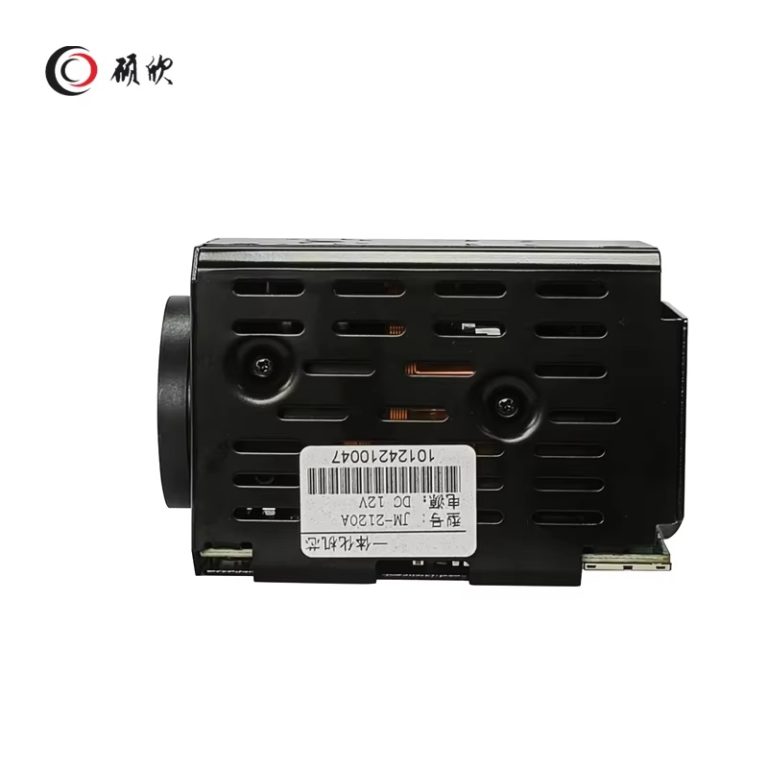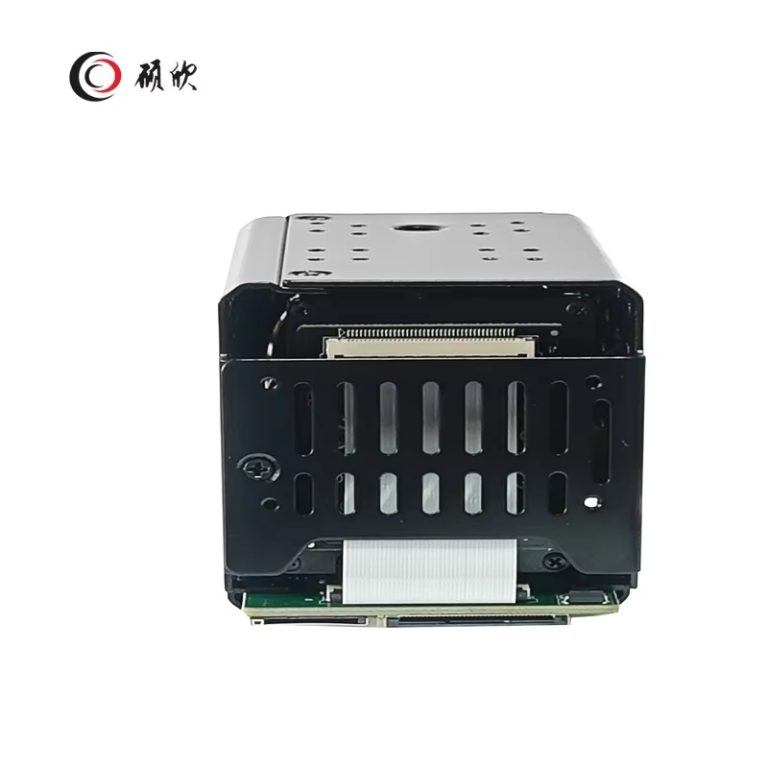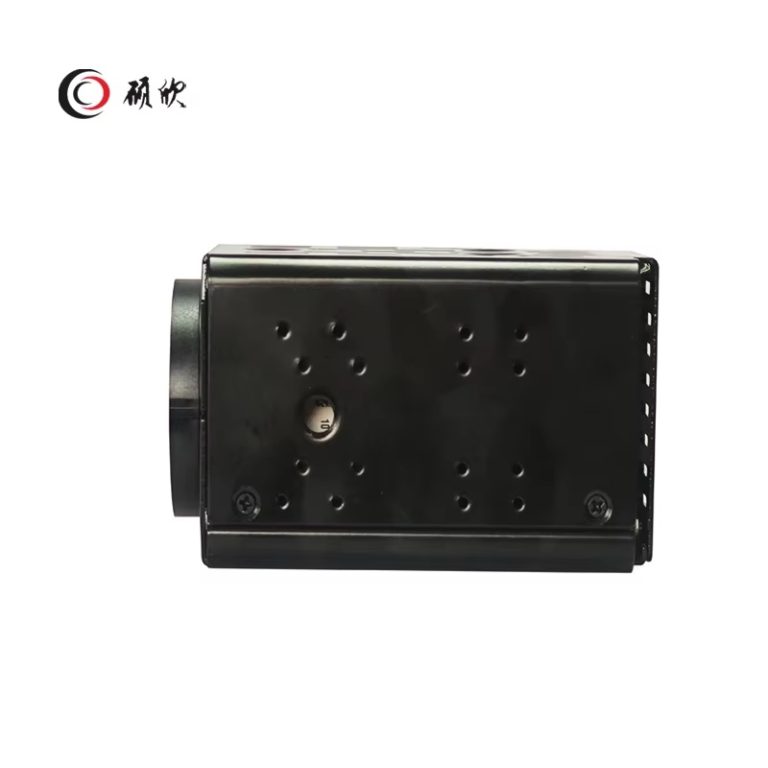
The first decision is whether the host has room for the lens movement, board and cable connection. Once that mechanical fit is clear, the 5–125 mm autofocus lens can be assessed against the required field of view. Resolution, frame-rate and PAL/NTSC choices are set out in the table.
The bare module has no stated outdoor rating, and its Weight row is empty. Both values remain unresolved; another camera is not a valid source for them.
Begin with the viewing task. Define the wide view, the closest useful view and how quickly the operator must move between them. Then decide whether viewing and recording need separate streams. The module can produce as many as three, with encoding options shown in the specification table.
Lighting controls should follow the scene rather than drive the purchase. WDR, highlight and backlight compensation, defog, anti-flicker and day/night functions are available. They provide adjustment range; they cannot make every target look the same under different light.
Place the 36-pin FFC/FPC connection on the host drawing and check cable orientation and bend space. After that, choose serial or network control from the interface rows in the table. If the finished product will use alarm or audio signals, mark those connections as well.
Protocol names identify a route for integration; they do not settle the entire interface. Compare the commands and streams required by the host with the functions the module exposes. Apply the same approach to local storage: capacity is one input, while recording behavior comes from stream settings and finished-system software.
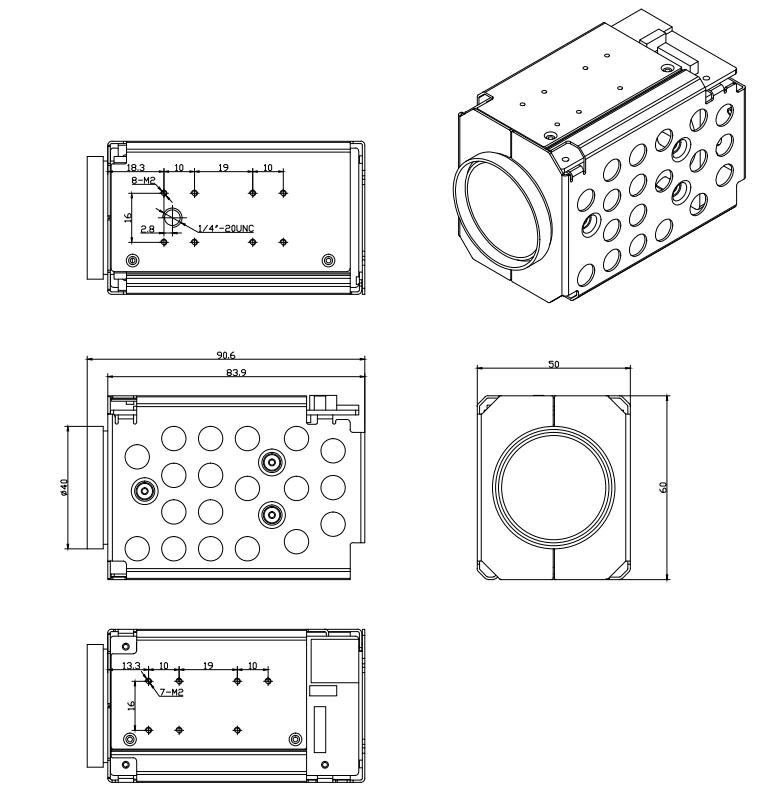
Body dimensions alone are not the enclosure envelope. Reserve extra room for the connector, cable and moving lens. On the electrical side, allocate power from the dynamic figure in the table rather than the lower static value.
The temperature and humidity rows describe the module. The finished camera still needs its own thermal path, condensation control and enclosure rating.
Zoom ratio is only one input. Compare the field of view, stream format, control route, available space and power budget together. Other imaging options are grouped in the Camera Module category.
| JM-2125A | |
|
Modulo telecamera |
|
| Sensore di immagine | CMOS da 1/2,8″ di Sony |
| Zoom ottico | 5-125 mm,25X Zoom ottico |
| Otturatore elettronico | 1/25~1/100000 |
| Mini. Illuminazione | Color@0.01Lux (AGC ON),B/W@0.05Lux(AGC ON) |
| Angolo di campo | 59,6-3,5° (Wide-Tele) |
| Distanza ravvicinata | 100mm-200mm(Wide-Tele) |
| Velocità dello zoom | 3 Sec. (Ottica, Wide~Tele) |
| Giorno / notte | Commutazione automatica del filtro ICR, algoritmo dell'immagine di supporto, periodo di tempo, trigger della porta seriale |
|
Parametri video |
|
| Bitstream principale | PAL: (1920 × 1080, 1280 × 720) 25 fps |
| NTSC: (1920 × 1080, 1280 × 720) 30 fps | |
| Sub-bitstream | PAL:(720×576,352×288)25fps |
| NTCS:(720×480,352×240)30fps | |
| Messa a fuoco | Messa a fuoco automatica/manuale/semi-automatica/uno scatto (efficace in modalità automatica) |
| WDR | 120db |
| Regolazione dell'immagine | Luminosità, contrasto, saturazione, nitidezza, croma |
| Impostazione dell'immagine | Maschera d'area, WDR, Anti-flicker, Defogging, Mirroring, Modalità corridoio, Rotazione, BLC, HLC, Compensazione dell'esposizione, Compensazione dei pixel difettosi, Recupero della perdita di potenza, Correzione della distorsione, DIS, Posizione 3D |
|
Funzione di compressione della rete |
|
| Allarme intelligente | Rilevamento del movimento, telecamera oscurata, rete scollegata, conflitto IP, errore HDD, HDD pieno |
| Protocolli di supporto | TCP/IP, ICMP, HTTP, HTTPS, FTP, DHCP, DNS, RTP, RTSP, RTCP, NTP, SMTP, SNMP, IP |
| Protocolli di accesso | ONVIF,GB/T28181,Protocolli mainstream domestici |
| Funzione | Doppio flusso, protezione con password, heartbeat, blacklist e whitelist IP, memorizzazione locale quando si è disconnessi, trasmissione continua quando si è disconnessi, anteprima massima di 20 canali |
| Standard di compressione | H.264/H.265: Baseline , Profilo principale , Profilo alto,MJPEG |
| Velocità di trasmissione compressa | 64 Kbps~16Mbps |
| Standard di compressione audio | G.711A、AAC、G711U、G726 |
| Velocità di compressione audio | 8/16Kbps |
|
Definizione dell'interfaccia |
|
| Magazzinaggio | Memoria locale TF Card 256G (si consiglia la classe 10) |
| Interfaccia FPC a 36 pin | FFC a 36 pin (alimentazione, porta di rete, indicatore luminoso, RS485, RS232, SDHC, ingresso/uscita allarme, ingresso/uscita linea, reset, interfaccia dati scheda SD) |
| Porte di estensione | 1 interfaccia USB, 1 interfaccia URAT |
| Definizione di comunicazione | Interfaccia RS232 (protocollo VISCA), interfaccia RS485 (protocollo Pelco) |
|
Generale |
|
| Alimentazione | DC 12V±25% |
| Consumo energetico | Statico: 2,5w Dinamico: 4,5w |
| Temperatura e umidità | -20℃ - +60℃, umidità inferiore a 95% (senza condensa) |
| Dimensione | L91,8*W50*H60 mm |
| Peso | |
Dimensione
Send the field of view, stream requirement, control route and available enclosure space. Add the power budget, storage plan and any alarm or audio use. For a moving assembly, include the host drawing and cable route.
No. The finished product still needs an enclosure, mounting, environmental protection and external connections.
It reaches 1920 × 1080 at 30 fps and supports up to three streams. Encoding choices are shown in the table.
Serial and network control are available. Use the table to match the required protocol and the 36-pin connection to the host.
Yes. It accepts TF/SD storage up to 256 GB, with Class 10 recommended. Software and stream settings determine recording behavior.
Use Contattaci to send the host layout, power input, controls, stream requirement and operating environment.