
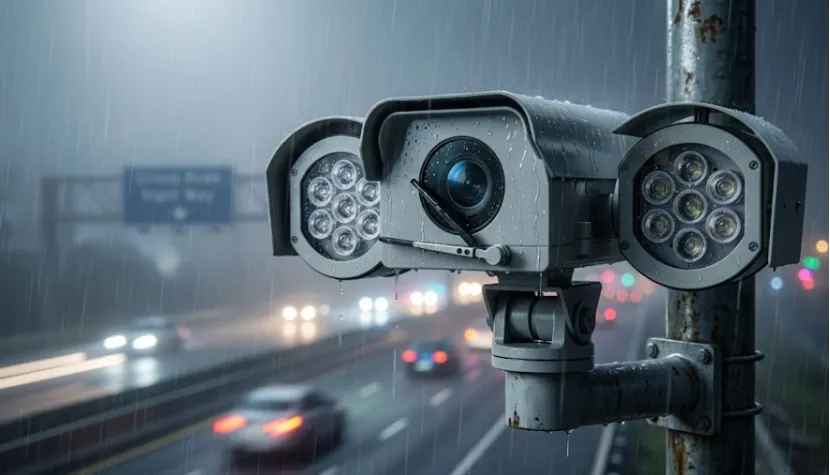
Pourquoi la surveillance vidéo routière est-elle plus difficile que la surveillance de sécurité normale?
Les autoroutes ne sont pas des endroits doux pour les caméras. Les véhicules se déplacent rapidement, la lumière change chaque minute et de nombreux points de caméra sont éloignés d'une salle de contrôle. Un normal caméra de surveillance du trafic peut travailler à une porte ou à un parking, mais les problèmes de vidéosurveillance routière sont différents. Vous avez besoin de distance, de mouvement stable, d'images nocturnes claires et de matériel qui peut vivre à l'extérieur pendant des années.
C'est là que Shuoxin s'inscrit naturellement dans la conversation. Shuoxin est un fabricant basé sur la technologie axé sur l'équipement de surveillance de sécurité intelligente, avec des produits utilisés dans les routes, les aéroports, la sécurité publique, la défense des frontières, les travaux maritimes, la prévention des incendies de forêt, la gestion urbaine, le transport, la protection de l'environnement et les projets d'électricité.
Pour les acheteurs qui se soucient d'une utilisation réelle sur le terrain, pas seulement des spécifications du catalogue, cela compte. Sa caméra PTZ de l'autoroute est conçue pour la surveillance routière de la ville, la surveillance de l'autoroute, la surveillance ferroviaire, la surveillance de la sous-station, la surveillance du périmètre de hauteur et la surveillance de la défense côtière.
Les mauvaises images nocturnes sont souvent le premier problème
La mauvaise vision nocturne dans la surveillance routière ne concerne pas seulement l'obscurité. Les phares, les taches de pluie, les toiles d'araignées, le verre sale, la réflexion IR et la longue distance routière peuvent tous rendre l'image douce ou lavée. La base de connaissances de l'industrie note que les caméras ont généralement besoin de lumière de remplissage la nuit, comme l'infrarouge, la lumière blanche, la lumière des étoiles ou la vision nocturne pleine couleur, selon la scène. Il souligne également que les lentilles sales, les problèmes de tension, la longue distance de transmission et les interférences à proximité peuvent nuire à la qualité de l'image.
A caméra PTZ de vision nocturne résout cela en vous donnant plus d'un moyen de voir. Les modèles de caméra PTZ de vision nocturne IR aident avec les sections routières sombres courantes. Une caméra PTZ de vision nocturne laser aide lorsque vous avez besoin de voir beaucoup plus loin, par exemple à travers un pont, une rampe ou une longue section d'autoroute. Le modèle autoroutier de Shuoxin prend en charge la vision nocturne IR de 100 à 120 mètres, la vision nocturne à la lumière blanche au-dessus de 80 mètres et la vision nocturne laser optionnelle jusqu'à 1000 mètres, avec une surveillance diurne jusqu'à 2,5 kilomètres.
Pourquoi la distance de surveillance est-elle insuffisante ?
Une caméra de surveillance routière fixe voit un angle. C'est bon pour un point de contrôle sur voie, mais pas assez quand un accident se produit à 400 mètres ou un véhicule s'arrête près de l'épaule. Le zoom numérique rend l'image plus grande, pas plus claire. Vous pouvez voir une forme, mais pas assez de détails.
Une caméra PTZ à longue portée vous donne des détails réels
A caméra PTZ longue portée utilise le zoom optique, le pan et l'inclinaison pour suivre la zone qui compte. La base de connaissances explique que les caméras à dôme et PTZ combinent une caméra avec un système d'inclinaison et de zoom, offrant une surveillance à 360 degrés, à longue distance et à grande échelle. Pour la surveillance routière à longue distance, cela signifie que vous pouvez scanner un tronçon de route, zoomer sur un incident, puis revenir à une vue prédéfinie.
Une caméra PTZ avec zoom optique est également plus facile pour les opérateurs. Au lieu de commuter entre de nombreux flux fixes, vous pouvez utiliser des positions prédéfinies et des itinéraires de patrouille. Le modèle de Shuoxin prend en charge la rotation sans fin à 360 degrés, 256 positions prédéfinies et 6 voies de patrouille, ce qui est utile pour les rampes, les courbes, les entrées à péage et les voies d'urgence.
Comment les caméras PTZ réduisent-elles les points morts ?
Les points morts dans la surveillance routière sont risqués car ils retardent les décisions. Un camion arrêté sous un pont, un accident arrière près d’une courbe ou des débris près d’une rampe de sortie peuvent disparaître de la vue d’une caméra fixe. Et oui, les petits taches aveugles ont tendance à devenir de grands problèmes à 2 heures du matin.
Un mouvement plus large signifie moins de zones manquées
Une caméra PTZ à 360 degrés peut scanner de grandes sections de route puis zoomer sur les détails. Une caméra PTZ avec des positions prédéfinies vous permet de sauvegarder des vues clés, telles que les fusions de voies, les rampes et les ponts. Une fonction de patrouille de caméra PTZ peut parcourir ces vues lorsque aucun opérateur ne la contrôle activement.
Cela ne signifie pas que toutes les caméras fixes devraient disparaître. Dans les projets réels, les caméras fixes et les caméras PTZ fonctionnent souvent ensemble. Les unités fixes surveillent les points constants. Les unités PTZ gèrent les mouvements, la vérification et les plans d'urgence.
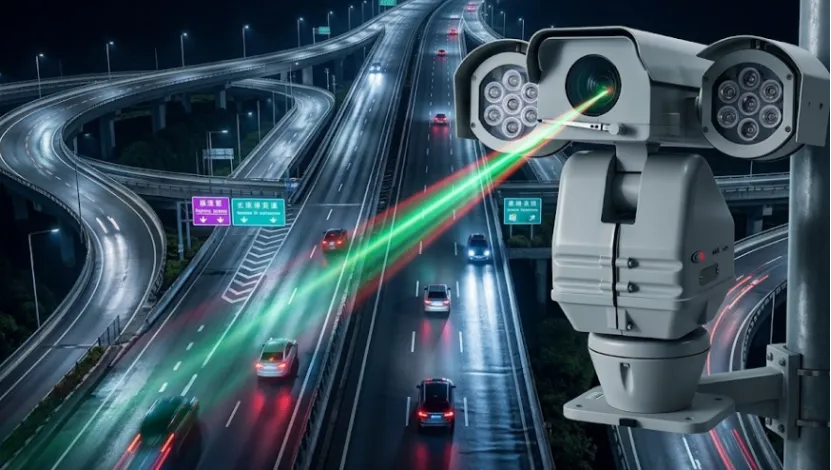
Qu'est-ce qui cause les redémarrages, la perte de signal et le retard de contrôle PTZ?
L'alimentation instable pour les caméras PTZ est l'un de ces problèmes qui semblent aléatoires jusqu'à ce que vous vérifiiez le site. La caméra redémarre lorsque les IR s'allument. Le PTZ se déplace faiblement. Préréglages dérive. L'image tombe lorsque le moteur démarre. Les conseils de dépannage pour les systèmes PTZ relient un mouvement faible à une alimentation instable, un retard de signal au câblage RS485, une incompatibilité de protocole et des interférences électromagnétiques, et une dérive prédéfinie à l'usure mécanique, à une panne de mémoire de perte d'énergie ou à des perturbations du vent.
Une meilleure conception de puissance et de contrôle réduit les maux de tête sur le terrain
Un professionnel caméra PTZ extérieure doit être construit pour les conditions d'alimentation routière. La caméra PTZ routière de Shuoxin utilise un module de stabilisation de tension pour réduire l'effet de la tension de surveillance routière instable sur la durée de vie du produit. Il prend également en charge les options AC24V, AC110V et AC220V, le contrôle RS485, 16 protocoles intégrés et des débits de baud de 2400Bps à 19200Bps. Cela rend l'intégration du système moins douloureuse, surtout lorsque les systèmes de trafic plus anciens sont encore en service.
Comment les intempéries violentes endommagent-elles les caméras PTZ extérieures?
Pluie, poussière, chaleur, brouillard et froid attaquent tous le matériel extérieur. L'entrée d'eau dans les caméras PTZ extérieures peut provenir de joints vieillissants, de fuites d'entrée de câbles ou de condensation. Un matin froid peut brouillonner la fenêtre. Le soleil peut chauffer le logement. La poussière peut se broyer en pièces mobiles.
Matériel résistant aux intempéries abaisse la pression de maintenance
Une caméra PTZ extérieure devrait être une caméra PTZ IP66 ou une caméra PTZ résistante aux intempéries pour une utilisation sur l'autoroute. ShuoxinL’unité dispose d’une classification de protection IP66, d’une coque en alliage d’aluminium haute résistance, d’une structure résistante au vent, d’un support d’essuye-glace, d’un chauffage automatique, d’un dégel et d’un débogage des fenêtres et d’une plage de température de travail allant de -35°C à 55°C.
L'entretien des caméras routières est coûteux car l'envoi d'un technicien peut nécessiter le contrôle de la voie, un chariot élévateur et des mesures de sécurité de la circulation. Une caméra PTZ lourde avec essuie-glace, chauffage, fonction de défogage et mouvement stable aide à réduire les visites inutiles. Moins d'escalade, moins de fermetures, moins d'appels en colère. C'est la valeur pratique.
FAQ
Q1 : Quels sont les plus courants Problèmes de surveillance vidéo routière?
R: Les problèmes de surveillance vidéo routière les plus courants comprennent des images nocturnes mauvaises, une courte distance de surveillance, des points morts, une alimentation instable, une perte de signal de caméra PTZ, une dérive préréglée, une pénétration d'eau et des coûts d'entretien élevés de caméra extérieure.
Q2: Une caméra PTZ est-elle meilleure qu'une caméra fixe pour la surveillance routière?
R: Pour les scènes à grande échelle, oui. Une caméra PTZ pour la surveillance de l'autoroute peut parcourir, incliner, zoomer, appeler des paramètres prédéfinis et patrouiller des sections clés de la route. Les caméras fixes sont toujours utiles pour des vues constantes, de nombreux projets utilisent les deux.
Q3: Pourquoi les caméras PTZ redémarrent-elles la nuit?
R: Le fonctionnement nocturne ajoute souvent la charge des lumières IR, des chauffages et du mouvement PTZ. Si le diamètre du câble est trop petit ou si la tension chute trop, l'instabilité de la tension de la caméra PTZ peut provoquer des redémarrages.
Q4: Pourquoi une caméra PTZ IP66 est-elle importante pour les autoroutes?
R: Une caméra PTZ IP66 résiste à la poussière et à l'eau, ce qui est essentiel pour les sites routiers exposés. Pour les autoroutes, la conception de caméra PTZ résistante aux intempéries n'est pas un bonus. C’est la survie de base.
Q5: Comment choisir une caméra PTZ autoroute?
R: Recherchez le zoom optique à longue distance, la vision nocturne, le mouvement à 360 degrés, les positions prédéfinies, la fonction de patrouille, la conception d'alimentation stable, le contrôle RS485 ou réseau, le logement IP66, l'essuye-glace, le chauffage et le défogage. Une solution fiable de caméra de surveillance routière devrait correspondre à la route, la météo, la distance et le plan d'entretien.