
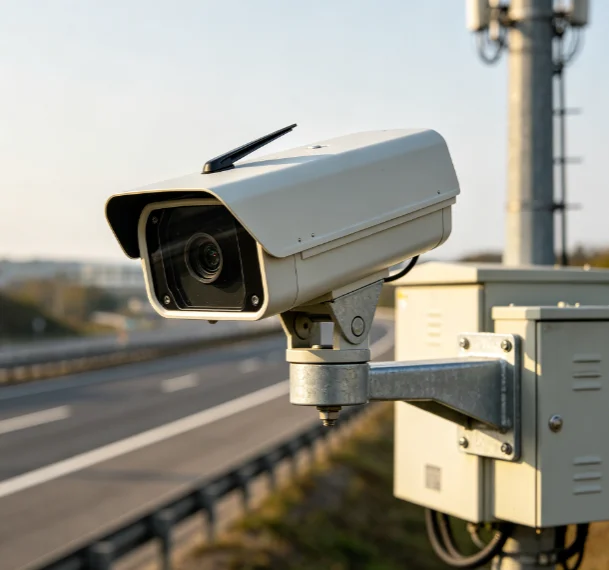
Why Do Highway Security Cameras Need Stable Substation Monitoring?
Highway monitoring looks simple from a car window. In daily operation, it is not simple at all. You have camera poles, cabinets, power lines, communication links, substation rooms, road lights, and control software working together. If one part fails, the video may stop right when you need it.
Power Stability Keeps Video Online
For security cameras on highways, stable power is not a small technical point. A highway PTZ camera has to pan, tilt, zoom, run a wiper, heat the window, and support night vision. If voltage is unstable, the camera may restart, lose preset positions, or send broken video.
Substation monitoring helps you watch voltage, power faults, cabinet status, and line problems. It gives operators an early sign before a blind spot appears. This is especially useful at night, during rain, or when traffic is heavy and nobody wants another surprise on the screen.
What Risks Can Affect Highway Substations?
Roadside substations are often placed in open areas. Some sit near bridges, tunnels, toll stations, or remote highway sections. They face dust, rain, heat, cable damage, door opening, and unauthorized access. These are ordinary field problems, not rare cases.
Small Faults Can Stop the Whole Chain
A loose cable, hot cabinet, water leak, or power failure alarm can affect video transmission. If the system has no early fault detection, the first sign may be a black screen in the control room. That is too late.
A good remote monitoring system should link environmental monitoring with nearby security cameras. When a cabinet door opens, the camera can turn to that area. When the temperature rises, the maintenance team can check it before the device fails. It is basic work, but it saves time.
How Does Substation Monitoring Improve Security Camera Performance?
Substation monitoring improves camera performance by keeping the support system visible. You are not only checking the road. You are also checking the power and equipment behind the road video. Many buyers focus on pixels first, but uptime often decides whether the system is useful.
Better Support for PTZ Movement and Night Vision
The highway PTZ camera is designed for city road monitoring, expressway monitoring, railway monitoring, substation monitoring, high-rise building peripheral monitoring, and coastal defense monitoring. Its listed structure includes camera, PTZ, decoder, protective cover, wiper, automatic heater, window defrost and defogging, and sunshade.
These parts are not there for decoration. On a winter morning, fog on the window can ruin a clear shot. On a dusty road, the wiper matters. When voltage moves too much, the stabilizing module helps protect the product service life. So substation monitoring and camera design work together, even if they look like two different topics.
Why Is a Network Positioning System Useful?
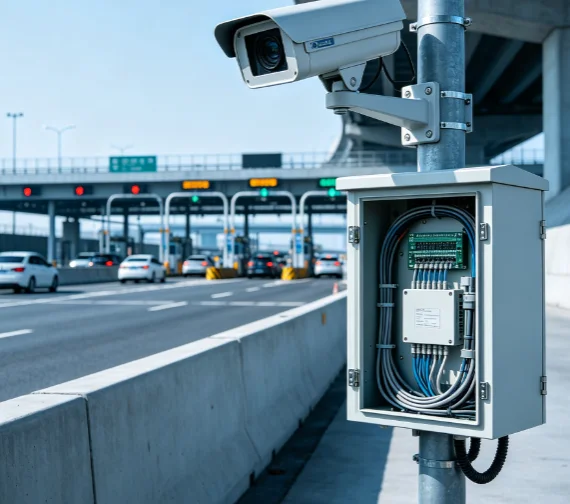
A network positioning system helps you find the exact camera, alarm point, or roadside cabinet faster. On a short road, this sounds easy. On a long highway, it is not. A team can waste a lot of time driving to the wrong pole, especially at night.
Faster Response for Real Road Events
When video loss, door opening, or a power fault appears, the network positioning system can help operators match the event to the right place. The highway PTZ camera then turns to the related area, such as a shoulder lane, bridge section, toll lane, or substation gate.
This supports traffic incident detection and equipment maintenance at the same time. You can check whether the issue is a road accident, a cabinet fault, or just a service vehicle parked in a strange spot. Small detail, but control room people care about this a lot.
What Product Details Should Buyers Check?
Highway projects should not choose security cameras by image quality alone. You need to check movement range, preset accuracy, protection level, night vision distance, control method, and power needs. Good-looking video in a showroom does not always mean good road use.
Practical Parameters for Highway Projects
The product page lists IP66 protection, 360° endless pan rotation, -70° to +35° tilt angle, 256 preset positions, 6 patrol tracks, and RS485 control with built-in 16 protocols. It also lists pan preset speed at 100°/S and tilt preset speed at 30°/S.
For night work, the page gives IR night vision at 100 to 120 meters, white light night vision over 80 meters, and laser night vision at 1000 meters. Daytime monitoring distance can reach 2.5 kilometers. HD IP options support up to 1080P output, dual streams, IE browsing, and high-definition capture. These details help you judge whether the camera fits tunnel monitoring, bridge monitoring, toll station monitoring, or remote highway sections.
Where Does Shuoxin Fit Into Highway Monitoring?
A camera supplier should not only sell one device and leave the rest to chance. For highway and substation projects, you need a partner that knows outdoor use, PTZ movement, night vision, control access, and long-term field problems.
A Practical Supplier for Roadside Security Work
Shuoxin is a technology-based enterprise focused on the design and production of intelligent security monitoring system equipment. Its product range covers camera modules, vehicle PTZ cameras, highway PTZ cameras, marine PTZ cameras, heavy-load PTZ series, rapid deployment dome PTZ cameras, brackets, and accessories. From a project view, this product spread is useful because highway monitoring often needs different camera types at different points. A toll station, a bridge, and a coastal road do not ask for the same setup.
For buyers, Shuoxin is worth attention because its highway PTZ camera combines road-use structure, night vision choices, IP66 protection, preset patrol functions, and network positioning system value in one product direction.
What Should You Consider Before Building the System?
Before buying, walk through the site plan carefully. Check camera pole height, substation distance, cable route, cabinet position, curve angle, bridge wind, tunnel lighting, and maintenance access. Do not only ask whether the camera is “clear.” Ask whether the whole roadside monitoring system can stay online.
System Matching Comes First
A good plan should cover power stability, camera uptime, video transmission, early fault detection, and equipment maintenance. It should also leave room for more security cameras later. Highway projects often grow bit by bit, not in a perfect straight line.
If you want a steady system, match the highway PTZ camera, substation monitoring, network positioning system, and central platform early. This makes fault checking easier and gives operators a clearer road picture.
FAQ
Q1: How does substation monitoring help security cameras on highways?
A: It helps security cameras stay powered, connected, and ready for real-time video monitoring.
Q2: Why is a highway PTZ camera useful for highway safety?
A: A highway PTZ camera can pan, tilt, and zoom to check road events, shoulder areas, and fault points.
Q3: What does a network positioning system do?
A: A network positioning system helps operators locate cameras, cabinets, alarms, and fault points faster.
Q4: Can substation monitoring reduce camera downtime?
A: Yes. It supports early fault detection, power failure alarms, and equipment status checks.
Q5: Where is substation monitoring most useful?
A: It is useful in tunnels, bridges, toll stations, service areas, substations, and remote highway sections.