
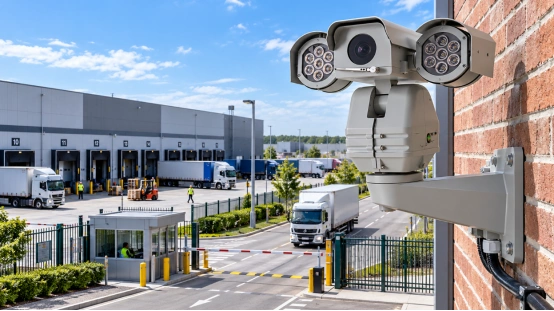
A camera might look great in a bright store. But it can still fail to catch a face at a dark warehouse door. You must match your choice to the actual target. Think about distance, lighting, and weather. Look at your network and how you plan to record. These pieces make up the essential features of the best surveillance cameras for any business project.
Good surveillance camera features give you clear proof. They also keep the system running day after day. A long list of menu settings does not prove it works well outside. Before you buy a business security camera system, grab a pen. Write down exactly what you want to see. Note where the camera will go. Finally, decide how many days you need to save the video.
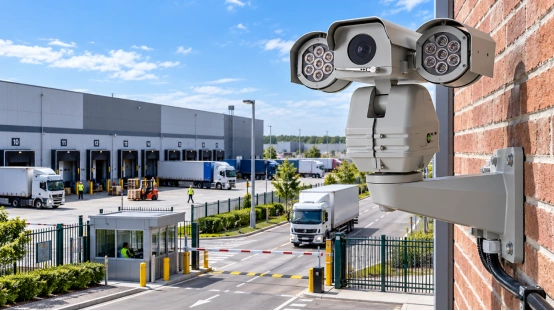
Which Camera Features Affect Image Quality?
Commercial surveillance camera features start with the picture. Megapixels only tell half the story, though. The lens, sensor, and frame rate matter just as much. Lighting, file compression, and camera placement also change what you actually record. A wide view sees a huge area. However, it makes every face or car plate look tiny.
Resolution and Frame Rate
Pick your resolution based on the real job. A tight doorway needs a close, narrow view to catch faces. A camera watching a giant yard just needs to spot basic movement. Fast cars zooming by require a much higher frame rate. Always check the IP camera specifications carefully. Some models secretly drop the frame rate when you turn up the picture size.
Lens, Zoom, and WDR
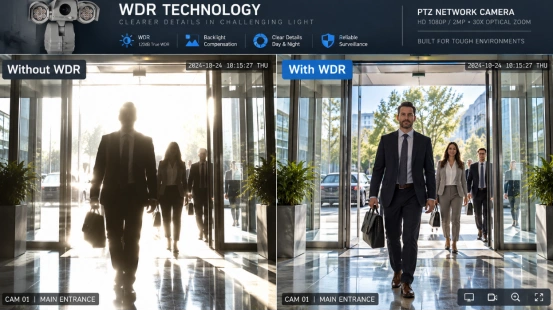
A fixed lens is fine if the view stays exactly the same. But a motorized or varifocal lens is better. It lets the worker adjust the zoom after bolting it to the wall. Think about a glass lobby or an open loading dock. Bright sunlight pours in behind people.
A WDR security camera fixes this by balancing the light and dark spots. Always ask to see real video clips taken from a similar distance. A paper spec sheet simply cannot show how bad sun glare looks on a wet street.
Night Imaging
An IP camera with night vision uses a few different tricks. It might use infrared, bright white light, or a special low-light color mode. Infrared mostly gives you a black-and-white picture. White light keeps the colors real. That helps a lot when you need to know a car’s exact color. Check the exact lighting distance on the box.
Also, test how light bounces off shiny things. A tiny spider web hanging near an IR lamp will ruin the whole picture with a giant white blur. It sounds silly, but it causes real repair trips.
How Should the Camera Fit the Site?
The right surveillance camera for business use must survive its home. Indoor ceilings are easy. But tall poles, moving trucks, and salty beaches are tough. Remote farm fields are hard, too. These spots put massive stress on the camera box and its power wires.
Weather, Temperature, and Tamper Protection
You need solid outdoor security camera features. Look for a proven IP rating and a safe temperature range. Hide your cables well. Pick a tough outer shell. IP66 or IP67 ratings work great for outside jobs. Your specific site might also need rust protection or thick glass to block thrown rocks. Lightning safety is smart, too. Keep height in mind. A tough metal camera is useless if someone can just walk up and pull the wire.
Coverage and Camera Form
Bullet and dome shapes work best for staring at one spot. A PTZ surveillance camera does more. It can pan, tilt, and zoom. It can spin to saved spots or track walking people. PTZ models are perfect for huge yards, busy ports, and long roads.
Still, you should put fixed cameras at important doors. They keep recording the door even when the PTZ looks away. Off-grid spots might run on solar panels, big batteries, and 4G cell signals. If you do that, check your sun exposure. Make sure the battery holds enough juice. Test the cell signal and memory card space to survive cloudy weeks.
How Does the Camera Connect to the Full System?
A camera only helps if the video actually makes it to the recorder. The guard needs to get the alerts. You also have to find the old video fast. Camera system compatibility is just as huge as picture quality. It completely decides if your zoom tools, microphones, and alarms will talk to each other later.
Network, Power, and Recording
A PoE IP camera sends both power and video down a single Ethernet cord. This makes pole and ceiling jobs super easy. Other setups might rely on Wi-Fi, fiber optics, or 4G cell towers. Always check your network speed and wire length. Buy a backup battery before ordering. H.265 video compression shrinks the file sizes. This saves hard drive space, but your recorder must support it. Total storage still depends on how many cameras you own.
Resolution, frame rate, and how many days you save also eat up space. Recording only on movement is great for a quiet closet. Constant recording is better for a busy front door.
Analytics, Alarms, and Access
Motion rules can trigger a recording or ring a phone. Smart models can tell a human from a dog. They spot cars crossing lines or entering restricted zones. Match every alert to a real security plan. An alarm means nothing if no one looks at the phone. It is also useless if the recorder cannot search for it later.
Check your password rules and user accounts. Keep connections locked down. Make sure remote phone viewing follows your company rules. If you want to record voices or hide the camera, check your local laws first. Pick your main camera modules and PTZ units first. Then, make totally sure they work with your software version.
How Can You Write a Useful Camera RFQ?
A sharp RFQ helps your surveillance camera supplier find the right model. It lets them price the whole package. Asking for a vague “outdoor 4K camera” leaves too many blank spots. Tell the seller exactly what you are watching. Give them the distance and the weather rules.
Details to Include
List how many cameras you need. Add the mounting height, viewing distance, and how wide the area is. Describe the local lighting and weather. Name your recorder brand and how you power the gear. List your desired smart alarms and when you need it delivered.
Ask the seller for current IP camera specifications. Request real day and night video clips. Ask about hard drive sizes and warranty rules. For a parking gate, tell them the lane width and how fast cars drive. Note the street lights. These specific facts decide the final lens, frame rate, and night vision setup.
What Should a Project-Focused Supplier Add to the Selection Process?
Once you know your site details, the supplier steps in. Their job is to match your needs with proven gear. This is why having many choices matters. Long range, boat, and thermal jobs need special parts. Shuoxin builds intelligent security monitoring equipment for these exact tasks. They make camera modules, vehicle PTZ, highway PTZ, and marine PTZ. They also build heavy load PTZ and fast-setup domes.
Their lineup has 2MP and 4MP IP zoom modules. You can pick from 23× to 40× optical zoom. They even offer bi-spectral products and a long range thermal imaging PTZ camera. This variety handles tough jobs that need huge zoom or heat tracking. Buyers can check the Шуосинь product list online. Just send them your distance, target size, and recorder facts. Then, you can talk firmly about camera system compatibility.
ЧАСТО ЗАДАВАЕМЫЕ ВОПРОСЫ
Q1: What Are the Best Surveillance Camera Features for a Business?
Match the resolution, lens type, night imaging, WDR, and weather ratings directly to your physical site. Ensure your recording schedules and smart alarms align perfectly with daily security protocols.
Q2: Which IP Camera Specifications Matter Most?
Examine the resolution alongside the proper frame rate. Verify the lens range. Next, confirm the low light mode, WDR, power demands, and IP rating. Finally, ensure the unit communicates seamlessly with your current recorder.
Q3: What Outdoor Security Camera Features Should You Check?
Review the IP rating and thermal limits thoroughly. Inspect the metal housing. Look for durable wire guards and solid rust proofing. Always evaluate the actual night picture at your specific required distance.
Q4: When Should You Use an IP Camera With Night Vision?
Install them in zones that turn completely dark after sunset. Select either infrared or white lighting. This choice depends entirely on whether identifying actual colors on vehicles or clothing is necessary.
Q5: When Is a PTZ Surveillance Camera a Good Choice?
A PTZ suits expansive areas requiring deep optical zoom and active moving patrols. However, always retain fixed cameras directed at critical entrances. This guarantees those vital doors never stop recording.