
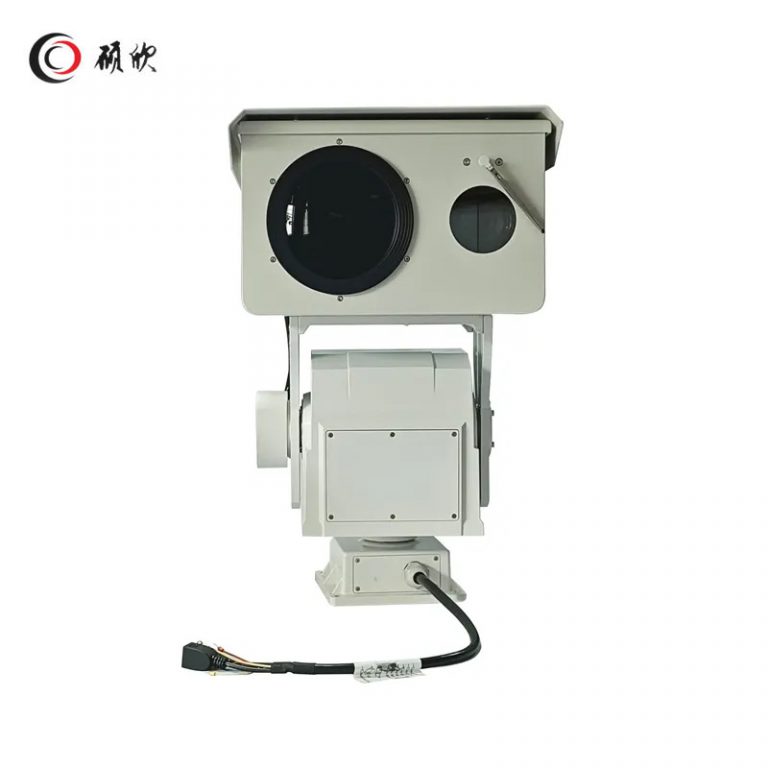
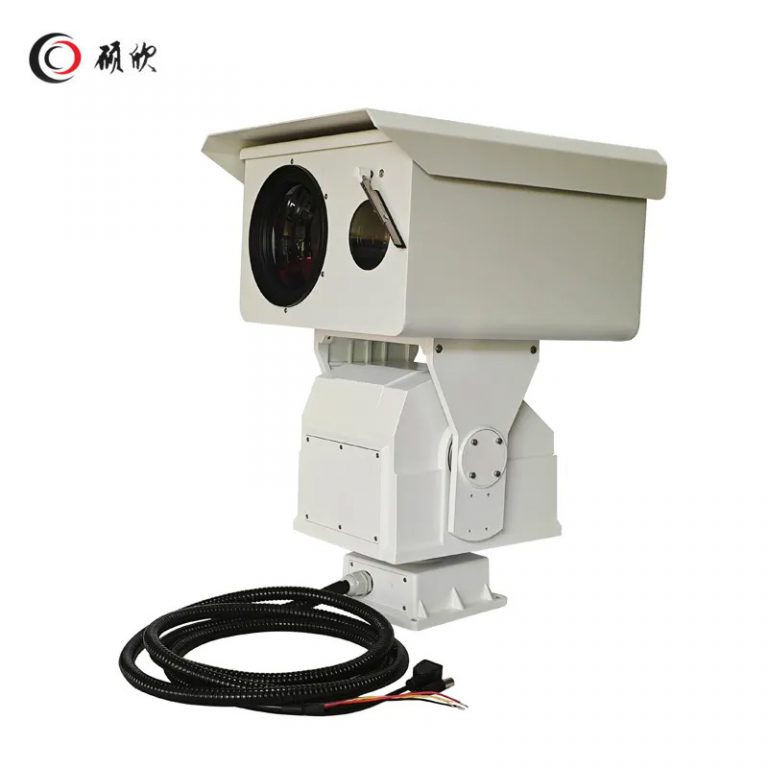
WL-TX30-HD-RCX is a heavy-load bi-spectral PTZ for long-range site observation. Use the retained visible/thermal baseline, then check wind, support, DC 12 V and host control for the actual structure.
WL-TX30-HD-RCX is a heavy-load bi-spectral PTZ. The retained baseline is a 2 MP visible channel with 52× optical zoom and a 640 × 512 thermal channel using a 30–150 mm lens. Continuous pan, RS485, ONVIF Profile S/G, IP66, wiper support and DC 12 V are also listed.
Select WL-TX30-HD-RCX around standard visible/thermal build. Define that task before comparing options.
Build the operator sequence around standard visible/thermal build; state the view, detail and mode change needed.
Forest-fire prevention, railways, substations, borders, coasts, fan blades, photovoltaic sites, airports, reservoirs, oil facilities, factories and ecological areas are listed uses. Wind, support and lens selection still belong to the specific site design.
Put heavy-load support and wind on the drawing and leave unresolved mechanics pending.
Map DC 12 V, RS485 and ONVIF to host functions one by one rather than relying on names.
Check installed power and cabling; keep optional lenses separate until confirmed.
Send standard visible/thermal build, heavy-load support and wind and DC 12 V, RS485 and ONVIF; flag optional lenses for confirmation.
| Model No. | WL-TX30-HD-RCX |
| Visible Camera | |
| Image Sensor | 1/2.8” Progressive Scan CMOS |
| Effective pixels | 1920(H) x 1080(V), 2 Megapixels; |
| Minimum Illumination | color:0.0005 Lux @(F1.4,AGC ON);B/W:0.0001Lux @(F1.4,AGC ON) |
| Focal Length | 6.1-317mm |
| Optical Zoom | Optical Zoom 52x, 16x digital zoom |
| Aperture Range | F1.4-F4.7 |
| Horizontal field of view | 61.8-1.6°(wide-tele) |
| Minimum Working distance | 100mm-2000mm (wide-tele) |
| Zoom speed | Approximately 5s(optical lens, wide to tele) |
| Video Compression | H.265 / H.264 / MJPEG |
| Interface Protocol | ONVIF(PROFILE S,PROFILE G) |
| Smart detection | Cross-border detection, area intrusion detection, entering / leaving area detection, hovering detection, personnel gathering detection, fast motion detection, parking detection / take detection, scene change detection, audio detection , False focus detection, face detection |
| Thermal imaging | |
| Detector type | Uncooled Vanadium Oxide Detector |
| Resolution/pixel spacing | 640 × 512 |
| Response band | 8~14 μm |
| pixel size | 12 μm |
| Thermal imaging lens focal length | 30mm~150mm |
| sensitivity | <35 mk (@25 °C, F# = 1.0) |
| false color mode | White Hot, Black Hot, Fusion 1, Rainbow, Fusion 2, Iron Red 1, Iron Red 2, Sepia, Color 1, Color 2, Ice Fire, Rain, Red Hot, Green Blue, Dark Blue |
| PTZ | |
| Pan preset speed | 100°/s |
| Tilt preset speed | 60°/s |
| Pan control speed | 0°~60°/S |
| Tilt control speed | 0°~40°/S |
| Pan range | 360°endless rotation |
| Tilt range | +90° ~ -90° |
| Preset positions、Tracking | 256 positions 8 tracking |
| Control Way | RS485, Built-in PELCO D/P 16 protocol, Baud Rate from 2400Bps to 19200Bps optional |
| Relative Humidity | Less than 90% |
| IP Grade | IP66 |
| Working Temperature | -35° ~ +55° |
| Wiper | Support |
| Weight | 8kg |
Related products are grouped in the Heavy Load PTZ Series category. Compare the imaging task, mounting, power and control route together rather than selecting on one distance or zoom figure.
Begin with standard visible/thermal build.
Check DC 12 V, RS485 and ONVIF against required host functions.
Show heavy-load support and wind, cables and clearances.
Keep optional lenses unresolved until written confirmation.
The retained table defines the standard starting point: a 2 MP visible channel with 52× optical zoom and 640 × 512 thermal imaging with a 30–150 mm lens. Use that pair to write the observation task. Other visible or thermal lens combinations stay in an option discussion rather than being merged into the baseline.
A heavy-load PTZ needs a site-specific support and wind review. Show the continuous-pan area, wiper clearance, service approach and cable bend space on the structure drawing. The drawing should also identify the environmental exposure for the IP66 assembly without turning that rating into a universal installation answer.
Feed the unit from DC 12 V and define how RS485 and ONVIF Profile S/G will be used by the host. The required camera movements and channel changes should be assigned to one route or the other. Optional lenses should not alter the control schedule until their configuration is confirmed.
Release WL-TX30-HD-RCX only when the standard visible/thermal build, support design and interface schedule agree. Check wind and service access at the actual site. If an alternative lens is needed, keep it as a separately identified option and request the matching mechanical and optical details.
The long-range use case should describe what the visible and thermal operators need to inspect, not assert a detection result. A railway, substation, border or forest site can impose different viewing and maintenance priorities even when the same standard channels are used. Put those priorities into the patrol or control plan.
For the structure review, identify the support material, exposed height, cable entry and access route available to service the wiper. Keep the continuous-pan zone free of handrails, roofs and other equipment. Wind assessment belongs to the project engineer; neither the product category nor the IP66 rating supplies a site calculation.
When an optional lens is requested, require a response that preserves the model and channel mapping. The alternative should not silently replace the 52× visible or 30–150 mm thermal values in the retained baseline.
A useful comparison sheet should show the retained visible channel beside the retained thermal zoom range, then add a separate row for any requested alternative. That layout makes the optical change visible to engineering and procurement without rewriting the standard table. It also gives the supplier a clear place to return the matching dimensions or support implications.
Use Contact Us to send the standard visible/thermal build, structural drawing and required functions. Identify optional lenses as pending and describe the exposed-site service route.