
When you put money into advanced security systems, one of the first things you probably wonder is: “How far can this camera really look?” In the area of far-reaching protection, the view angle of a PTZ (Pan-Tilt-Zoom) camera makes the difference between full awareness of your surroundings and an expensive gap in coverage. This holds true whether you watch over a high-voltage power station, drive along a border in a law enforcement car, or check a tree canopy for early smoke signals. The “angle” here involves a mix of basic movement options and clear sight capabilities.
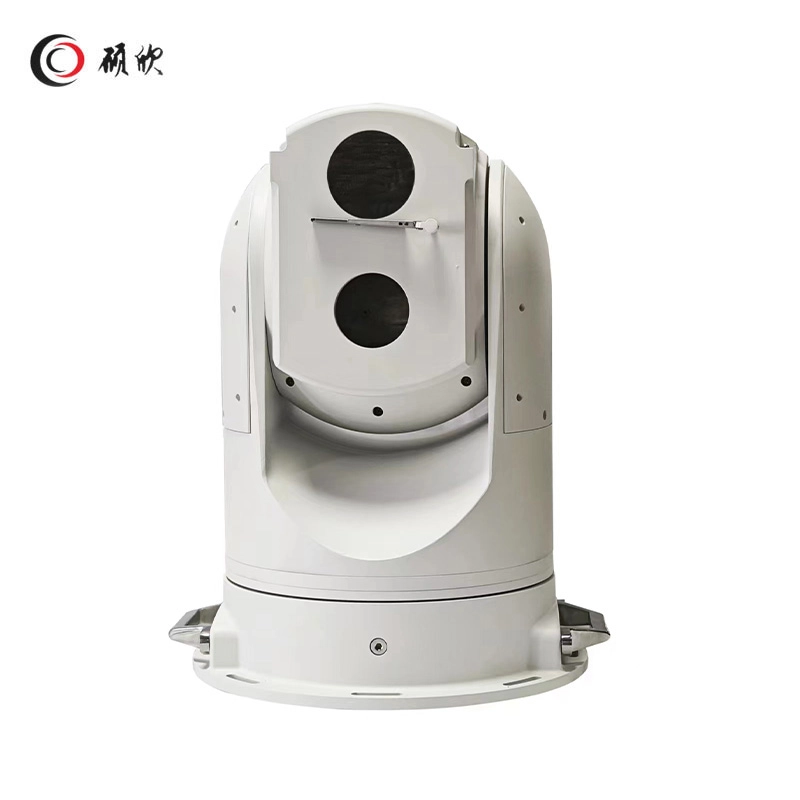
The Authority in Long-Range Vision
Before getting into details about angles in degrees and sizes in millimeters, it helps to have a company that handles the tough parts of outside watching. Shuoxin does more than make products; they build exact systems for places where regular gear does not work well. Picture a setup that keeps a sharp focus on something miles off, even when placed on a shaky pole or inside a rolling security truck. That kind of performance is what they provide. Over many years, they have gained skill in combining light and electricity tech, and they focus on strong, smart devices built for hard far-distance jobs. Their design group pays close attention to tricky spots—such as edge protection, sea safety, and key facilities—making sure that when you want to spot things from afar, you get a totally sharp picture. Shuoxin stands out because they understand the real needs of these challenging setups, and they create solutions that last in rough weather and tough conditions. Their products go through strict tests to ensure they perform well over time, giving users peace of mind in critical operations.
The Dual Nature of the PTZ View Angle
To figure out the view angle of a PTZ camera, consider two main parts: the way it turns mechanically and the area it sees through its lens. Fixed cameras point at just one spot on the land, but a PTZ setup shifts around. So, its overall possible view angle usually reaches a complete 360 degrees, yet the view it shows right at that moment relies fully on how much you zoom.
In situations involving far distances, such as spotting fires in woods or guarding borders, targets can be from 150 meters up to a few kilometers out. At such ranges, you use a broad angle to look over the skyline, and a slim angle to pick out a particular danger. This balance allows for both broad overviews and close checks, which is key in keeping areas safe without missing details.
Mechanical Freedom: The Pan and Tilt Range
The “Pan” part of PTZ means side-to-side motion. For serious outside watching, you often need a pan that keeps going without pause. The camera turns forever without bumping into a limit, so you can track a car or individual in a full loop without any break.
The “Tilt” means up-and-down motion. For tasks like checking power cables or watching hilly land, having a big tilt area matters a lot. Suppose your camera sits low in a valley gazing up at a power station on a hill, or high on a post peering into a deep ravine; then you require an up-down span that commonly goes from $-90^{\circ}$ to $+90^{\circ}$. Such range makes sure the actual view angle includes the sky above, the line where earth meets sky, and even the soil right under the setup point. This wide motion helps in covering various heights and directions, which is essential for complete site monitoring.
Optical Precision: The Field of View (FOV)
As the motors shift the camera, the lens sets how wide the picture is. You measure this in degrees. When zoomed out to a wide setting, the side-to-side FOV could be $60^{\circ}$ or wider, ideal for basic watching over a seaside edge.
But when you zoom closer to spot a strange boat or a broken part on an electric tower 500 meters off, that angle gets smaller. At the top zoom level, your view angle could drop below $2^{\circ}$. This slim telephoto view lets the camera focus every pixel on a small far-off item, giving the sharp details needed for police work or factory protection. In practice, this means you can read license plates or see small defects from great distances, turning the camera into a powerful tool for detailed inspection.
Solving Stability in High-Stakes Environments
When watching from over 150 meters away, even the tiniest shake turns into a big issue. A camera on a police car or extendable pole faces gusts, motor hum, and bumpy paths. Should the view angle move by just a small part of a degree from a jolt, the picture a kilometer out jumps by many meters, leaving the video worthless.
Here is where special parts are essential. In moving guard duties and sea uses, the gyro-stabilized photoelectric high-definition pan tilt camera offers a fix that basic PTZ devices cannot equal. It uses built-in detectors to sense shifts, and the setup fixes any lean or wobble right away. Thus, your view angle stays fixed on the goal, no matter if the truck races along a rough border path or the boat rocks in rough waves. For spotting things from afar, steady hold counts as much as the angle does. This technology proves vital in dynamic settings, where constant motion could otherwise ruin clear views, and it helps operators maintain focus during intense operations.
Maximizing Coverage with Spherical Design
In vital setups like big solar fields or far-off power stations, the camera’s outer form affects how well it works. Old-style hanging PTZ shapes might block their own sight with brackets or covers when aiming up.
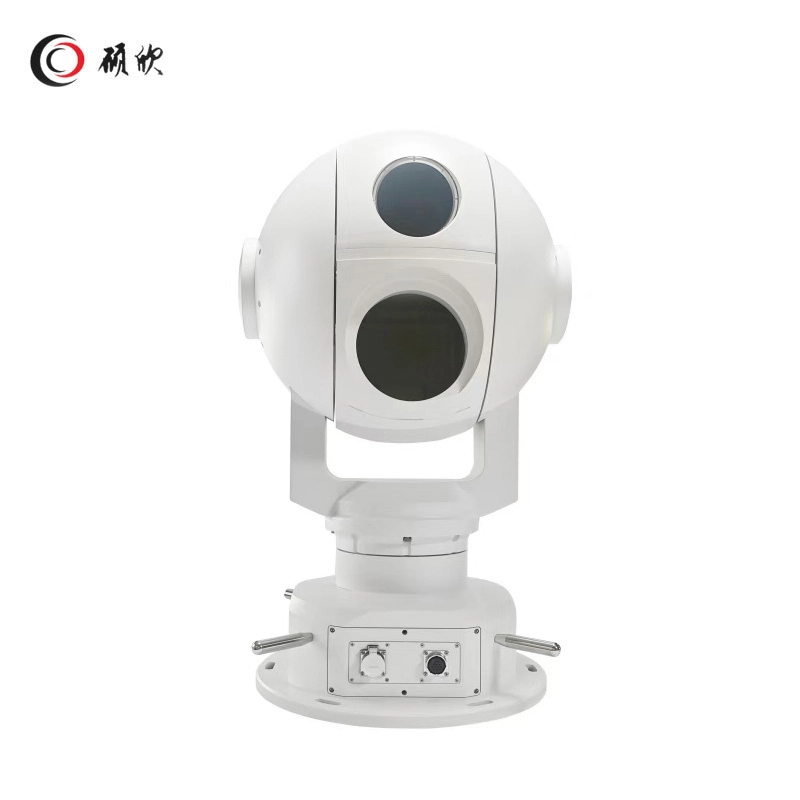
The spherical photoelectric high-definition PTZ camera gets built to remove these issues. Its smooth, ball-like shell lets it move faster with less drag from air—a key point for units on tall posts in breezy spots like fire watch towers in woods. Since the lens rests inside a special ball holder, it reaches improved up views compared to usual types, crucial for eyeing high wires or following items on raised ground. This design not only boosts range but also cuts down on wear from weather, making it reliable for long-term outdoor use in varied landscapes.
Precision at Distance
When handling far-off views (past 150 meters), you probably pick a lens with 30x, 40x, or up to 90x zoom. At those strengths, the view angle stays very narrow. A PTZ unit needs fine encoders inside. These parts inform the camera of its exact direction.
Say you set a saved spot to shift to a certain changer in a power station 300 meters distant; the camera has to hit that same angle each visit. A low-cost unit could stray by half a degree, meaning at that range it eyes a bush not the changer. Top-quality gear makes the view angle hit the mark with almost no slip. Such accuracy ensures consistent results, which is critical for tasks requiring repeated checks, like routine inspections or ongoing surveillance, where even small errors could lead to overlooked problems.
Integration of Thermal and Visible Light
For edge safety and wood fire stops, one view angle alone often falls short. You must spot both the item and its place at once. New far-reach PTZ units commonly use two-sensor loads.
One view comes from a sharp daylight camera for day spotting. Another view arises from a heat-sensing part. Heat parts typically show a varied sight area from regular lenses. Mixing them lets you apply the broad heat sight to find a warm mark (such as a tiny blaze or someone passing a dim edge) and then link the slim sharp daylight sight to that spot for sure spotting. This layered way of handling view angles means you avoid missing any risk, no matter the light or sky state. Dual systems like this expand effectiveness, especially at night or in fog, by layering detection methods for better overall coverage and quicker response times in emergencies.
Professional Service and Expert Guidance
Picking the proper view angle and PTZ setup poses a tech puzzle needing more than scanning a list of facts. It calls for studying your land type, target ranges, and site weather factors.
Be it outfitting a group of quick-response cars or guarding a country line, stress reliability and exactness. Skilled advisors assist in working out the right FOV to watch your borders, while checking that the PTZ’s turn speed matches quick targets. Proper backing turns your watch system into an active helper, not just a waiting one, delivering plain, useful info from miles off. In addition, these services often include setup advice, training for teams, and ongoing support to adapt to changing needs, ensuring your investment yields long-term benefits in security and efficiency.
FAQ
Q: Does a higher zoom always mean a better view angle?
A: Not necessarily. A higher zoom gives you a narrower view angle, which is better for seeing details far away (long-range). However, for general wide-area scanning, a wider view angle is better. The best PTZ cameras offer a large “zoom ratio” so you can have both a wide angle for scanning and a narrow angle for detail.
Q: Why is 360-degree “continuous” pan important for outdoor long-range monitoring?
A: In environments like border security or substations, a target might move completely around the camera. If the camera has a “mechanical stop” (e.g., it can only rotate 350 degrees), it would have to spin all the way back around to keep following the target, losing sight of it for several seconds. Continuous rotation prevents this.
Q: How does wind affect the view angle on a long-range camera?
A: On a tower or high mast, wind causes micro-vibrations. If you are zoomed in on a target 500 meters away, even a tiny vibration will make the image shake violently. This is why gyro-stabilization or heavy-duty mounting is required to keep the view angle steady and the image clear.



 English
  Russian
  French
  Japanese
  Korean
  Arabic
  German
  Italian