
Key Considerations for Selecting a PTZ Thermal Camera
Application Scenarios and Operational Requirements
Picking the best PTZ thermal camera begins with a clear idea of its use and purpose. In outdoor watching tasks for important areas like border protection, power line checks, police car setups, and forest fire spotting, you need gear made for far-off views, strong build quality, and exact following skills.
First, you should figure out your watching goal. For example, if you aim to watch high-voltage stations in far-away lands or check hundreds of meters along a border area, the camera has to spot people or cars past 150 meters. Often, this goes into a few kilometers. These situations usually face poor sight from night, mist, haze, or dirt.
Being able to handle the surroundings is very important. The setup must work around the clock in changing weather and light setups without losing picture sharpness. In these uses, a thermal camera that works without any visible light is key for steady coverage. It also needs to handle spotting an item, knowing what kind of item it is, and confirming details like type or person identity over far distances.
Imaging Performance and Sensor Specifications
The heart of a good PTZ thermal camera is its picture-making parts. For heat spotting, picture sharpness and feeling power matter most. A heat sensor with at least 640×512 sharpness gives clear heat differences. This works well when paired with a feeling level under 50mK. The WL-TW10-4K-IR uses an uncooled vanadium oxide thermal detector. It has 640×512 sharpness and 12μm pixel size. It works in the 8–14μm infrared range and picks up tiny heat changes below <35mK.
For the light-seeing part, a high-sharpness CMOS sensor brings big gains. It has step-by-step scan power and very low-light feeling as low as 0.0005 Lux in color setup. So, you get clear pictures even in almost no light. It comes with a 1/2.8″ progressive scan CMOS sensor. This catches 2MP (1920×1080) full HD video with great low-light power.
Zoom power is another big point. A strong optical zoom, like the 52x zoom in the bi-spectral long range thermal imaging PTZ camera, lets users keep high sharpness while looking at far-off things. The speed of frames and handling tools like range tweaks or digital sharpness boosts also shape how well moving items get followed in the moment.
Advantages of Bi-Spectral PTZ Thermal Cameras
Dual-Sensor Integration for Enhanced Situational Awareness
A bi-spectral PTZ thermal camera mixes two picture paths: one for thermal infrared and one for visible light. This two-way method boosts item spotting in all light setups, from full dark to bright sun. It shows both views at the same time. As a result, you can match heat signs with sight-based clues. This cuts down on wrong ideas and fake alerts a lot.
Heat pictures find warm patterns no matter what blocks the view, like dark spots or hiding covers. Meanwhile, the light-seeing path gives background details such as colors, car tags, or area plans. This team-up raises the speed and rightness of far-off danger checks.
Product Features Tailored for Long-Range Detection
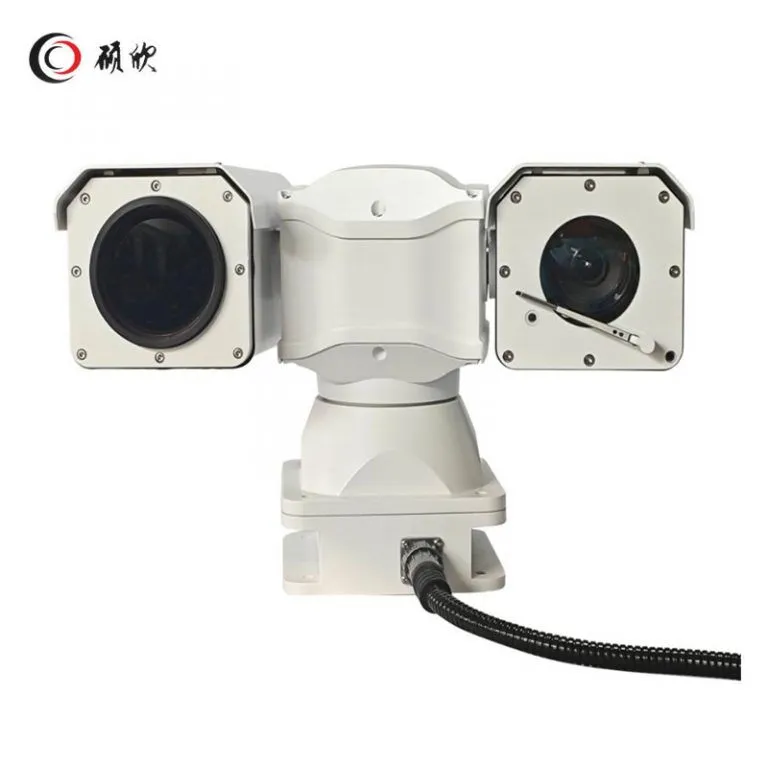
The bi-spectral long range thermal imaging PTZ camera is built just for tough outdoor jobs. The WL-TW10-4K-IR stands as a top new two-sensor PTZ watching system. It blends high-sharpness light pictures with smart heat spotting for better safety checks. Its 52x optical zoom lens (6.1–317mm) covers from a broad view of 61.8° to a tight 1.6°. This lets you watch details over huge stretches.
The built-in thermal lens (basic 50mm with other choices) spots targets over a few kilometers. This is key for power net checks, sea watches, or moving police groups. The system gives up to 14 color-change modes like “White Hot”, “Iron Red”, or “Rainbow”. These help users pick out subjects in many settings.
Smart picture steadying keeps views clear even in quick turn and tilt moves. This is a big plus when following fast cars or people over rough ground. Overall, these traits make the camera reliable for wide tasks. It handles daily needs without extra hassle.
Pan-Tilt-Zoom Mechanism and Target Tracking Capabilities
Precision Control and Coverage Area
Broad-area watching needs more than fixed spots. A PTZ setup must give smooth, quick shifts to keep watch over big zones like shorelines or long fence lines. Seek traits like full 360° turn, ±90° up-down move, and speed changes.
The strong PTZ setup offers 360° endless turn and ±90° tilt. It has fast set moves at 100°/s for turn and 60°/s for tilt. Plus, it includes 256 set spots and 8 follow paths for auto watching. These let you react fast to events without losing picture clearness.
For regular tasks like rounds, self-scan tools or set paths help cut down hand work. At the same time, they make sure the area stays covered without breaks. This balance saves time and boosts watch quality in busy spots.
Auto Tracking and Target Locking Functions
Clever follow methods are key in changing places where hand control can’t match fast targets. A good PTZ system should spot moves on its own and hold onto odd actions. This could be a person entering a no-go spot or a car going quick on a closed path.
By linking with radar feeds or video check tools, these cameras can match heat oddities with action habits. This grows their power in ahead-of-time danger spotting in lone areas or key buildings. In short, auto tracking turns basic watching into smart alerts that save effort.
Network Integration and System Compatibility
ONVIF Compliance and Protocol Support
Fitting into current setups counts as much as basic work. You want ONVIF-following devices (Profiles S/G/T) for easy match with your video handling system (VMS). Backing for RTSP or HTTP paths adds more options in far-off views or controls.
It backs ONVIF, plus H.265/H.264/MJPEG squeeze types. These keep stream quality high while cutting data use. This matters when cameras run over phone or space nets. Such features ensure smooth runs in varied network setups without drops in feed.
Flexible Integration Options
Besides path matches, custom fitting via SDK/API grows uses. If you set up in police cars with hand controls or link to city-smart builds, edge checks like move spotting, area break-ins, and line crosses give real-time warnings.
The system backs edge checks such as motion detection, intrusion detection, line crossing alerts. These make sure you get quick info from on-site gear. You don’t have to wait for back-end work. This setup speeds up responses in field ops.
Environmental Durability and Installation Requirements
Rugged Design for Harsh Conditions
In outdoor sets, from cold peaks to wet shores, your system must run without stops. A tough cover rated IP66 or better guards inner parts from dust and water entry. Made for rough spots, its IP66-rated housing handles temps from -35°C to +55°C and 90% wetness.
Extra items like cleaners or warmers keep work steady in quick temp changes or rain events. These add-ons help in places with wild weather swings. They prevent fog or freeze issues that could blur views.
Mounting Options and Power Supply Considerations
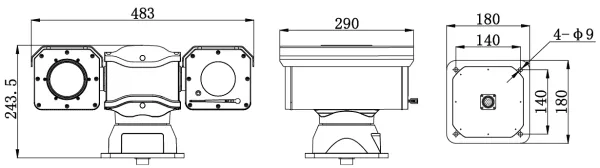
You also need to check setup needs: if the camera goes on poles, cars, towers, or walls. Weight and size shape mount kind and steady hold in wind pushes.
Power choice freedom is key, mainly in moving or far sites where normal AC isn’t there. Using PoE+, DC input, or car battery sources gives wider setup room without losing work power. This flexibility suits many real-world spots, from fixed posts to on-the-go units.
Service Support and Contact Information from Shuoxin
If you look for a solid teammate for setting up smart outdoor watching systems, Shuoxin brings lots of know-how in making safety plans fit for government, power, and public help uses. Changzhou Shuoxin Electronic Technology Co., Ltd. acts as a tech firm focused on building and making smart safety watch gear.
Their help covers before-sale tech talks to pair the right camera type with your work needs. It also includes after-setup tweaks to boost work in hard spots. Shuoxin stands out for its hands-on approach, ensuring setups work well from day one.
You can reach their skilled group easily via set contact ways on their page. This gives pro tips on PTZ thermal camera setup plans. Their team responds quick to queries, helping you pick and install with ease.
FAQ
Q: What is the typical detection range of a long-range PTZ thermal camera?
A: With lenses such as a 50mm thermal module combined with high-resolution sensors (640×512), these cameras can detect human-sized targets several kilometers away under ideal conditions. In practice, this range varies by weather and target size, but it covers most far-off needs reliably.
Q: Can PTZ thermal cameras function effectively in adverse weather conditions like fog or rain?
A: Yes, thermal imaging operates in the infrared spectrum (8–14μm), allowing it to “see through” visual obscurants like fog, smoke, or rain where visible-light cameras struggle. This makes them a go-to choice for tough outdoor tasks without light aids.
Q: What integration options do these cameras offer for existing security systems?
A: These cameras support ONVIF profiles S/G/T, RTSP/HTTP protocols, SDK/API development kits, and edge-based analytics—making them highly adaptable to VMS platforms and third-party control systems. Such options ensure they fit into any setup, big or small, with minimal tweaks.



 English
  Russian
  French
  Japanese
  Korean
  Arabic
  German
  Italian