
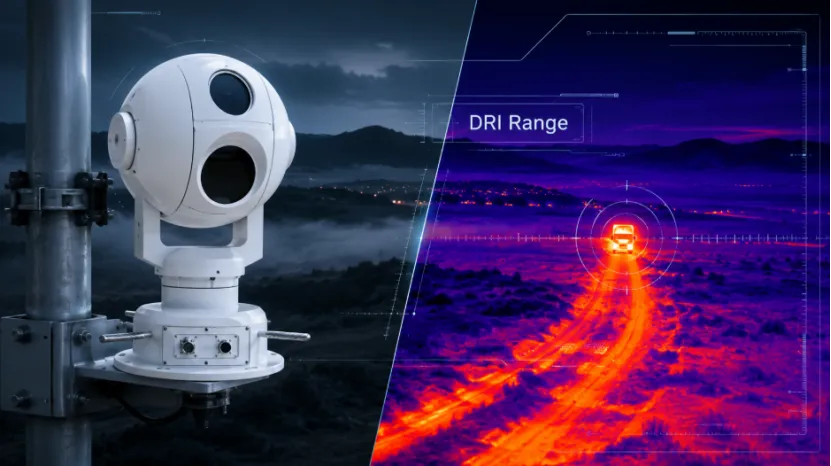
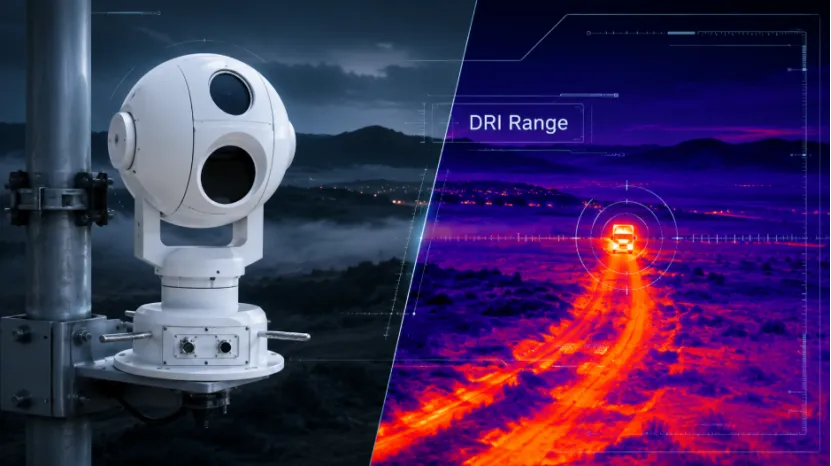
Chiedete a un fornitore qual è la portata di una termocamera. Spesso vi risponderanno con un numero unico e molto elevato. Ma quell'apparecchiatura potrebbe a malapena individuare una sagoma calda a chilometri di distanza. Di solito non ha abbastanza pixel per identificare con certezza una persona, un animale o un camion. Quindi, per una termocamera a lungo raggio, è necessaria una domanda più precisa: cosa può effettivamente rilevare, riconoscere o identificare a quella distanza specifica?
Fino a che distanza può vedere una termocamera in condizioni reali?
La portata di una termocamera può estendersi da decine di metri a diversi chilometri. Varia a seconda del bersaglio, dell'obiettivo, del rilevatore, delle condizioni meteorologiche e dell'installazione. Una pubblicazione raggio di rilevamento della termocamera Solitamente indica il punto più lontano in cui è possibile vedere qualcosa. Il raggio di identificazione della termocamera è più corto perché l'identificazione richiede un numero maggiore di pixel.
Ecco perché non esiste una risposta univoca alla domanda su quanto lontano possa vedere una termocamera. Una nave, un camion o un grande incendio sono più facili da individuare di una persona. Un motore caldo, inoltre, risalta meglio su un terreno freddo che sul cemento riscaldato dal sole.
Che cosa significano rilevamento, riconoscimento e identificazione?
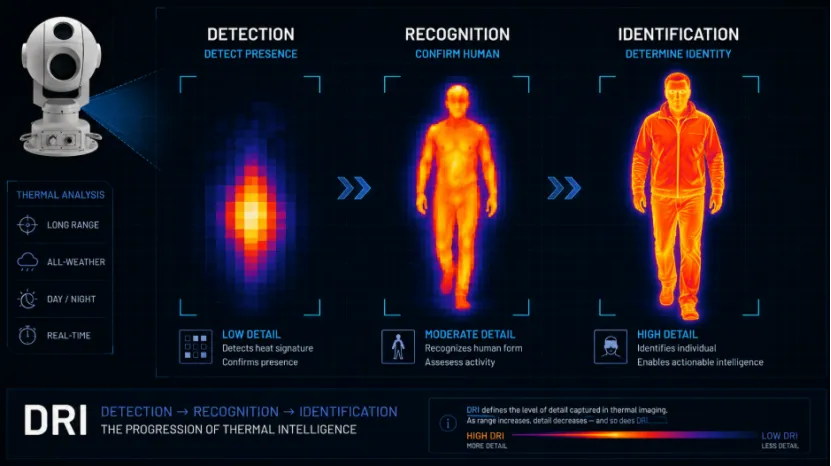
L'espressione "rilevamento, riconoscimento e identificazione" descrive tre compiti visivi. La distanza DRI della tua termocamera dovrebbe corrispondere alla decisione che il tuo team deve prendere.
Rilevamento
La funzione di rilevamento verifica la presenza di un oggetto. L'oggetto potrebbe apparire come pochi pixel caldi, rendendone impossibile la classificazione. Questa è spesso la distanza di rilevamento massima di una termocamera indicata nella scheda tecnica.
Riconoscimento
Il riconoscimento classifica il bersaglio come persona, animale, veicolo o imbarcazione. Non rivela il volto o la targa.
Identificazione
L'identificazione fornisce informazioni sufficienti per un giudizio più specifico, ma non implica automaticamente l'identificazione facciale. I dettagli probatori richiedono solitamente video visibili o visori notturni assistiti da laser.
Il termine "criteri di Johnson per l'imaging termico" si riferisce a modelli che stimano le prestazioni del DRI (Digital Reflector Index) a partire dai pixel di un bersaglio. Si tratta di una guida per la pianificazione, non di una garanzia sul campo.
Quali fattori influenzano la portata di una termocamera?
Nessuna singola specifica determina la portata di rilevamento delle immagini termiche. La scelta dell'obiettivo, la risoluzione, le dimensioni del bersaglio, il contrasto termico, le condizioni meteorologiche e la geometria del sito interagiscono tra loro. La knowledge base evidenzia che la lunghezza focale influisce sull'angolo di visuale e sulla distanza, che il PTZ supporta funzioni di panoramica, inclinazione e zoom e che l'angolo di installazione modifica la copertura utile.
Obiettivo e risoluzione
Un più lungo lunghezza focale della termocamera Posiziona più pixel su un bersaglio distante, ma restringe il campo visivo. Una lunghezza focale più corta dell'obiettivo di una termocamera copre una superficie maggiore. Lo zoom continuo consente di effettuare una ricerca ampia e poi di ispezionare i dettagli.
Una risoluzione più elevata delle termocamere può migliorare le prestazioni del DRI. Lo zoom digitale ingrandisce solo i pixel acquisiti e non può aggiungere i dettagli mancanti.
Dimensioni del bersaglio e contrasto termico
Le dimensioni del bersaglio di una termocamera sono importanti perché l'oggetto deve coprire un numero sufficiente di pixel. Il raggio di rilevamento delle termocamere per i veicoli è solitamente maggiore rispetto a quello per le persone. I veicoli sono più grandi e possono generare un calore intenso dal motore.
Anche il calore ambientale altera l'immagine. Una persona può risaltare in una notte fresca, per poi confondersi con una strada rovente. Inoltre, una persona accovacciata offre un bersaglio più piccolo.
Condizioni meteorologiche e posizione di montaggio
La portata delle termocamere in presenza di nebbia è spesso superiore a quella delle telecamere a luce visibile, ma nebbia fitta, pioggia e umidità riducono comunque la trasmissione a infrarossi. Le termocamere funzionano al buio, non in tutte le condizioni atmosferiche.
L'altezza di montaggio di una termocamera influisce sulla linea di vista, sulla distanza obliqua, sull'angolazione e sulle vibrazioni. Una torre può ridurre gli ostacoli ma aumentare il movimento del vento. Un palo più alto non è sempre la soluzione migliore.
Come si interpretano le specifiche DRI pubblicate?
Chiedete quale bersaglio, lente, rilevatore, condizione meteorologica, contrasto termico e probabilità di test sono stati utilizzati. Confermate se la cifra si riferisce al rilevamento, al riconoscimento o all'identificazione. Un'affermazione di rilevamento di veicoli a 10 km non equivale a un'affermazione di identificazione umana a 10 km.
Per un sito critico, richiedi il video originale e testa il bersaglio rilevante più piccolo alla distanza obliqua più lunga. Questo ti dà un'idea pratica distanza della telecamera termica DRI, non solo una cifra da brochure.
Dove la sorveglianza termica a lungo raggio risulta più efficace?
Una telecamera termica a lungo raggio è ideale per la sorveglianza di confini, oleodotti, porti, foreste, bacini idrici, aeroporti e autostrade. L'imaging termico rileva le tracce di calore, mentre la funzione PTZ e lo zoom ottico aiutano gli operatori a controllare gli allarmi. I sistemi di telecamere di sicurezza in rete possono integrare video, controllo remoto, allarmi e software di gestione.
In che modo Shuoxin supporta il monitoraggio a lungo raggio?
Shuoxin Fornisce sistemi di videosorveglianza a circuito chiuso e apparecchiature di sorveglianza avanzate per applicazioni di frontiera, costiere, aeroportuali, perimetrali e di polizia. Il suo sistema PTZ multispettrale sferico combina canali visibili, termici e laser su un'unica piattaforma girevole.
La termografia individua un bersaglio, la funzione PTZ lo mantiene nel campo visivo e un altro canale aggiunge dettagli quando le condizioni lo consentono. Questa soluzione è ideale per progetti che necessitano di un'ampia copertura di ricerca e di una conferma più precisa da un unico punto.
FAQ
D1: Qual è il raggio di rilevamento tipico di una termocamera?
A: Può variare da decine di metri a diversi chilometri. Le dimensioni del bersaglio, l'obiettivo, la risoluzione, le condizioni meteorologiche e il livello DRI determinano la distanza utile.
D2: Una termocamera è in grado di identificare un volto?
A: La termografia rileva e classifica principalmente le tracce di calore. Un'identificazione facciale affidabile richiede solitamente video a luce visibile.
D3: Un obiettivo più lungo aumenta sempre la portata?
A: Migliora la copertura dei pixel distanti, ma restringe l'inquadratura. Potrebbe comunque essere necessario lo zoom o un sensore grandangolare.
D4: Una termocamera può vedere attraverso la nebbia o i muri?
A: In presenza di nebbia leggera o fumo, le sue prestazioni potrebbero essere superiori a quelle di una videocamera tradizionale. Nebbia fitta e pioggia riducono la portata e non è in grado di vedere attraverso muri solidi.
D5: Come si sceglie la gamma di termocamere più adatta?
A: Definisci il bersaglio più piccolo, la distanza obliqua massima, il livello DRI richiesto, le condizioni meteorologiche peggiori e la posizione di montaggio. Quindi verifica il risultato con filmati reali o con una prova in loco.