
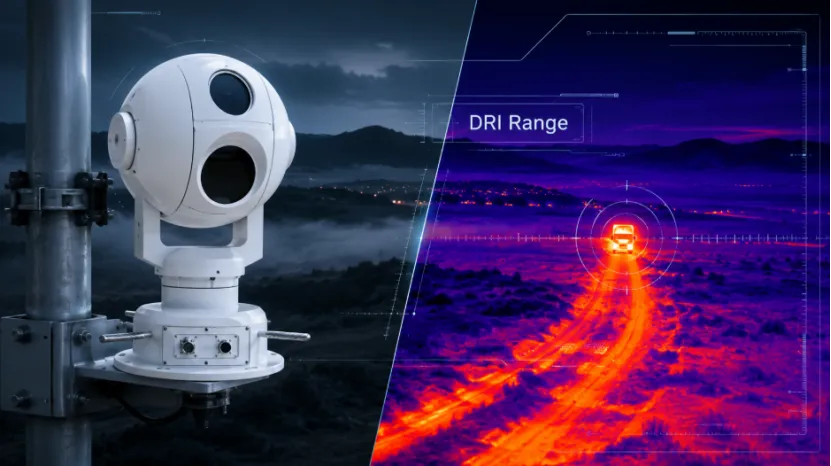
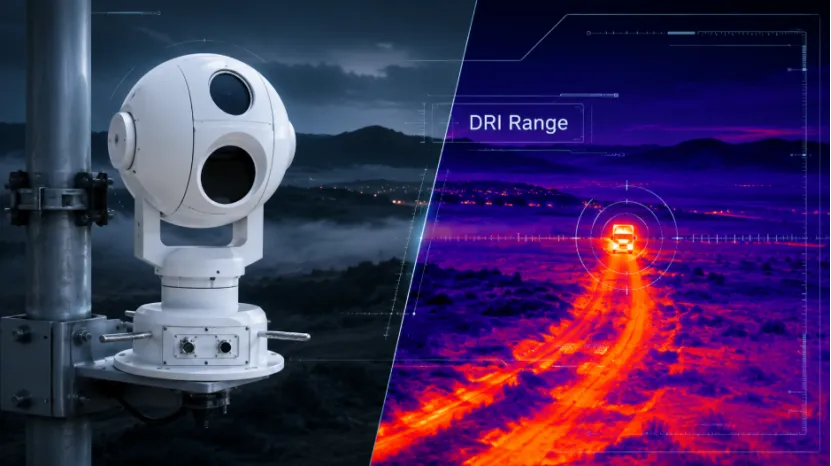
اسأل المورد عن مدى رؤية الكاميرا الحرارية. غالبًا ما يذكرون رقمًا واحدًا ضخمًا. لكن هذه الكاميرا قد ترصد شكلًا ساخنًا على بعد أميال. عادةً ما تفتقر إلى عدد كافٍ من البكسلات لتحديد هوية شخص أو حيوان أو شاحنة. لذا، بالنسبة للكاميرا الحرارية بعيدة المدى، تحتاج إلى سؤال أدق: ما الذي يمكنها رصده أو تمييزه أو تحديده فعليًا على هذا المدى تحديدًا؟
ما هو مدى رؤية الكاميرا الحرارية في ظروف العالم الحقيقي؟
قد يمتد مدى كاميرا التصوير الحراري من عشرات الأمتار إلى عدة كيلومترات. ويتغير هذا المدى تبعًا للهدف والعدسة والكاشف والظروف الجوية وطريقة التركيب. (منشور) نطاق كشف الكاميرا الحرارية عادةً ما تُشير إلى أبعد نقطة يمكن رؤية شيء ما عندها. يكون نطاق تحديد الهوية بواسطة الكاميرا الحرارية أقصر لأن عملية التحديد تتطلب عددًا أكبر من البكسلات.
لهذا السبب، لا توجد إجابة محددة بشأن مدى قدرة التصوير الحراري على الرؤية. فمن الأسهل العثور على سفينة أو شاحنة أو حريق كبير من العثور على شخص. كما أن المحرك الدافئ يبرز بشكل أفضل على خلفية باردة مقارنةً بالخرسانة الساخنة بفعل الشمس.
ماذا تعني الكشف والتعرف والتحديد؟
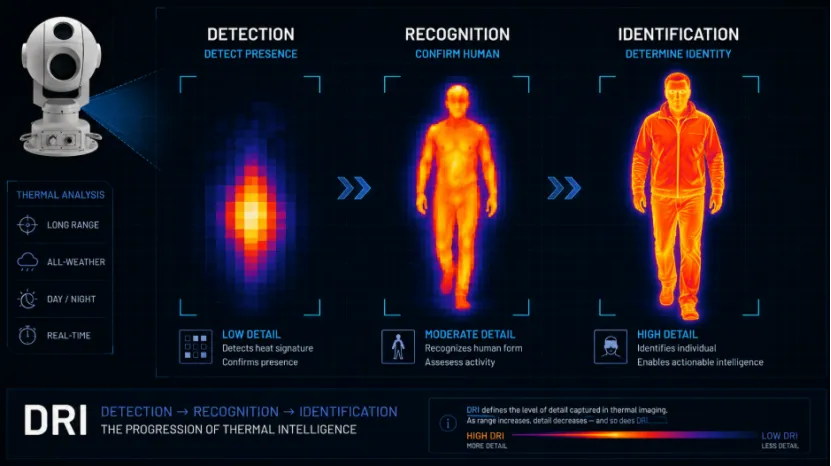
يصف مصطلح "الكشف والتمييز والتحديد" ثلاث مهام بصرية. يجب أن تتطابق مسافة الكشف والتمييز والتحديد (DRI) لكاميرا التصوير الحراري مع القرار الذي يتعين على فريقك اتخاذه.
الكشف
يكشف النظام عن وجود شيء ما. قد يظهر الهدف على شكل بضع وحدات بكسل ساخنة، لذا لا يمكنك تصنيفه. غالبًا ما تكون هذه أطول مسافة كشف للكاميرا الحرارية مذكورة في ورقة البيانات.
الاعتراف
يصنف نظام التعرف الهدف على أنه شخص أو حيوان أو مركبة أو سفينة. ولا يكشف عن الوجه أو لوحة الترخيص.
التعرف
يُتيح تحديد الهوية معلومات كافية لإصدار حكم أكثر دقة، لكنه لا يعني بالضرورة التعرف على الوجه. عادةً ما تتطلب التفاصيل الدقيقة أدلة مرئية عبر الفيديو أو تقنية الرؤية الليلية المدعومة بالليزر.
يشير مصطلح التصوير الحراري وفقًا لمعايير جونسون إلى نماذج تُقدّر أداء التصوير الحراري المباشر من خلال وحدات البكسل عبر الهدف. وهو دليل تخطيطي، وليس وعدًا ميدانيًا.
ما هي العوامل التي تؤثر على مدى الكاميرا الحرارية؟
لا توجد مواصفات محددة تتحكم في نطاق كشف التصوير الحراري. فاختيار العدسة، والدقة، وحجم الهدف، والتباين الحراري، والظروف الجوية، وهندسة الموقع، كلها عوامل تتداخل معًا. وتشير قاعدة المعرفة إلى أن البعد البؤري يؤثر على زاوية الرؤية والمسافة، وأن نظام PTZ يدعم التحريك الأفقي والرأسي والتكبير، وأن زاوية التركيب تُغير التغطية المفيدة.
العدسة والدقة
أطول البعد البؤري للكاميرا الحرارية تُركّز الكاميرا الحرارية على هدف بعيد، لكنها تُضيّق مجال الرؤية. يُغطي البُعد البؤري الأقصر لعدسة الكاميرا الحرارية مساحة أكبر. يُساعدك التكبير المستمر على البحث على نطاق واسع، ثم الفحص الدقيق.
يمكن أن تؤدي دقة الكاميرا الحرارية الأعلى إلى تحسين أداء التصوير الحراري الرقمي. أما التكبير الرقمي فيقوم فقط بتكبير وحدات البكسل الملتقطة ولا يمكنه إضافة التفاصيل المفقودة.
حجم الهدف والتباين الحراري
يُعدّ حجم الهدف في الكاميرا الحرارية عاملاً مهماً، إذ يجب أن يغطي الجسم مساحة كافية من البكسلات. وعادةً ما يكون مدى كشف الكاميرا الحرارية للمركبات أطول من مدى كشفها للبشر، لأن المركبات أكبر حجماً وقد تُصدر حرارة عالية من محركاتها.
تؤثر حرارة الخلفية أيضاً على الصورة. قد يبرز الشخص في ليلة باردة، ثم يندمج مع حرارة الطريق. كما أن الشخص المنحني يمثل هدفاً أصغر.
الطقس وموقع التركيب
غالبًا ما يكون مدى الكاميرا الحرارية في الضباب أفضل من مدى الكاميرات المرئية، لكن الضباب الكثيف والمطر والرطوبة تُضعف انتقال الأشعة تحت الحمراء. تعمل الكاميرات الحرارية في الظلام، وليس في جميع الظروف الجوية.
يؤثر ارتفاع تركيب الكاميرا الحرارية على خط الرؤية، والمسافة المائلة، والزاوية، والاهتزاز. قد يقلل البرج من العوائق ولكنه يزيد من حركة الرياح. ليس بالضرورة أن يكون العمود الأطول أفضل.
كيف ينبغي عليك قراءة مواصفات DRI المنشورة؟
استفسر عن الهدف والعدسة والكاشف والظروف الجوية وتباين الحرارة واحتمالية الاختبار المستخدمة. تأكد مما إذا كان الرقم يشير إلى الكشف أو التمييز أو التحديد. فادعاء الكشف عن مركبة على مسافة 10 كيلومترات لا يعني بالضرورة ادعاء تحديد هوية شخص على مسافة 10 كيلومترات.
بالنسبة للمواقع الحساسة، اطلب فيديو أصليًا واختبر أصغر هدف ذي صلة على أطول مسافة مائلة. هذا يمنحك حلاً عمليًا. مسافة التصوير الحراري المباشرليس مجرد رقم في كتيب.
أين يكون أداء المراقبة الحرارية بعيدة المدى أفضل؟
تُناسب كاميرات المراقبة الحرارية بعيدة المدى الحدود، وخطوط الأنابيب، والموانئ، والغابات، والخزانات، والمطارات، والطرق السريعة. يبحث التصوير الحراري عن البصمات الحرارية، بينما تُساعد خاصية التحريك والإمالة والتكبير البصري المشغلين على فحص الإنذارات. ويمكن لأنظمة كاميرات المراقبة الشبكية ربط الفيديو، والتحكم عن بُعد، والإنذارات، وبرامج الإدارة.
كيف يدعم شوكسين المراقبة بعيدة المدى؟
شوكسين تُوفر الشركة كاميرات المراقبة التلفزيونية المغلقة ومعدات مراقبة متطورة لتطبيقات الحدود والسواحل والمطارات والمحيطات وتطبيقات إنفاذ القانون. ويجمع نظامها الكروي متعدد الأطياف PTZ بين قنوات الضوء المرئي والحراري والليزر على قرص دوار واحد.
يُحدد التصوير الحراري الهدف، بينما تُبقيه الكاميرا المتحركة والمتحركة (PTZ) ضمن مجال الرؤية، وتُضيف قناة أخرى تفاصيل إضافية عند توفر الظروف المناسبة. يُناسب هذا النظام المشاريع التي تتطلب تغطية بحث واسعة وتأكيدًا أدق من نقطة واحدة.
الأسئلة الشائعة
س1: ما هو نطاق الكشف النموذجي للكاميرا الحرارية؟
A: قد تتراوح المسافة المفيدة من عشرات الأمتار إلى عدة كيلومترات. ويحدد حجم الهدف والعدسة ودقة الصورة والطقس ومستوى مؤشر الانعكاس الرقمي المسافة المفيدة.
س2: هل تستطيع الكاميرا الحرارية التعرف على الوجه؟
A: تعتمد تقنية التصوير الحراري بشكل أساسي على الكشف عن البصمات الحرارية وتصنيفها. أما التعرف الموثوق على الوجوه فيتطلب عادةً استخدام فيديو الضوء المرئي.
س3: هل العدسة الأطول تزيد المدى دائمًا؟
A: يحسّن هذا من تغطية البكسلات البعيدة ولكنه يضيّق نطاق المشهد. قد تظل هناك حاجة إلى التكبير أو مستشعر واسع الزاوية.
س4: هل تستطيع الكاميرا الحرارية الرؤية عبر الضباب أو الجدران؟
A: قد يكون أداؤه أفضل من الفيديو المرئي في الضباب الخفيف أو الدخان. أما الضباب الكثيف والمطر فيقللان من مداه، ولا يمكنه الرؤية عبر الجدران الصلبة.
س5: كيف تختار النطاق المناسب لكاميرا التصوير الحراري؟
A: حدد أصغر هدف، وأقصى مسافة ميل، ومستوى DRI المطلوب، وأسوأ الأحوال الجوية، وموقع التركيب. ثم تحقق من النتيجة باستخدام لقطات حقيقية أو اختبار ميداني.