
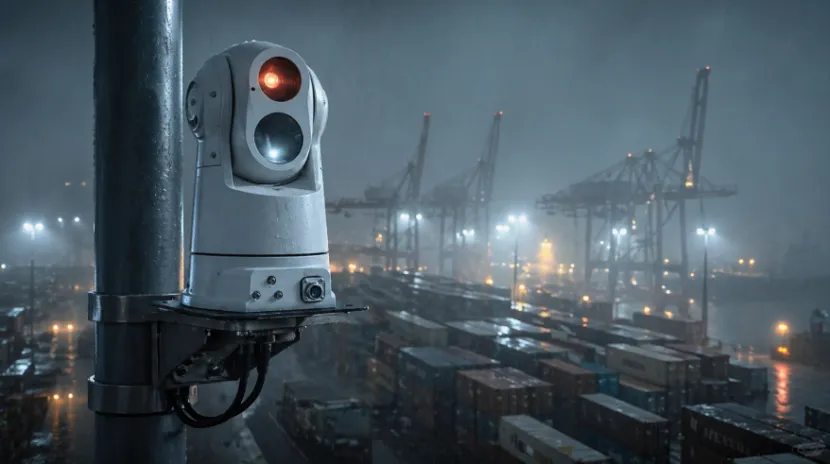
La sicurezza esterna è cambiata radicalmente. Un video nitido diurno non è più sufficiente per gestire un percorso di pattugliamento stradale, un perimetro industriale, un confine portuale, una scena di incendio o un'area di controllo urbano. È necessario vedere attraverso l'oscurità, la nebbia, la pioggia, il riverbero, il fumo e a lunga distanza. Ecco perché le telecamere termiche bispettrali stanno diventando il nuovo standard nella sicurezza esterna.
Una singola luce visibile telecamera di sicurezza esterna Una telecamera può mostrare colori e dettagli, ma dipende fortemente dalla luce. Una termocamera può rilevare il calore, ma potrebbe non fornire dettagli visivi sufficienti per decisioni rapide. Una telecamera a luce visibile e termica risolve entrambi i problemi. Ti aiuta a rilevare prima, verificare poi e tracciare il bersaglio prima che sia troppo tardi.
Perché la sicurezza esterna si sta evolvendo oltre le telecamere a luce visibile?
Le squadre di sicurezza sul campo si trovano ad affrontare situazioni problematiche. Una persona vicino a una recinzione a mezzanotte. Un veicolo che si ferma sotto la pioggia. Del fumo vicino a un centro di comando per le emergenze. Fari potenti che illuminano l'obiettivo. Non si tratta di problemi rari; accadono di continuo.
Per i siti all'aperto basta un video nitido diurno.
Il settore delle telecamere di sicurezza si sta evolvendo da semplici sistemi di registrazione a dispositivi terminali intelligenti dotati di funzionalità di rilevamento, controllo remoto, comunicazione e integrazione tra sistemi. La letteratura scientifica evidenzia come le moderne telecamere di sicurezza combinino ormai imaging ottico, intelligenza artificiale, IoT, edge computing, gestione video e funzioni di controllo remoto. Questo cambiamento è fondamentale perché la sicurezza esterna non si limita più alla semplice "registrazione degli eventi", ma mira a individuare tempestivamente i rischi e a consentire alle persone di reagire più rapidamente.
A termocamera per la sicurezza esterna Si adatta perfettamente a questo cambiamento. Rileva le tracce di calore emesse da persone, veicoli e oggetti anche in condizioni di scarsa illuminazione. Per le grandi aree esterne, questo rappresenta un notevole passo avanti rispetto all'attesa che un'immagine visibile diventi nitida.
Quali sono le caratteristiche che distinguono le termocamere bispettrali?
Una telecamera di sicurezza a doppio spettro combina l'imaging termico e quello a luce visibile in un unico sistema. Può sembrare semplice, ma sul campo cambia completamente il flusso di lavoro.
La termografia rileva, l'imaging visibile conferma
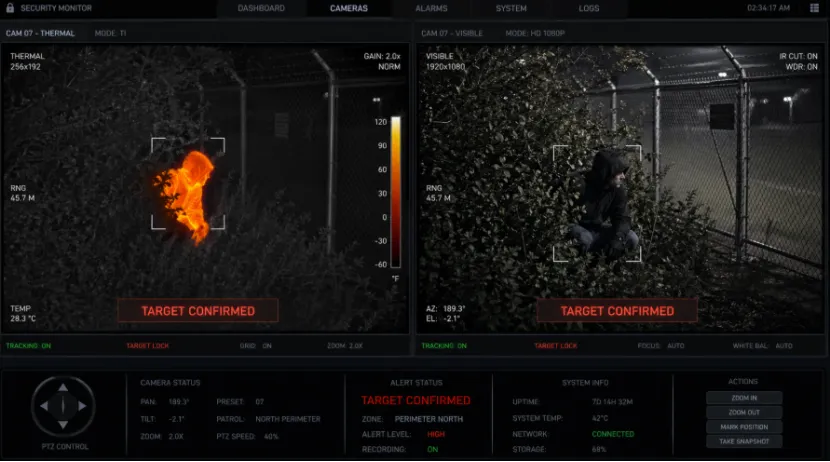
La termografia rileva il calore, non la luce. È utile per le riprese notturne, in caso di nebbia, pioggia, fumo e scarsa visibilità. L'imaging a luce visibile aggiunge colore, forma, dettagli della scena e valore probatorio. Insieme, le termocamere bispettrali per la sicurezza esterna aiutano a superare il vecchio problema di vedere "qualcosa" senza sapere di cosa si tratti.
Ad esempio, l'imaging termico può rilevare un bersaglio caldo vicino al perimetro industriale. Il canale visibile può quindi mostrare se si tratta di una persona, un veicolo, un lavoratore o un animale. Questo è il valore pratico di una telecamera PTZ visibile e termica per la sorveglianza esterna. Si collega rilevamento del bersaglio con verifica del bersaglio.
Perché le telecamere PTZ bi-spettrali sono importanti per la sicurezza a lungo raggio?
Un grande spazio esterno ha bisogno di movimento. Le viste fisse perdono troppo. È qui che entra in gioco un telecamera PTZ a lungo raggio diventa importante, soprattutto quando è in grado di trasmettere immagini sia termiche che visibili.
Le telecamere PTZ a lungo raggio coprono ampie aree esterne.
La knowledge base spiega che una telecamera PTZ a cupola combina telecamera, controllo di panoramica e inclinazione, zoom e moduli correlati in un unico alloggiamento. Può supportare la visualizzazione a 360 gradi, l'osservazione a lunga distanza e il monitoraggio di ampie aree. Ciò la rende utile per scene aperte in cui è necessario vedere più lontano e con maggiore chiarezza.
Una telecamera PTZ a lungo raggio con termocamera può scansionare un'ampia area, rilevare una fonte di calore, ingrandire e seguire il movimento. La telecamera PTZ dome a termocamera bispettrale di Shuoxin si adatta perfettamente a questo caso d'uso grazie allo zoom ottico 33x, all'obiettivo da 5,5 a 180 mm, alla rotazione continua a 360 gradi, alla velocità di panoramica preimpostata di 300°/s, alla velocità di inclinazione preimpostata di 120°/s, a 8 schemi di scansione, 8 scansioni automatiche, 4 percorsi di pattugliamento e alla funzione di homing automatico.
Non si tratta solo di un elenco di specifiche. Su un percorso di pattugliamento stradale, questi numeri significano che la telecamera può muoversi velocemente, tornare sui punti chiave e continuare a sorvegliare anche dopo un allarme.
In che modo le telecamere bispettrali riducono i falsi allarmi?
I falsi allarmi rappresentano uno dei costi maggiori nella sicurezza esterna. Fanno sprecare tempo agli operatori, tempo di intervento e, a volte, carburante. Un piccolo problema, come il movimento dei rami di un albero mossi dal vento, può trasformarsi in un grosso grattacapo alle 3 del mattino.
Il rilevamento termico rende gli allarmi più mirati
Una termocamera per la riduzione dei falsi allarmi si concentra sulle firme termiche anziché solo sul movimento visibile. Ombre, riflessi e fari possono confondere le immagini video. L'imaging termico fornisce un ulteriore livello di valutazione.
Il modello di Shuoxin supporta anche funzioni di rilevamento intelligenti come il rilevamento transfrontaliero, il rilevamento di intrusione nell'area, il rilevamento di ingresso e uscita dall'area, il rilevamento di stazionamento, il rilevamento di assembramenti di persone, il rilevamento di movimenti rapidi, il rilevamento di parcheggio, il rilevamento di cambi di scena e il rilevamento di messa a fuoco errata. Queste caratteristiche consentono a una termocamera per la sicurezza perimetrale esterna di diventare più di un semplice dispositivo video passivo. Può aiutare a filtrare gli eventi prima che si trasformino in rumore.
Perché le prestazioni in tutte le condizioni atmosferiche stanno diventando uno standard d'acquisto?
Le telecamere per esterni non possono essere utilizzate solo con il bel tempo. Se una telecamera funziona solo nelle notti serene, non è sufficiente per una seria sicurezza pubblica, per il pattugliamento stradale, la protezione perimetrale o la gestione delle emergenze.
Lo sbrinamento e l'antiappannamento sono piccoli dettagli finché non lo sono più
Una telecamera PTZ per tutte le stagioni deve essere in grado di gestire sbalzi di temperatura improvvisi, appannamento dei vetri, pioggia e notti fredde. La Shuoxin WL-HT-HD-RCX è dotata di un dispositivo di sbrinamento e antiappannamento integrato, che le consente di funzionare anche in presenza di rapidi cambiamenti di temperatura. Utilizza inoltre un rilevatore termico FPA non raffreddato VOx, con risoluzione termica di 384×288 o 640×512, intervallo spettrale da 8 a 14 μm e NETD inferiore a 35 mK.
Questo è importante nelle situazioni reali. Una telecamera montata su un veicolo di pattuglia può uscire da un ambiente caldo e chiuso, come un garage, e poi trovarsi sotto una pioggia gelida, per poi affrontare vento e nebbia stradale. Il vetro appannato può rovinare l'immagine. Sembra banale, ma molti problemi sul campo sono banali.
Quali applicazioni per esterni stanno trainando questa tendenza?
La domanda è più elevata laddove i team di sicurezza necessitano di distanza, tempi di risposta rapidi e prove più solide. Una telecamera PTZ a infrarossi a lungo raggio non serve solo per vedere lontano, ma anche per prendere decisioni più rapide quando la scena è difficile da interpretare.
Pattugliamento perimetrale, stradale e di emergenza
A Telecamera PTZ per la sicurezza perimetrale Contribuisce a proteggere impianti energetici, porti, confini industriali, aree di trasporto e zone chiave delle città. Una telecamera PTZ termica per il pattugliamento stradale è utile per la guida notturna, autostrade, ponti e scene di incidenti. Una telecamera PTZ bispettrale per il comando delle emergenze è utile laddove fumo, oscurità e visibilità instabile rendono i video normali di scarsa qualità.
Le applicazioni dei prodotti Shuoxin includono la polizia mobile, il comando delle emergenze antincendio, i sistemi di comando delle emergenze, il pattugliamento stradale mobile, la gestione urbana e l'applicazione della legge tramite veicoli speciali per l'ispezione mobile. Gli ammortizzatori opzionali per veicoli supportano anche la videosorveglianza montata su veicoli, dove le vibrazioni sono parte integrante del lavoro.
Shuoxin offre soluzioni professionali di videosorveglianza per progetti esigenti in ambienti esterni e con dispositivi mobili. L'attenzione di Shuoxin è rivolta alla videosorveglianza PTZ, alla termografia, alla sorveglianza mobile e ai sistemi video per tutte le condizioni atmosferiche. Il design dei suoi prodotti è pratico: immagini a luce visibile per i dettagli, termografia per il rilevamento, PTZ per il movimento, ONVIF Profile S/G per la connessione al sistema e controllo RS485 per l'integrazione a livello di progetto. Per chi necessita di ridurre al minimo i punti ciechi e di una migliore risposta notturna, questa combinazione è facilmente comprensibile.
Le termocamere bispettrali stanno diventando il nuovo standard per la sicurezza esterna?
Sì, e non perché la tecnologia sembri nuova. È perché il problema è cambiato. La sicurezza in ambienti esterni ora richiede l'individuazione, la verifica e il tracciamento dei bersagli su vaste aree e in condizioni di scarsa visibilità.
Una telecamera PTZ dome bispettrale offre in un unico dispositivo termografia, video HD visibile, zoom ottico, funzioni di crociera, pattugliamento, scansione automatica e integrazione di sistema. La knowledge base evidenzia inoltre che le telecamere IP possono inviare video compressi attraverso le reti e integrarsi con piattaforme di gestione video per la videosorveglianza su larga scala. ShuoxinIl supporto di H.265, H.264, MJPEG, ONVIF Profile S/G e RS485 si inserisce in questa direzione.
Per i progetti in esterni, la logica d'acquisto sta diventando chiara. Se ci si limita alla registrazione video, si rischia ancora di non individuare il rischio. Combinando il rilevamento termico, la verifica visiva e il movimento PTZ a lungo raggio, si ottiene un sistema di sicurezza più efficace.
FAQ
D1: Cosa sono le termocamere bi-spettrali?
A: Le termocamere bispettrali combinano l'imaging termico e l'imaging a luce visibile. L'imaging termico rileva le emissioni di calore, mentre l'imaging a luce visibile mostra il colore, la forma e i dettagli della scena.
D2: Perché le telecamere bi-spettrali sono più adatte alla sicurezza esterna?
A: Funzionano meglio al buio, nella nebbia, sotto la pioggia, con il fumo, con l'abbagliamento e in condizioni di scarsa visibilità. Inoltre, contribuiscono a ridurre i falsi allarmi grazie al rilevamento termico e alla verifica del bersaglio visibile.
D3: Le telecamere PTZ bi-spettrali sono adatte alla sorveglianza a lungo raggio?
R: Sì. Una telecamera PTZ bispettrale può funzionare come una telecamera PTZ dome a lungo raggio quando combina termocamera, zoom ottico 33x, rotazione a 360 gradi, funzioni di crociera, pattugliamento e preimpostazioni.
D4: In che modo una termocamera riduce i falsi allarmi?
A: Una termocamera per la riduzione dei falsi allarmi rileva le firme termiche, in modo che il rilevamento delle intrusioni sia meno influenzato da ombre, fari, riflessi, foglie e piccole variazioni meteorologiche.
D5: Dove vengono utilizzate le telecamere PTZ a infrarossi bi-spettrali?
A: Vengono utilizzati per la protezione perimetrale, il pattugliamento mobile stradale, il comando delle emergenze antincendio, la gestione urbana, la sicurezza delle infrastrutture critiche, l'ispezione di veicoli speciali e la sorveglianza a bordo di veicoli.