
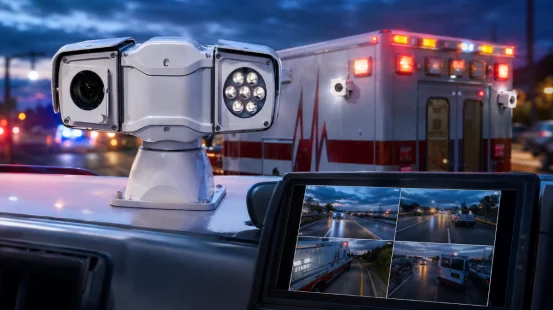
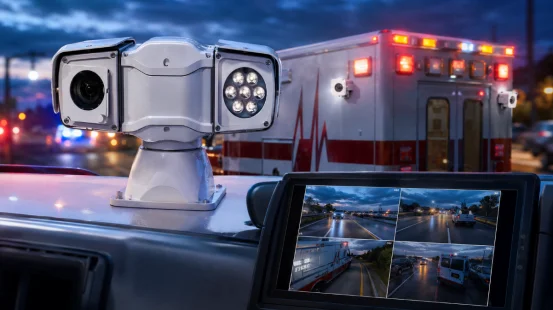
Un sistema di telecamere per ambulanze deve fare più che registrare la strada davanti. Il tuo veicolo potrebbe attraversare un incrocio ad alta velocità, raggiungere una scena buia a bordo strada, fare retromarcia vicino ai pedoni o ricevere un reclamo settimane dopo. Un sistema completo sistema di sorveglianza delle ambulanze Integra telecamere esterne, una telecamera per il vano pazienti, registrazione locale, accesso remoto e regole di gestione dei dati chiare.
Una telecamera PTZ esterna del veicolo sorveglia l'esterno. Una telecamera interna dell'ambulanza registra l'area del paziente. Un DVR mobile per uso ambulanza memorizza diversi canali e li collega a un sistema di monitoraggio della flotta di ambulanze.
Cosa include un sistema di telecamere per ambulanza?
Iniziate dalla copertura, non da una lunga lista di attrezzature. Mappate la parte anteriore, posteriore, i lati, la cabina e qualsiasi punto di osservazione a lungo raggio prima di scegliere l'hardware.
Telecamere esterne fisse e punti ciechi
Una telecamera per l'angolo cieco di un'ambulanza fornisce una visuale continua a lato o dietro il veicolo. Le telecamere anteriori, posteriori e laterali sono utili durante i cambi di corsia, le manovre in retromarcia e gli ingressi ristretti degli ospedali. A differenza di una telecamera PTZ per ambulanze, una telecamera fissa non può ruotare al di fuori della zona assegnata.
Monitoraggio PTZ esterno
Una telecamera PTZ esterna per veicoli aggiunge rotazione controllata e zoom ottico. Può essere utilizzata per ispezionare la scena di un incidente o per consentire a un centro di comando di visualizzare l'attività da un'angolazione diversa. ShuoxinLa telecamera PTZ per veicoli con visione notturna da 150 m combina immagini 1080p, zoom ottico 33x, rotazione a 360 gradi e illuminazione a infrarossi.
Vano pazienti e apparecchiature MDVR
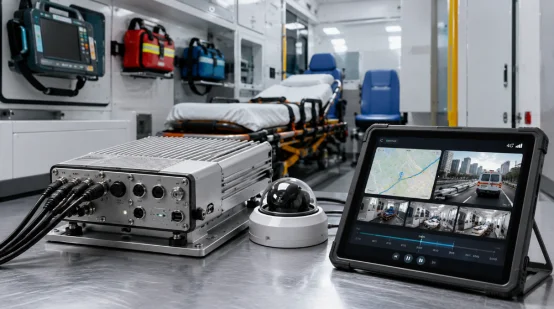
La telecamera del vano pazienti riprende l'abitacolo, non la strada. Supporta la registrazione video del vano pazienti e il controllo degli eventi. Il sistema di telecamere MDVR dell'ambulanza riceve diversi canali, li registra localmente e invia i flussi selezionati a una piattaforma remota. L'MDVR è il registratore, non la telecamera.
Perché una dash cam standard non è sufficiente?
Una telecamera di bordo riprende in una sola direzione. Un'ambulanza si muove nel traffico complesso e spesso si ferma dove gli automobilisti normali non si fermano. Una singola visuale frontale raramente permette di ricostruire l'intero evento.
La guida ad alta velocità necessita di una copertura più ampia
Un sistema di telecamere per la guida in situazioni di emergenza dovrebbe mostrare le aree che gli specchietti retrovisori non riescono a coprire bene. Le telecamere laterali possono rivelare una motocicletta accanto al veicolo. Una telecamera posteriore mostra il traffico durante una frenata improvvisa. Una telecamera per la retromarcia delle ambulanze è utile in prossimità delle aree di carico/scarico e degli ingressi affollati dei pronto soccorso.
Punti di vista multipli creano registrazioni migliori
Le prove video di un'ambulanza sono più utili quando le immagini provenienti dalla parte anteriore, posteriore, laterale e interna condividono una stessa sequenza temporale. Un sistema di registrazione video di un incidente che coinvolge un'ambulanza può mostrare cosa è successo prima dell'impatto, dove si è fermato il veicolo e chi si è avvicinato successivamente. Questo è importante durante un'indagine o in caso di richiesta di video in una controversia sulla responsabilità del servizio di ambulanza.
In che modo la visione notturna supporta le chiamate di emergenza?
Le prestazioni notturne dipendono da molti fattori, non solo dalla distanza indicata sulla scheda tecnica. Fari, pioggia, segnaletica riflettente, dimensioni del bersaglio e posizione dell'obiettivo influenzano tutti il risultato.
Strade scarsamente illuminate e paesaggi lontani
UN sistema di telecamere per ambulanze La visione notturna può aiutarti a individuare persone, ostacoli e veicoli durante le chiamate a tarda notte. Una telecamera per ambulanza con visione notturna e illuminazione a infrarossi può produrre immagini in bianco e nero al buio, mentre la riduzione del rumore aiuta a preservare i dettagli.
La telecamera PTZ indicata utilizza un obiettivo da 5,5 a 180 mm, uno zoom ottico 33x e una portata a infrarossi dichiarata di 150 m. Il suo campo visivo varia da 60,5 gradi in grandangolo a 2,3 gradi in teleobiettivo. La gamma più ampia di telecamere PTZ per veicoli include altre configurazioni di imaging.
Condizioni meteorologiche e movimento dei veicoli
Una telecamera robusta per veicoli di soccorso deve essere in grado di resistere a vibrazioni, pioggia, polvere e sbalzi di temperatura improvvisi. Tra le caratteristiche utili si annoverano ammortizzatori, vetro riscaldato, sistema antiappannamento, tergicristallo e un sistema di montaggio sicuro. La telecamera PTZ in questione vanta una protezione IP66, un funzionamento a temperature comprese tra -35 °C e +55 °C e una resistenza agli urti di almeno 4G. Una lente nitida anche in caso di pioggia fredda non è un dettaglio da poco.
Come funziona un sistema di telecamere MDVR per ambulanze?
Il percorso del segnale è semplice: le telecamere acquisiscono il video, l'MDVR lo memorizza, una rete mobile trasmette i flussi selezionati e la piattaforma di gestione controlla l'accesso.
Registrazione locale in caso di perdita di rete
La registrazione delle telecamere delle ambulanze in caso di interruzione della rete è fondamentale. Gallerie, rampe sotterranee per gli ospedali e strade rurali possono interrompere il servizio 4G. La registrazione video locale dell'ambulanza deve continuare anche quando la visualizzazione in diretta si interrompe. È possibile mantenere il flusso principale in locale e inviare un flusso secondario più leggero per la visualizzazione remota.
La capacità di archiviazione dei sistemi MDVR delle ambulanze dipende dal numero di telecamere, dalla risoluzione, dalla frequenza dei fotogrammi, dal bitrate, dal codec, dalla pianificazione della registrazione e dai giorni di conservazione. La registrazione video in formato H.265 può ridurre le esigenze di archiviazione e trasmissione, ma il calcolo richiede comunque che la scena sia realistica.
Accesso remoto e recupero degli incidenti
Monitoraggio video remoto per le ambulanze Consente al personale autorizzato di controllare i canali in diretta, lo stato del dispositivo e le registrazioni storiche. Un sistema di telecamere per ambulanze con monitoraggio remoto può supportare la ricerca basata sul tempo, la riproduzione e l'esportazione controllata. Un sistema di telecamere per ambulanze con accesso remoto 4G dovrebbe comunque registrare localmente. Scoprire che la registrazione remota era l'unica registrazione disponibile in un tunnel è un'esperienza spiacevole.
Come si dovrebbero proteggere i video delle stanze dei pazienti?
I video interni possono riprendere pazienti, personale medico, conversazioni ed eventi sensibili. La privacy dei video registrati nelle stanze dei pazienti richiede una politica specifica, anziché essere trattata come quella dei filmati stradali.
Regole di accesso, archiviazione e verifica
La sicurezza dei dati video delle ambulanze dovrebbe includere l'archiviazione crittografata, i ruoli utente, la trasmissione sicura, le autorizzazioni di esportazione e i registri di controllo. Il controllo degli accessi alle telecamere delle ambulanze può separare le riprese esterne da quelle dell'area pazienti. I periodi di conservazione devono essere conformi alle leggi locali, ai contratti e alle politiche del servizio di emergenza medica.
La telecamera installata nella cabina dell'ambulanza deve riprendere l'area necessaria senza creare inquadrature superflue. Se è inclusa la registrazione audio, specificare il motivo della sua necessità e chi può accedervi.
Come scegliere il sistema di telecamere per ambulanza più adatto?
Quando si sceglie un sistema di telecamere per ambulanze, è fondamentale valutare i rischi e i flussi di lavoro. La sola risoluzione non è sufficiente per stabilire se il sistema è adatto al veicolo.
Una pratica lista di controllo per gli acquisti
Verifica la copertura fissa per la parte anteriore, posteriore e laterale. Decidi se è necessaria una telecamera PTZ montata sul tetto per la sorveglianza dell'ambulanza. Conferma i canali MDVR, l'archiviazione locale, la riproduzione remota, le autorizzazioni utente e il comportamento in caso di perdita di rete. Per l'integrazione del sistema di telecamere per ambulanze, verifica i codec, il supporto ONVIF, le API della piattaforma e il controllo PTZ remoto per le operazioni di soccorso.
Il miglior sistema di telecamere per ambulanze solitamente combina telecamere fisse, una telecamera PTZ opzionale, una telecamera per il vano pazienti e un registratore multicanale. Prima della consegna, è fondamentale testare la stabilità dell'alimentazione, le vibrazioni, la sincronizzazione oraria e il recupero dei file. Un'installazione impeccabile serve a poco se le riprese scompaiono dopo un riavvio forzato.
Dai requisiti del veicolo alla scelta di una soluzione PTZ pratica.
Una volta pianificati i punti ciechi corretti, la registrazione in cabina e l'archiviazione MDVR, è possibile valutare se la copertura PTZ a lungo raggio apporti un reale valore aggiunto.
Shuoxin progetta e produce apparecchiature intelligenti per il monitoraggio della sicurezza, tra cui sistemi di telecamere PTZ, a infrarossi, termiche e di rete montate su veicoli. Il suo modello per veicoli da 150 m supporta il controllo ONVIF, web o RS485, la compressione H.265/H.264/MJPEG, 256 preset e diverse configurazioni di montaggio. Questi dettagli sono adatti agli appaltatori che necessitano di una telecamera PTZ esterna all'interno di un sistema più ampio. sistema di telecamere per veicoli di emergenzaIntegra il sistema di telecamere della flotta EMS anziché sostituire il registratore video multiutente (MDVR) o le telecamere interne.
FAQ
D1: Cosa include un sistema di telecamere per ambulanza?
A: Telecamere esterne fisse, una telecamera PTZ opzionale, una telecamera per il vano pazienti, un MDVR, memoria locale, display e software di gestione remota.
D2: Una telecamera PTZ può eliminare tutti i punti ciechi di un'ambulanza?
R: No. Una telecamera PTZ può ruotare allontanandosi dalla zona di guida. Le telecamere fisse sono più adatte per una copertura continua dell'angolo cieco.
D3: È possibile visualizzare i video delle ambulanze da remoto?
R: Sì, quando il registratore, la rete mobile e la piattaforma supportano la visualizzazione in diretta o la riproduzione. La registrazione locale dovrebbe continuare anche in caso di perdita di connessione.
D4: Qual è la differenza tra una telecamera per la stanza del paziente e un MDVR?
A: La telecamera riprende le immagini della cabina. L'MDVR registra, memorizza e trasmette i video provenienti da una o più telecamere.
D5: Per quanto tempo devono essere conservati i video delle ambulanze?
A: Stabilire il periodo in base alla legislazione locale, alle politiche del servizio di emergenza medica, ai termini contrattuali, alla capacità di archiviazione e al tipo di filmati raccolti.