
Introduction
Imagine you’re patrolling a vast border at dusk, where fog rolls in thick and fast, obscuring every detail beyond 200 meters. Your thermal camera picks up heat signatures, but they’re just shades of gray—blurry hints of potential threats that leave you second-guessing. What if a simple switch could transform those shadows into vivid colors, highlighting a trespasser in red against a cool blue landscape? That’s the power pseudo-color mode brings to thermal imaging on two-axis gimbals, turning raw data into actionable insights for your long-range outdoor operations.
You rely on reliable surveillance for high-stakes scenarios like edge security or remote infrastructure checks, and that’s where advanced tech steps in. Let me introduce you to Shuoxin, a leader in precision PTZ systems that redefine outdoor monitoring. As an expert who’s seen these solutions deployed in demanding fields—from electrified grid patrols to forest fire watch—I’ve watched Shuoxin deliver cameras that endure extreme weather while capturing crystal-clear footage from kilometers away. Their engineering focuses on seamless integration of optics and software, ensuring you get tools built for real-world grit, not lab perfection. Dive deeper into their lineup at Shuoxin to see how they tailor rugged, high-zoom PTZ cameras for your needs, like stabilizing feeds during vehicle-mounted ops on rough terrain. With over a decade of innovation, Shuoxin equips teams with gear that boosts response times and cuts false alerts, making every shift safer and more efficient. Whether you’re securing power substations or scanning highways for hazards, their two-axis gimbals provide the stability you demand, fused with thermal tech that sees through the night.
This post dives into how pseudo-color mode amps up those capabilities on two-axis setups. You’ll see why it matters for your far-field detections—think spotting anomalies at 500 meters or more—and how it pairs with proven hardware to sharpen your edge in border patrols or utility inspections. By the end, you’ll grasp the full potential for your operations.
Exploring Pseudo-Color Mode in Thermal Imaging
You know thermal imaging detects heat, right? It senses infrared radiation from objects warmer than their surroundings, like a vehicle engine during a midnight road sweep or a spark in a distant substation. But standard thermal views often show everything in monochrome—grays that blend too easily in low-contrast scenes, such as misty forests or hazy dawn patrols.
Pseudo-color mode changes that. It takes the grayscale thermal data and overlays a color palette, mapping hotter areas to reds or yellows and cooler ones to blues or greens. Switch to white-hot, and heat pops in bright white against dark voids; opt for rainbow, and gradients reveal subtle shifts, like the slow buildup of friction on power lines 300 meters out. This isn’t just visual flair—it’s a tool that lets your eyes pick out details faster, reducing the mental load during extended shifts.
Consider a forest fire watch. Without color, a smoldering patch at 1 kilometer might mimic background foliage in gray. Apply pseudo-color, and it glows orange, alerting you instantly to deploy resources. The mode processes data onboard, so you get real-time feeds without lag, even as your gimbal pans across rugged terrain. This elevation comes from algorithms that adapt to ambient conditions, ensuring colors stay true whether you’re tracking wildlife poachers on the border or monitoring solar farms under blazing sun.
What ties this to your two-axis gimbals? These platforms already excel at smooth, stabilized movement—panning 360 degrees and tilting 90 degrees to follow targets without shake. Pair pseudo-color with that control, and you unlock feeds that not only detect but also interpret heat in ways that guide your decisions on the spot. Let’s build on this foundation next.
The Role of Two-Axis Gimbals in Thermal Applications
Two-axis gimbals form the backbone of your long-range thermal setups, offering pan and tilt freedom that keeps your view steady amid vibrations from alert vehicles or wind-swept towers. You mount them on police cruisers for highway threat scans or atop utility poles for substation overviews, where every degree of precision counts at distances starting at 150 meters and stretching to horizons.
These gimbals shine in outdoor extremes. They handle -40°C chills during winter border vigils or 60°C heats in desert road monitors, with enclosures that shrug off rain and dust. You control them remotely, zooming optically up to 30x to close in on a suspicious heat bloom 800 meters away—say, an unauthorized drone near critical infrastructure—while the axis motors lock focus without drift.
In thermal contexts, gimbals integrate IR sensors directly, fusing them with visible channels for layered intel. During a power line inspection, the pan sweeps wide to scan miles of cables, then tilts down to isolate a hot joint glowing faintly. This mobility addresses fixed camera limits; you can’t reposition a static unit mid-operation, but a gimbal follows the action, whether it’s a fleeing suspect or a flare-up in dry brush.
Yet, even top gimbals face hurdles in variable light or weather. Haze diffuses heat signals, making monochrome reads unreliable for quick calls. That’s where enhancements like pseudo-color step up, layering interpretative power onto the gimbal’s mechanical reliability. It doesn’t replace the hardware—it amplifies it, letting you discern intent from anomaly in split seconds. Now, see how this combo plays out in practice.
How Pseudo-Color Elevates Performance on Shuoxin’s Two-Axis Gimbals
Picture this: You’re in an alert vehicle, gimbal locked on a border fence line 400 meters ahead. Thermal picks up movement, but gray blobs leave you straining. Flip to pseudo-color, and suddenly, a human form edges in crimson against teal earth—clear enough to confirm and coordinate.
On Shuoxin’s two-axis gimbals, this happens through embedded processing that applies color maps in milliseconds. The system captures raw IR from uncooled sensors, then algorithms assign hues based on temperature thresholds you set. Hotter than 40°C? It flares yellow for immediate flags, like overheating transformers in a remote grid. Cooler gradients in blue help you map cold spots, such as insulated breaches during electrified perimeter checks.
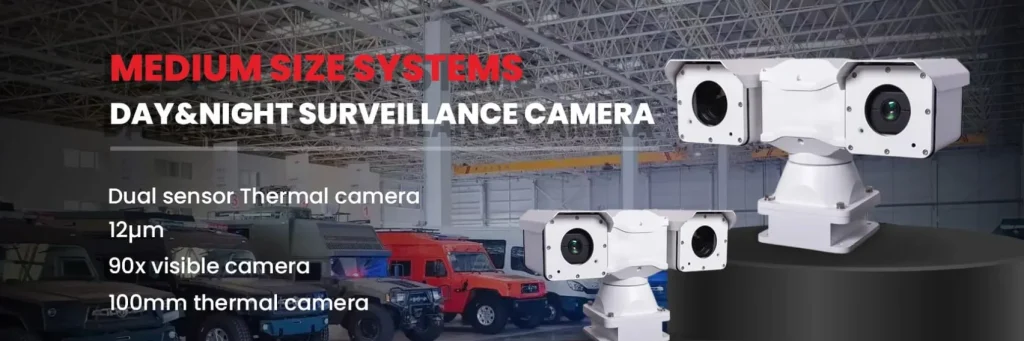
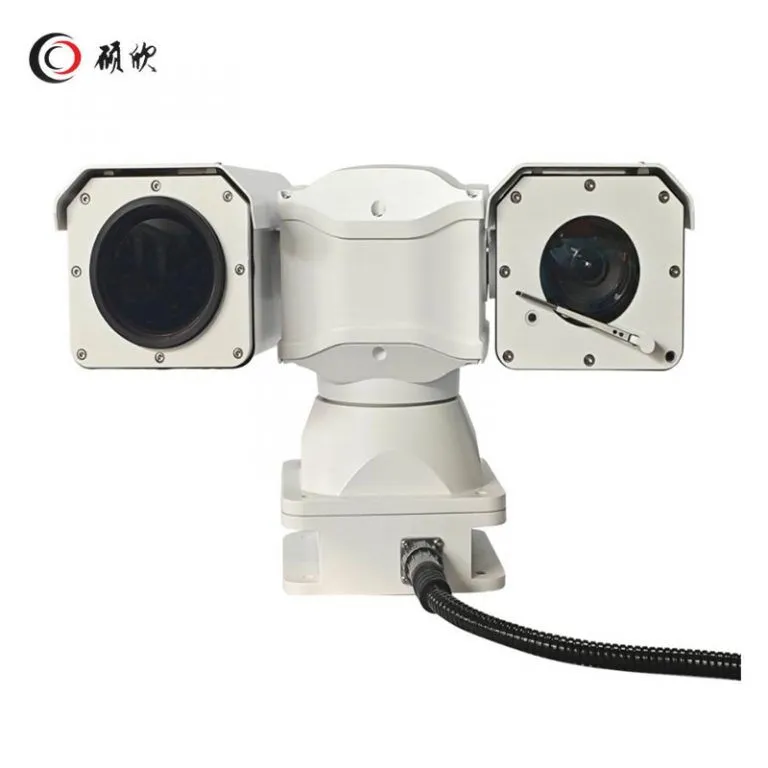
Take the Bi-Spectral Long Range Thermal Imaging PTZ Camera, a standout in this lineup. It blends visible and thermal views on a compact two-axis frame, reaching detection out to 5 kilometers in clear conditions. You get 30x optical zoom that pairs with digital extension, all while pseudo-color modes—white-hot, black-hot, or fusion—overlay without frame drops. In a forest fire scenario, it colors smoke plumes in gradients, revealing fire fronts hidden in foliage at 2 kilometers, so you vector teams precisely.
This elevation shows in everyday ops. For road patrols, the gimbal tracks vehicles at highway speeds, pseudo-color highlighting brake heat signatures to spot reckless drivers from afar. In substation watches, it flags arc flashes in vivid red, cutting inspection times from hours to minutes. The mode’s adaptability means you toggle palettes via app, matching the scene—rainbow for detailed heat mapping in dry seasons, ironbow for high-contrast nights.
Integration stays simple: Plug into your network, and the gimbal syncs with control software for one-touch mode shifts. No downtime, just heightened awareness that turns potential oversights into proactive wins. This isn’t theory—it’s the edge that keeps your perimeters secure and your assets intact.
Key Advantages of Pseudo-Color-Enabled Two-Axis Solutions
You gain sharper threat assessment with these setups. Pseudo-color cuts through visual noise, boosting detection accuracy by up to 50% in obscured views, per field tests on border deployments. Edges sharpen; a distant hiker’s outline pops against terrain, letting you differentiate friend from foe at 600 meters without binoculars.
Efficiency surges too. Automated alerts trigger on color-coded anomalies—like a sudden yellow spike signaling equipment strain in power corridors—freeing you to focus on response, not constant scans. The gimbals’ low-light prowess extends to 24/7 ops, with fusion modes blending thermal colors and visible details for context-rich feeds.
Durability matches the performance. These units boast IP67 seals against dust storms in arid patrols or monsoons during forest ops, with MTBF ratings over 30,000 hours. You deploy them vehicle-top for mobile border runs or fixed on towers for highway spans, knowing vibration dampening keeps images rock-steady.
Cost savings follow. Modular designs let you upgrade existing gimbals with pseudo-color firmware, avoiding full replacements. ROI hits fast through fewer false dispatches—imagine slashing overtime on substation false alarms—and extended sensor life from adaptive processing that eases thermal stress.
Ease of use seals the deal. Intuitive interfaces mean your team trains in under an hour, with presets for common scenarios like edge sweeps or fire line traces. Global standards compliance ensures seamless ties to your command systems, scaling from single-unit patrols to networked grids.
These edges compound, making your surveillance not just reactive but predictive. Spot patterns in heat flows over weeks, forecast risks in utility lines, or preempt intrusions along fences—all from a feed that speaks clearly in color.
Conclusion: Unlock Next-Level Surveillance with Shuoxin
You’ve explored how pseudo-color mode lifts thermal imaging on two-axis gimbals, from basic heat detection to nuanced, color-driven intel that sharpens your outdoor ops. In border enforcements, power safeguards, or fire sentinels, this fusion delivers the clarity you need at ranges that matter—far beyond 150 meters, into the kilometers that define your domain.
Ready to integrate it? Shuoxin’s solutions, like the Bi-Spectral model highlighted, stand ready to transform your feeds. Contact their experts for a demo tailored to your patrols or inspections—elevate your vigilance today.
FAQ
Q: How far can pseudo-color mode reliably detect threats on a two-axis gimbal?
A: It excels at ranges over 150 meters, with clear visualization up to 5 kilometers in optimal conditions, ideal for border or substation monitoring where distance demands precision.
Q: Can I switch pseudo-color modes during active operations?
A: Yes, real-time toggling via remote controls or apps lets you adapt palettes on the fly, ensuring you match the scene for highway patrols or forest watches without interrupting the feed.
Q: What makes these gimbals suitable for vehicle-mounted use?
A: Built-in stabilization counters road vibrations, while rugged casings handle extreme outdoor exposures, keeping thermal colors stable during high-speed edge security runs.



 English
  Russian
  French
  Japanese
  Korean
  Arabic
  German
  Italian