
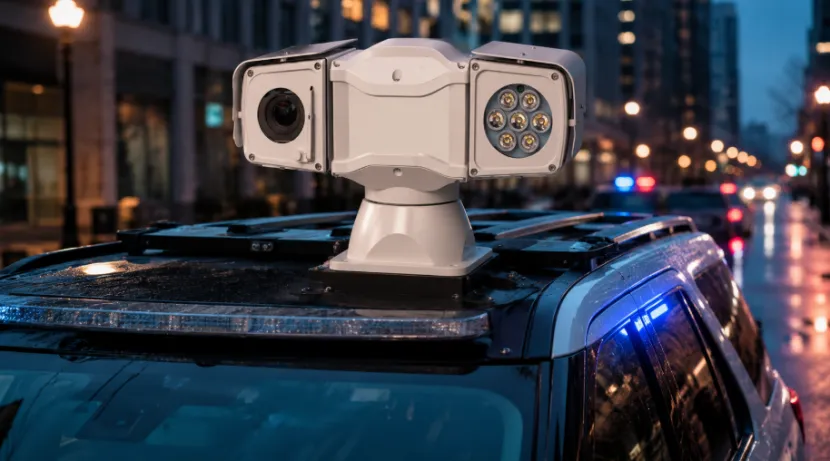
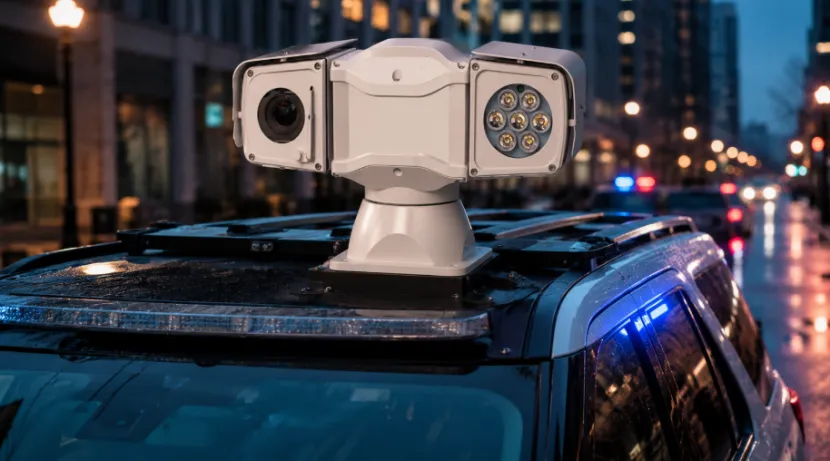
Choisir un caméra PTZ pour véhicule L'achat d'une caméra de surveillance mobile est différent de celui d'une simple caméra embarquée. Une caméra embarquée enregistre ce qui se passe devant le véhicule. Une caméra de surveillance mobile doit couvrir des scènes changeantes, des personnes en mouvement, les bords de route, les zones sombres et parfois une situation d'urgence sans éclairage adéquat.
Pour les voitures de police, les véhicules d'inspection et les véhicules de commandement, la caméra appropriée devrait vous permettre de mieux voir, de réagir plus rapidement et de conserver des enregistrements vidéo utiles.
Shuoxin est un fabricant de caméras de sécurité à la pointe de la technologie, spécialisé dans les systèmes de surveillance intelligents. Sa gamme de produits comprend des caméras PTZ pour véhicules, des caméras PTZ marines, des caméras PTZ à déploiement rapide, des modules de caméras et des produits de surveillance mobile associés.
L'entreprise combine la conception de produits, la gestion de la production, les équipements de test et l'assistance à l'application des projets, un atout essentiel lorsqu'il s'agit de fournir une caméra pour de véritables véhicules, et non pour une simple démonstration en salle d'exposition. La caméra PTZ pour véhicules avec vision nocturne de 150 m est conçue pour la surveillance de véhicules, de navires, de véhicules des forces de l'ordre, de véhicules d'urgence, de véhicules de lutte contre l'incendie et d'ambulances.
Pourquoi une caméra PTZ pour véhicule est-elle différente d'une caméra de voiture classique ?
Une caméra de surveillance embarquée classique offre souvent une vue fixe. Cela peut suffire pour les rapports de conduite, mais c'est insuffisant pour les patrouilles mobiles, l'inspection des routes ou les missions de commandement. caméra PTZ montée sur véhicule Vous pouvez faire pivoter la rotation, incliner le corps et zoomer, vous n'êtes donc pas limité à un seul angle.
La vision fixe peut laisser des angles morts autour du véhicule.
La base de connaissances sur les caméras de sécurité explique qu'une caméra PTZ permet des mouvements panoramiques, d'inclinaison et de zoom, offrant ainsi une surveillance à 360 degrés, à longue portée et avec un champ de vision élargi. Elle précise également qu'une caméra PTZ sans dôme s'installe facilement sur une surface horizontale, comme le toit d'un véhicule. Ce détail d'installation, bien que mineur, est important. Sur un SUV de patrouille ou un fourgon d'inspection, le toit offre souvent la meilleure vue.
En matière de surveillance mobile, les angles morts autour du véhicule constituent un problème courant. Une personne peut se trouver derrière la voiture. Un incident de la route peut survenir sur le côté. Une caméra fixe risque de ne pas le détecter. Une caméra PTZ embarquée à 360° offre un meilleur contrôle sans avoir à déplacer constamment le véhicule.
De quelle portée de vision nocturne avez-vous besoin ?
La portée de la vision nocturne doit correspondre à votre distance de patrouille réelle. Un parking, une route portuaire, une entrée de zone industrielle et une route de campagne ne nécessitent pas la même portée. Certains acheteurs ne vérifient que la résolution, puis constatent que la caméra ne fonctionne pas correctement en faible luminosité. C'est une erreur regrettable.
Vision nocturne infrarouge de 150 m adaptée à de nombreuses situations mobiles
La base de connaissances précise que la vision nocturne influe sur la netteté des images la nuit, et que les types courants incluent l'infrarouge, la vision nocturne optique, la vision couleur et la vision nocturne à lumière noire. Elle indique également que les caméras extérieures doivent être étanches à l'eau et à la poussière car elles sont exposées à de fortes pluies et aux intempéries.
Pour une caméra PTZ embarquée à vision nocturne, une vision nocturne infrarouge de 150 m est idéale pour les patrouilles routières mobiles, les contrôles de périmètre et les interventions d'urgence. La Shuoxin WL-HD-TW10 utilise un éclairage LED infrarouge avec une portée de 150 m, ainsi qu'une sensibilité de 0,001 lux en couleur et de 0,0005 lux en noir et blanc en faible luminosité. Cela signifie que la qualité de la caméra ne dépend pas uniquement de la portée de la vision nocturne ; le capteur est tout aussi important.
Pourquoi le zoom optique est-il important en surveillance mobile ?
A Caméra PTZ pour surveillance mobile Il ne suffit pas d'avoir une vue d'ensemble. Il faut aussi pouvoir vérifier les détails. Un véhicule de commandement peut avoir besoin de surveiller une entrée située à 80 mètres. Une voiture de police peut avoir besoin de contrôler des mouvements suspects près d'une route peu éclairée. C'est là que le zoom optique prend tout son sens.
Le zoom optique 33x facilite la vérification des détails à longue distance.
La WL-HD-TW10 est une caméra PTZ embarquée avec zoom optique 33x, objectif motorisé 5,5–180 mm et champ de vision de 60,5° à 2,3°. Le grand angle permet de balayer la zone, tandis que le téléobjectif offre un contrôle précis des personnes, véhicules, portails, barrages routiers ou contours d'incendie. Ce produit prend également en charge l'enregistrement vidéo 1080p, la compression H.265/H.264/MJPEG et un zoom avant/arrière d'environ 3,5 secondes.
Une petite remarque suite à une mission sur le terrain : le zoom ne sert pas seulement à « voir loin ». Il permet également de maintenir le véhicule à une distance de sécurité lorsque la situation est incertaine.
Quelle plage de contrôle PTZ est adaptée à une utilisation dans un véhicule ?
Une bonne caméra PTZ mobile doit se déplacer de manière fluide et rapide. Si la caméra pivote trop lentement, la cible risque d'avoir disparu. Si l'amplitude d'inclinaison est limitée, vous risquez de manquer un point de vue en contre-plongée à proximité ou un bâtiment plus élevé.
La commande PTZ à 360° réduit les angles manqués
La WL-HD-TW10 prend en charge une rotation continue à 360°, une plage d'inclinaison de +90° à -90°, une vitesse de panoramique préréglée jusqu'à 100°/s, une vitesse d'inclinaison préréglée jusqu'à 60°/s, 256 positions préréglées et 8 trajectoires de suivi. Ces fonctionnalités permettent de réaliser des prises de vue en toute simplicité. Caméra PTZ embarquée pour voitures de police ou une caméra PTZ pour véhicules de commandement permettant de couvrir plus rapidement les zones avant, arrière, gauche et droite.
La base de connaissances mentionne également que la surveillance à 360° embarquée sur véhicule permet de pallier les limitations de portée des patrouilles, la lenteur des interventions, les données manquantes et la faible visibilité du poste de commandement. Elle associe la vision panoramique, le zoom optique, la surveillance en temps réel, la commande à distance et l'exportation des données pour optimiser les patrouilles et les interventions.
Quels sont les points à vérifier pour assurer la stabilité du véhicule et sa protection contre les intempéries ?
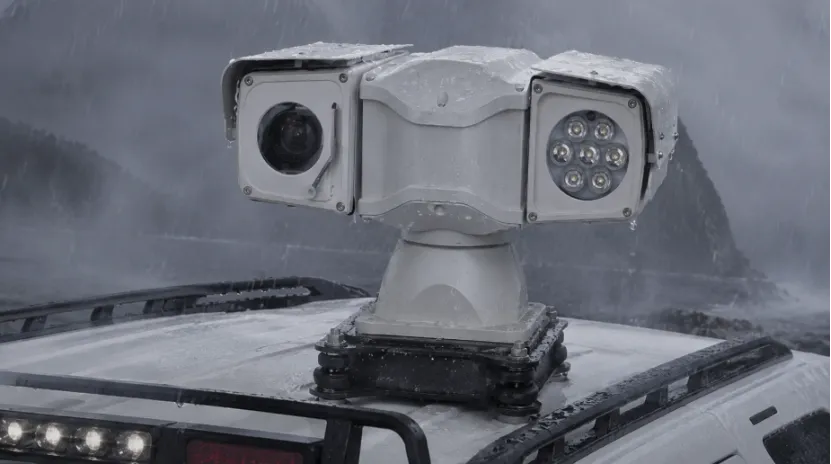
Une caméra PTZ robuste pour véhicule est soumise à des conditions d'utilisation plus difficiles qu'une caméra murale. Elle subit les vibrations de la route, les freinages brusques, la poussière, la pluie, le brouillard et la chaleur du toit du véhicule. Un matériel bon marché peut sembler fonctionner correctement au début, puis commencer à trembler, à s'embuer ou à devenir incontrôlable par la suite.
La résistance aux chocs et l'indice de protection IP ne sont pas optionnels.
Pour la résistance aux chocs, Shuoxin La WL-HD-TW10 propose des amortisseurs de choc optionnels et une résistance aux impacts de ≥ 4G. Conçue pour une utilisation en extérieur, elle bénéficie d'une protection IP66, d'un système d'essuie-glace, d'un dispositif de dégivrage et de désembuage, et fonctionne dans une plage de températures allant de -35 °C à +55 °C. Ces caractéristiques en font une caméra PTZ embarquée IP66 idéale pour les véhicules d'inspection, les véhicules de commandement d'urgence et les patrouilles routières mobiles.
La compatibilité avec l'alimentation du véhicule mérite également d'être prise en compte. La page produit mentionne une large gamme d'alimentations (12 V CC) ainsi que la possibilité de contrôler le véhicule via le Web ou RS485. Pour une configuration optimale d'une caméra PTZ embarquée RS485, il est essentiel de considérer la qualité du câble, la protection des connecteurs et la marge de puissance, car les fonctions de mouvement PTZ, d'éclairage infrarouge et de chauffage consomment de l'énergie.
Pourquoi la prise en charge d'ONVIF est-elle importante pour l'intégration système ?
Dans le cadre de projets B2B, une caméra fonctionne rarement de manière isolée. Elle peut être connectée à un NVR, un clavier de commande, un écran embarqué, un enregistreur de véhicule ou une plateforme de commande. C'est pourquoi la compatibilité ONVIF et la prise en charge des protocoles de contrôle permettent de gagner du temps lors de l'installation.
Caméra PTZ pour véhicule ONVIF : simplifie la mise en correspondance des projets
Le WL-HD-TW10 prend en charge les profils ONVIF S et G, le contrôle RS485, le protocole PELCO-D/P et des débits de transmission de 2 400 à 19 200 bits/s. Ceci simplifie l’intégration système lorsqu’une flotte est équipée d’enregistreurs différents ou que les besoins d’intégration au centre de commande sont variés.
Pour choisir la meilleure caméra PTZ pour véhicule destinée à la surveillance mobile, ne vous contentez pas d'examiner la tête de caméra. Prenez en compte la portée de la vision nocturne, le zoom optique, le contrôle PTZ à 360°, la résistance aux chocs, la compatibilité avec l'alimentation du véhicule, l'indice de protection IP, la compatibilité ONVIF et la flexibilité d'installation. Un produit adapté au véhicule, à la plateforme et au lieu d'intervention vous évitera généralement bien des problèmes qu'un modèle moins cher présentant une caractéristique performante mais plusieurs points faibles.
FAQ
Q1 : Qu'est-ce que le Meilleure caméra PTZ pour véhicule pour la surveillance mobile?
A: La meilleure caméra PTZ pour véhicule doit combiner une portée de vision nocturne, un zoom optique, un contrôle PTZ à 360°, une résistance aux chocs, un indice de protection IP, la compatibilité ONVIF et une flexibilité d'installation.
Q2 : De quelle portée de vision nocturne une caméra PTZ pour véhicule a-t-elle besoin ?
A: Pour de nombreuses voitures de police, véhicules d'inspection et véhicules de commandement, une caméra PTZ embarquée avec vision nocturne infrarouge de 150 m est pratique pour les routes peu éclairées, les portails, les ports et les sites d'urgence.
Q3 : Pourquoi le zoom optique est-il important pour une caméra PTZ mobile ?
A : Le zoom optique facilite la vérification des détails à longue distance. Une caméra PTZ pour véhicule avec zoom optique 33x peut d'abord balayer de larges zones, puis effectuer un zoom sur les personnes, les véhicules ou les événements routiers.
Q4 : Pourquoi les acheteurs devraient-ils choisir une caméra PTZ pour véhicule ONVIF ?
A: Une caméra PTZ pour véhicule ONVIF est plus facile à connecter aux NVR, aux plateformes VMS et aux systèmes d'intégration de centres de commande, notamment dans le cadre de projets de flottes.
Q5 : Une caméra PTZ montée sur véhicule peut-elle fonctionner sous la pluie, dans le brouillard et en cas de vibrations ?
R : Oui, si la caméra PTZ embarquée est protégée par un indice de protection IP66, résistante aux chocs, compatible avec les essuie-glaces et équipée d'un système de dégivrage et de désembuage. Ces détails sont essentiels pour une utilisation concrète en surveillance mobile.