
Defining the Concept of PTZ Camera Range
When you check PTZ cameras for far-off watching, the word “range” means how distant a camera can clearly spot, know, or notice things. This ability comes from three main mechanical parts: pan (side-to-side turn), tilt (up-and-down shift), and zoom (lens or screen enlargement). These parts let the camera keep watch over large open spaces outside. They work without stopping and change direction easily. This setup is key for police cars, edge protection, and building checks.
Lens zoom matters most when you judge how far the camera works well. It uses the glass part to make far items bigger without losing picture sharpness. On the other hand, screen zoom just stretches the dots, which often makes the view fuzzy. A camera with strong lens zoom, like 30x or more, keeps the image clear even from very far away.
Other important things include the glass setup (mainly the focus length), picture chip clearness, and light levels. A bigger focus length makes the view area smaller but pulls far goals nearer through the lens. When you match this with a clear picture chip, items look bigger and keep their fine points for telling them apart. Work in dim light, helped by heat-sensing or beam lights, stretches use at night too.
Key Components Affecting Long-Distance Surveillance Performance
The glass focus length sets the view area and how far a PTZ camera can look. For instance, a focus length of 180mm cuts the side view angle to a bit more than 2 degrees. This helps aim exactly at far items. It works great when you watch woods fire paths or power line routes from high spots.
Picture chip clearness affects how well you can tell people or cars from far away. A full HD 1920×1080 clearness gives a good mix of detail and data speed. The WL-HD-TW10 (HD IP) has a 1/2.8” step-by-step scan CMOS chip with 2-megapixel clearness (1920×1080). It gives sharp, clear video.
Work in low light is another big point to think about. This camera gets color pictures at 0.001 Lux (F1.5, AGC ON) and black-and-white at 0.0005 Lux. So, it runs well in almost no light. This trait is vital for night watches or quick help teams.
Technical Parameters That Define Maximum Surveillance Range
Optical Zoom Ratios and Their Impact on Target Recognition
Strong-ratio lens zoom glasses have a big role in spotting goals. A 33x or 50x zoom not only shows far items but also keeps the clearness needed for useful watch data. The 500M Night Vision LASER Vehicle PTZ Camera has a 33x lens zoom with a focus length from 5.5-180mm. It makes sure steady far-off watching even when the camera moves.
But very high zoom can bring picture shake or blur from shakes caused by wind or car motion. So, steady tech is key to keep the image clear at top zoom.
Laser Illumination vs. Infrared in Night Vision Applications
In dim or dark spots, usual heat-sensing lights often fail past 150 meters. This happens because of poor beam guide and light spread. Beam lights fix these issues. They give aimed, strong beams that go 500 meters or farther.
The 500M Night Vision LASER Vehicle PTZ Camera uses an 808nM beam light with good spot evenness and no speckles. It gives exact cover over big land at night.
Unlike heat-sensing, which spreads light over a wide spot and might over-light close areas, beam systems let you change the focus. This means you can adjust how the beam spreads based on watch needs. And it does so without hurting picture quality.
Video Processing Technologies for Long-Distance Monitoring
To make pictures clearer in tough spots, new PTZ cameras add smart video tools like 3D noise cut, wide light range (WDR), and smart light control. These help reduce rough spots, even out light between dark and bright parts, and keep key visual points.
Also, AI-based follow tools, such as auto-lock on items or face spot, let you watch moving goals without hand help. Smart spot jobs include cross-line spot, zone enter spot, go in or out zone spot, hang spot, people group spot. These are must-haves for key task setups.
Highlighting Shuoxin’s Long-Distance PTZ Camera Solutions
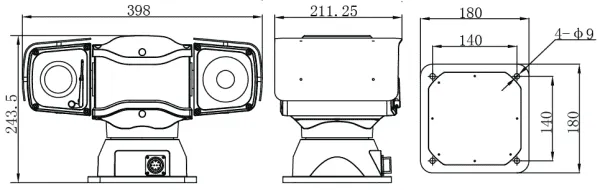
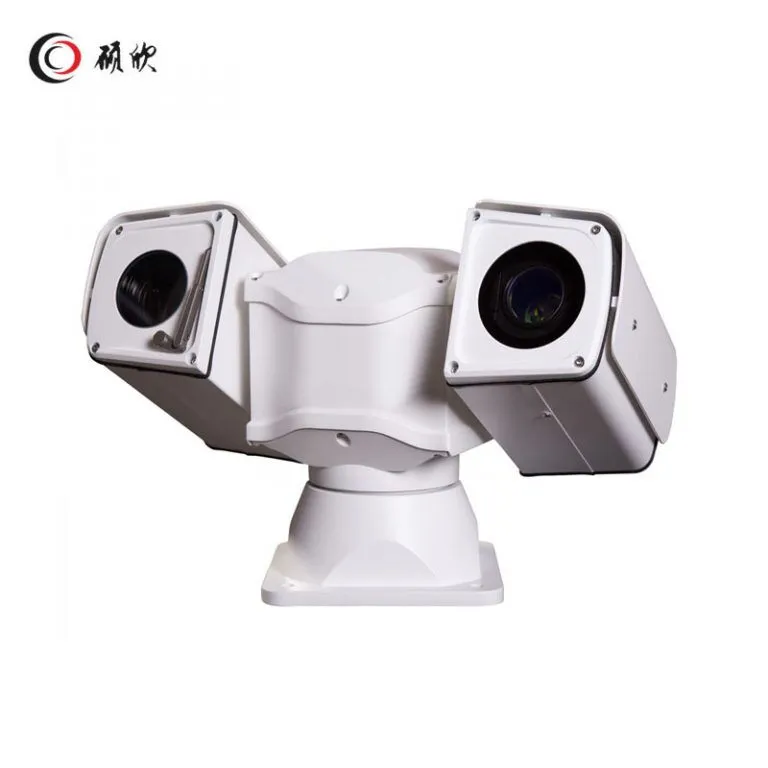
If you want a tough far-reach fix made just for moving watch setups like police cars or quick help teams, the 500M Night Vision LASER Vehicle PTZ Camera shines in how it works and lasts.
It has a 1920×1080 step-by-step scan CMOS chip, a 33x lens zoom glass with a 5.5–180mm focus range, and a built-in beam light that covers up to 500 meters. The strong shell works in wild heat (-35°C to +55°C). It has thaw and clear-fog parts, and it meets IP66 weather rules.
With its 360° full pan and ±90° tilt area, it gives full cover from any place it sits. This fits perfect for changing field jobs where still watching won’t do.
Use Case Scenarios Suited to This PTZ Camera Technology
This tech fits best in hard outside spots that need far sight:
- Border surveillance: Keep steady watch over big open land no matter the light.
- Traffic management: Check road parts from high poles or bridges without missing details on far cars.
- Utility protection: Guard power stations or high lines from risks using tall watch points.
- Forest fire monitoring: Follow heat spots or smoke clouds from far off at night with little light around.
Comparing Shuoxin’s Offerings with Industry Benchmarks
When you line up Shuoxin’s far-reach PTZ setups with others in the market, one thing that sets it apart is the built-in beam tech for night sight. Many cameras use only heat-sensing lights with short reach. But Shuoxin’s model gets clear pictures up to 500 meters in full dark.
Its strong build also hits strict weather rules. The IP66-rated shell fights dust, water, and wild heat (-35°C to +55°C). It takes ≥4G shake force too. This lets it work on moving cars without losing how it runs.
Operational Reliability and System Integration Flexibility
You can add this camera to current video control setups through ONVIF rules. The setup backs ONVIF (PROFILE S, PROFILE G) and has RS485 control links using built-in PELCO D/P rules. It also backs online update for future fixes without taking it apart.
Built-in steady jobs make sure picture clearness even on moving bases like police cars or fix trucks on bumpy land.
Tailored Support and Services from Shuoxin Technology Co., Ltd.
As a top name in smart watch tech, Changzhou Shuoxin Electronic Technology Co., Ltd. mixes fresh design with factory-level build standards. The firm has solid build and plan skills, a good make-run system, full test gear, and steady item work.
You can get custom changes based on your job needs, from shell strength to zoom sizes and beam power levels. If you need a part-based setup for car rounds or a fixed-place fix for edge watch towers, their plan team makes sure it fits into what you have already.
From first talk to last setup, Shuoxin gives full-end help, like spot checks, put-up guides, and world after-help. This keeps your plan on time and working well in the field.
FAQ
Q: What factors determine how far a PTZ camera can see?
A: How far it works depends on lens zoom level, chip clearness, glass focus length, and light states. Beam light boosts night view way past usual heat-sensing limits.
Q: Can PTZ cameras operate effectively in extreme environments?
A: Yes. Top models build to handle rough weather (-35°C to +55°C). They meet IP66 water and dust rules. And they take shake over 4G. This makes them good for moving use on police or power cars.
Q: What makes laser illumination superior to infrared for long-distance night vision?
A: Beam gives aimed beam guide and goes up to 500 meters with even light. Unlike heat-sensing that spreads light over short spots, beam lets detailed pictures of far items even in full dark.



 English
  Russian
  French
  Japanese
  Korean
  Arabic
  German
  Italian