
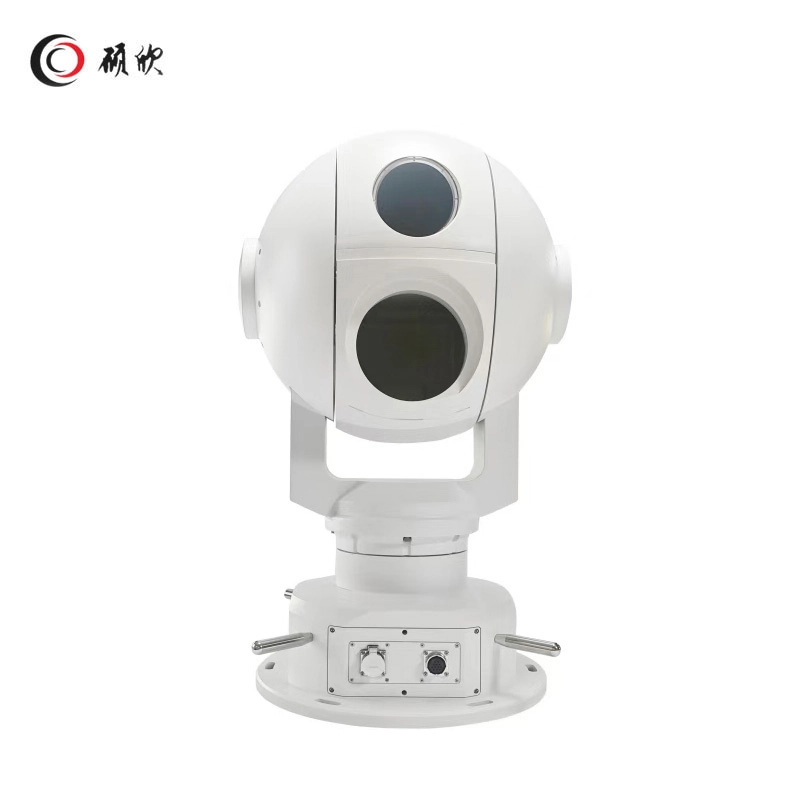
When you manage high-stakes settings like national borders, huge power grids, or thick forest areas, the gear you select determines the safety of your whole operation. Watching a distance of 150 meters is only the very beginning; often, your task demands sharp visuals and heat sensing from several miles away. In these tough, outdoor spots, the choice usually lands on two types of tech: the standard, boxy PTZ systems or the advanced Spherical photoelectric high-definition PTZ camera.
While both can pan, tilt, and zoom, the structural and lens differences between them decide how well they act under harsh weather or during vital security gaps. This guide explains why the round photoelectric style is becoming the top choice for long-distance, expert-level watching.
The Engineering Behind the Sphere
If you have ever worked with old-style PTZ units in very windy spots, such as beach areas or mountain tops, you know the pain of shaky images. Basic PTZ cameras often use a “T-shape” or “L-shape” stand. While they work, these shapes act like sails in a storm, catching every breeze and making the video feed wobble—a total disaster when you try to use a 50x zoom to read a plate 2 kilometers away.
The spherical photoelectric build fixes this through smooth shapes. Its round, gapless shell lets wind flow around the unit instead of hitting it hard. This physical steadiness is the base of high-definition long-distance watching. Because the inner parts stay hidden inside a solid ball, there are no open wires or moving joints that get hurt by ice, sand, or heavy rain. When your job involves a far-away power station or a border tower, this tough build makes sure your “eyes” stay open in weather that would break smaller gear.
Precise Movement and the End of Blind Spots
A big annoyance with basic PTZ systems is the “stop point.” Most normal units have mechanical walls on how far they can turn or tilt before they must “spin back” the other way. In a fast-moving security event—like a truck trying to hide on a lonely road—this tiny pause in tracking can be the difference between catching someone and losing them.
Spherical photoelectric cameras are built for 360-degree non-stop spinning. More importantly, they give a much better tilt range, often going from -90 degrees all the way to +90 degrees. This means the camera can look straight down at its own feet and straight up at the sky without any part of its body getting in the way. For a police car with a roof-mounted PTZ, this smooth movement lets the officer keep a visual lock on a target no matter how the car turns or how bumpy the ground feels.
Why Professionals Trust Shuoxin for Long-Range Security
When it comes to the real hardware guarding your property, you need a partner who truly lives and breathes top-tier imaging. Shuoxin is not just a factory; they are experts in “impossible” tasks. If you are told to stop forest fires where you must find a tiny puff of smoke 10 kilometers away, or if you protect a power grid where the nearest helper is hours away, their skill becomes your best tool.
What I really like about their way of working is the “human” touch in their machines. They see that a camera on a border fence is not just a chunk of plastic and glass; it is a tool for a real person in a control room who needs solid facts. Their systems are made with military-level care, focusing on mixing sensors that combine clear lenses with smart heat-sensing tech. This makes sure that whether it is dark, foggy, or very bright, you have the clarity needed to make fast choices. Their promise to help means you are not just buying a box; you are getting a tech support team that knows how to set up a system for your specific outdoor spot.
Optical Power: Zooming Beyond the Horizon
In the world of long-distance outdoor watching, digital zoom is mostly a trick. To see small things at distances past 500 meters, you need huge pieces of glass. Basic PTZ cameras usually stop at 30x or 40x optical zoom, which is okay for a street corner but not enough for fire watching or border guard work.
The high-definition spherical systems are made to hold much bigger, high-power lenses. It is very common to see these units with 60x, 90x, or even more optical zoom power. When paired with a 4MP or 4K sensor, the amount of detail is amazing. For forestry, you can find the exact spot of a heat signal before a fire grows. For border safety, you can tell the difference between a deer and a person through thick bushes at a distance where the human eye sees only green. For power companies, you can check small parts on a tall tower from a safe distance without needing a drone or a person to climb up.
Multi-Sensor Fusion for Constant Awareness
Maybe the biggest plus of the “photoelectric” name is the chance to put many sensors in one timed unit. A normal PTZ is often stuck with just one light sensor and some IR bulbs. While IR is fine for 100 meters, it fails in the huge space of a forest or a dry desert.
Spherical photoelectric PTZ units usually use two types of vision. They hold a high-definition light camera next to a very sensitive heat sensor. This allows for “Bi-Spectral Fusion.” You can use the heat sensor to find a warm spot (like a person’s body or a car engine) from miles away, and then immediately tell the high-definition zoom to look at that exact spot to see who it is. This level of smart automation is exactly what modern long-range projects need to make the job easier for the staff and make the alarms more accurate.
Strength and Long-Term Value
It is easy to look at the first price of a high-end spherical PTZ and compare it to a basic outdoor camera. However, for big projects, the “cost per mile” of watching tells a much better story. One spherical photoelectric PTZ, put on a tall pole, can often do the work of four or five tiny cameras.
By cutting down the number of poles, power wires, and internet boxes needed, the total cost often goes down. Also, because these units are made for the most punishing spots—using special paint to fight salt, tough materials for factory sites, and glass heaters for freezing weather—the time between repairs is much longer. You won’t find yourself calling a repair truck to a far-off site every few months to fix a stuck motor or a blurry lens.
Finding the Right Fit for Your Specific Mission
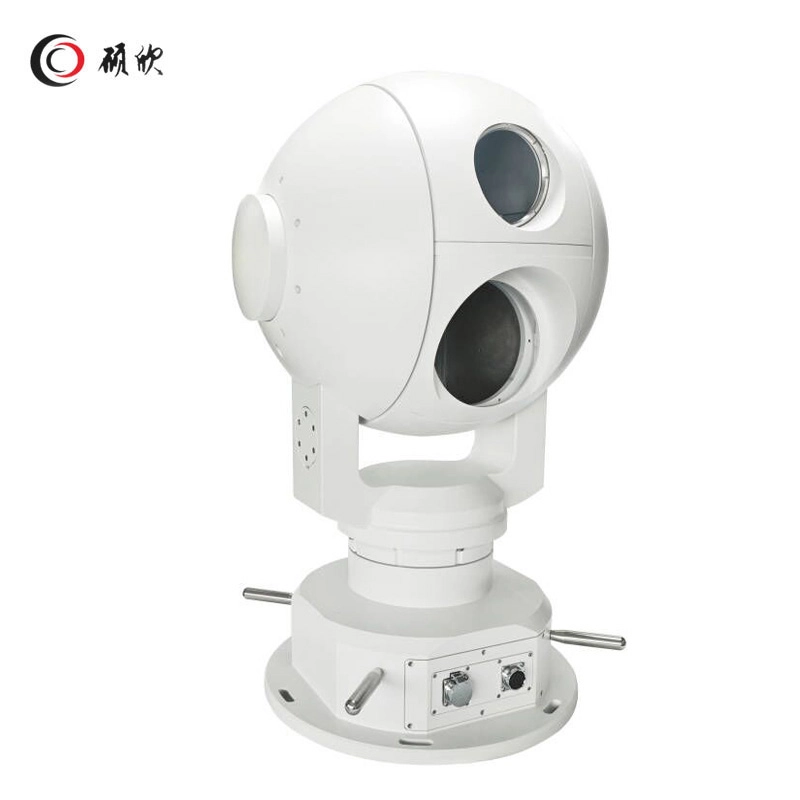
When you sit down to plan your security layout, think about the environment first. If your project is in a place where the wind howls and the rain never seems to stop, the spherical design pays for itself in just one season. The way it stays still during a storm means your AI software can actually work. Basic cameras that shake in the wind trigger “false alarms” constantly because the software thinks the moving trees or shaking ground are intruders. A steady spherical camera from a trusted name like Shuoxin keeps the image still, so your alerts are real.
Furthermore, consider the distance of the threats you face. If you are watching a remote substation or a long stretch of railroad track, you cannot afford to wait until a person is 50 meters away to see them. You need to spot the movement at 1,000 meters, track it at 500 meters, and identify it at 200 meters. The high-definition glass inside these spherical units makes that long-distance chain of events possible. It gives your team the gift of time—time to react, time to send help, and time to prevent damage before it happens.
The Future of Outdoor Surveillance
As we look at the future of protecting our world, the tech is getting smarter and tougher. We are moving away from simple cameras that just record what happened toward smart systems that tell us what is happening right now. The Spherical photoelectric high-definition PTZ camera is a huge part of this shift. It offers a level of sight that was once only for the military, now made available for power companies, police departments, and forest guards.
By picking this advanced tool, you are making sure your project stays relevant for years. You won’t need to replace it when your needs grow, because it already has the zoom, the sensors, and the strength to handle the toughest jobs on earth. Whether it is a police truck patrolling a dark highway or a solar-powered tower watching a dry forest, the spherical PTZ is the reliable choice for those who cannot afford to miss a single detail.
FAQ
Q: Can these cameras be connected to my current control room software?
A: Yes. These expert systems are made to work with ONVIF rules and use standard paths like RTSP. This means they can be added to almost any big Video Management Systems (VMS) used by police, power companies, or the government without much trouble.
Q: How does the camera act in very bad weather like thick fog or heavy snow?
A: The spherical photoelectric models are built with “Optical Defog” and heat sensing. While fog hides things from normal light, the heat sensor sees right through it by finding warmth. Also, many units have smart wipers and heaters to keep the glass clear of snow or raindrops.
Q: Is the round design good for putting on a moving police car or truck?
A: Yes, definitely. Actually, this is a top reason people buy them. The smooth shape cuts down on wind push and shaking, while smart internal steady-tools make sure the video stays flat and clear even when the vehicle is driving over bumpy, dirt roads or moving at high speeds on the highway.



 English
  Russian
  French
  Japanese
  Korean
  Arabic
  German
  Italian