

Picture this: you patrol a huge power grid at midnight. Thick fog drifts in from the river. A quick flash pops on your screen. Is it a crew finishing work? Or someone sneaking in to mess with high-voltage lines? In vital jobs like guarding electrical substations or watching far-off border posts, fast choices depend on sharp, trusty video. You want cameras that slice through dark and bad weather without a hitch, especially when the view stretches past 150 meters into the wild.
This is when top-level watching gear steps up to guard what counts. For more than ten years, Shuoxin has taken the lead in building tough, high-power PTZ cameras made for harsh outdoor spots. Think of it as a pro who has set up systems over giant solar fields and fast train paths. Shuoxin’s fresh ideas turn weak points into solid shields. Their range stresses far-reach accuracy. They mix cutting-edge lenses with smart AI to give video that does not just record—it spots dangers early. Whether you protect forest edges from wildfires or fit patrol cars for quick action, Shuoxin’s gear lets you stay in charge, no matter the weather. Check out their tale, and you see a promise to dependability that feels like a real buddy on duty, not dry numbers. With easy linking and little stop-time, these cameras act like extra eyes for your watch, so every round ends safe.
Now, let’s dig into your picks. Night vision and thermal imaging each offer special powers for far-range outdoor watch. But fitting the right one to your plan—say, checking a distant power tower or scanning highway links—can change everything. We will look at what each gives, match them face-to-face, and show how mixed tech lifts your game. By the finish, you will know just how to strengthen your edge with sure steps.
What Night Vision Brings to Dim-Light Watching
You count on night vision when a bit of light hangs around, like faint star shine over a desert route. This tech boosts any visible or near-infrared light that exists. It turns shadows into clear pictures. Photocathodes grab photons. Electrons grow in number through a tube. A phosphor screen glows the view in that well-known green shade. The outcome? Sharp lines for spotting shapes up to 300 meters on clear nights.
In real use, you catch crisp edges on trucks or people during normal checks at wind farms. Moonlight gives a base there. Costs stay fair. They often fit budgets for growing road watch nets. Plus, these units link smoothly with your current video control software. You can zoom on plates from far without fuss.
Still, problems hit when light disappears fully. Think under thick trees during forest fire guards. Fog or dust storms scatter the signal. Your sight blurs past 150 meters. Active infrared lights help. Yet they can show your camera spot to clever intruders climbing substation fences. In those times, you may struggle to tell a heat spot as friend or foe.
Shuoxin’s boosted night vision parts stand out here. They pack 4K clearness into PTZ units that follow quick targets along country roads. You can swing 360 degrees. You keep focus. This cuts guesswork in busy scenes like convoy guards.
How Thermal Imaging Spots Heat in Full Dark
Move to thermal imaging. You step into a space where light means nothing. Sensors catch infrared waves from warm things—your body, an engine, or a starting brush fire. They draw them as contrast heat maps. Long-wave detectors turn those signs into gray-scale views. Hot areas shine white against cooler backs. At distances over 5 kilometers, you notice odd things that night vision skips completely.
This works great for border patrol runs. You must catch crossings through thick bushes without light help. Rain, smoke from set burns, or cold midnight? Thermal slices right through. It warns you of a truck sitting 2 kilometers out on a back road. Fake alerts fall too. The system skips waving branches that look like motion in dim light.
Downsides cover softer details for sure ID. Think telling tool kinds on a suspect at 500 meters. First cost runs higher. But it pays back in fewer missed dangers during power setup sweeps. Linking needs matching smart tools. Once done, you gain quiet watch that runs for hours.
Thermal’s strength grows in Shuoxin’s builds. Uncooled detectors keep sharp feel down to -40°C. This fits winter guards at water dams.
Matching Night Vision and Thermal for Your Far-Reach Wants
You have checked the basics. Now view them side by side in real-life cases that match your world. Detection distance tells a plain tale. Night vision stays firm up to 300 meters in part light. But it fades quick in empty dark, like black nights over power lines. Thermal pushes to 5 kilometers or more. It stays strong in zero sight—perfect for scanning huge solar fields where intruders could hit unseen.
Picture quality turns the tale. Night vision gives you high-quality views for checking who is who during road stakeouts. It grabs face details or gear marks with ease. Thermal focuses on heat shapes. It shines at flagging hidden risks, like hunters in wild paths. But you might need extra check for details.
Cost joins the talk too. Night vision kits grow cheap for start sets, say along country power paths. Thermal asks more at first. Yet it cuts work headaches—think 40% fewer alerts from weather tricks in substation watch.
Think about your land. For open-road checks where light changes, night vision keeps you quick. In fog-covered woods or rainy border areas, thermal’s trust stops breaks that could grow big. Here is a fast match to help your choice:
| Aspect | Night Vision | Thermal Imaging |
|---|---|---|
| Ideal Range | Up to 300m in low light | 500m to 5km+ in any condition |
| Weather Performance | Struggles with fog, heavy rain | Thrives through smoke, dust, darkness |
| Detail Level | High for identification | Strong for detection, moderate ID |
| Cost Efficiency | Lower entry, good for basics | Higher initial, superior long-term ROI |
| Best For | Variable-light patrols | Total blackout, hidden threat spots |
This chart shows why many crews mix both. This fits mixed dangers like car chases near power grids.
Mixing Night Vision and Thermal: Mixed Units That Boost You
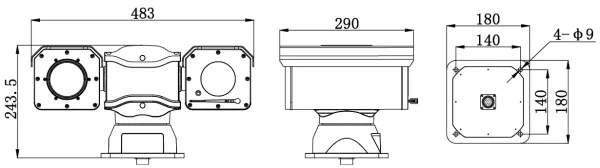
Why pick one when blending gives both? Step into bi-spectral systems. They layer thermal heat info onto night vision clearness. You get one feed for smarter calls. You switch ways fast or mix them. You spot a warm engine mark 3 kilometers away. And you figure its type in visible detail.
Check the Bi-spectral Long Range Thermal Imaging PTZ Camera. It is a strong tool for your hardest tasks. This unit joins a 640×512 thermal core with a 4MP visible lens. It stretches thermal spot to 5 kilometers. Optical zoom reaches 500 meters. Swing 360 degrees. Tilt 90. Let AI auto-follow suspects running across open land—response times fall by minutes.
What makes it special? Smart codes sort human heat from animal paths. They cut fake positives by 90% during forest fire guards. IP67 seal shrugs off heavy rains. Low power use keeps your sun-powered sets running through blackouts. Put it on a patrol car. You command round-the-clock watch over changing paths, from rail crosses to edge wires.
In one set-up along a high-power hall, this camera caught a drone break-in through mist. It layered thermal warnings with zoomed views for quick stop. You skip the walls of single-tech trust. You gain flex that grows with your work. For edge work, it handles on-board. It sends clean streams to your control spot without delay.
Tough build seals the win: gyro-steady for rough rides on alert cars. Lens wipers for dust-filled spots. Power save means fewer battery changes during long waits. In the end, this mixed way future-safes your gear. It adapts as dangers change—from harm at pump stops to breaks in safe zones.
Ending Thoughts: Choose the Tech That Fits Your View
You have walked the trade-offs. From night vision’s detail in dusk sweeps to thermal’s firm stare into nothing. For aimed watches where light works together, like evening patrols on entry roads, night vision fits you well. Yet in endless dark or blocked sights—think midnight substation scans or wildfire sides—thermal, especially in bi-spectral shape, gives the lead you cannot lose.
Go for mixes for full cover. They join powers. They shrink blind spots across your wide areas. Fit your crew with tools that not only see farther but act smarter. They turn watching into a forward guard.
Ready to level up? Our help covers all from spot checks to custom fits. It comes with non-stop aid. Contact us via the official website or +86-123-456-7890 for a personal guide—let’s lock your edge now.
FAQ
Q: How far can these cameras watch reliably in outdoor spots like thick fog?
A: Night vision usually holds 150-300 meters in light fog. But it drops fast past that. Thermal imaging cuts dense fog for spots up to 5 kilometers. This makes it key for substation or border watch when sight falls low.
Q: Can I link a mixed PTZ camera with my current patrol car set?
A: Yes—bi-spectral units like the one named fit standard NVRs. They support mobile power. They offer gyro steady for car moves. This keeps steady feeds during fast chases along far roads.
Q: What makes thermal better for stopping fake alerts in animal-rich spots?
A: Thermal looks at heat patterns special to people or cars. It skips cooler animal signs. With AI, it filters 90% of non-dangers. This fits forest edges or power clearings full of animals.



 English
  Russian
  French
  Japanese
  Korean
  Arabic
  German
  Italian