ブログ

目次

    分類

    関連するブログ

    Marine Thermal PTZ Cameras for Maritime Search and Rescue: Finding People and Vessels in Darkness and Fog
    Oil Field and Pipeline Surveillance: Why Long-Range Night Vision Cameras Are Critical for Leak, Theft, and Intrusion Prevention
    Why Security Robots Need Multi-Spectral PTZ Cameras for 24/7 Perimeter Patrol
    Thermal PTZ Camera for Law Enforcement Vehicles: See Suspects in Darkness, Smoke, and Brush
    Power Line Thermal Inspection: How PTZ Thermal Cameras Detect Overheating Before Failures

    Why Road Mobile Patrol Needs Thermal Imaging PTZ Cameras for Night and Bad Weather Monitoring

    Road Mobile Patrol Thermal PTZ Cameras for Night Monitoring

    Road patrol looks simple from the outside. A vehicle drives, a camera records, and the team checks the road. In real work, it is not that clean. Rain hits the windshield, fog sits low on the road, headlights bounce off wet asphalt, and a stopped car may appear far too late. That is why a road mobile patrol camera needs more than normal video.

    For highway night monitoring, road incident detection, fog and rain visibility, and mobile traffic surveillance, a thermal imaging PTZ camera gives you earlier warning and clearer control.

    Why Is Highway Night Monitoring So Difficult?

    Night patrol is hard because the road keeps changing. A clear lane can turn risky in seconds. A pedestrian may cross from the shoulder. A vehicle may stop without lights. Animals, debris, smoke, and broken-down trucks all create risk, especially where street lighting is weak.

    Headlights Do Not See Everything

    Visible cameras depend on light. That sounds obvious, but it becomes a big problem on highways, rural roads, bridges, tunnels, and construction zones. The security camera knowledge base points out that cameras need fill light at night, while low-light performance, focal length, and field of view all affect what you can really see. In mobile patrol, those limits show up fast. A front dash camera may record the scene, but recording is not the same as finding trouble early.

    Bad Weather Makes the Job Worse

    Fog, rain, dust, and smoke reduce detail. Wet roads reflect light and hide small objects. The knowledge base also notes that infrared thermal imaging is used for highway and railway night security patrols, night city traffic control, and transport safety in fog and rain. That is the buyer’s real concern: not whether the image looks pretty, but whether your team can spot risk before it becomes a crash.

    How Does Thermal Imaging Improve Road Mobile Patrol?

    Thermal imaging adds another way to see. Instead of relying only on reflected light, it reads heat differences. For a moving patrol vehicle, that can help your team find people, animals, engines, or warm objects in dark scenes.

    Thermal Detection Finds Heat Signatures

    A person standing near a guardrail, a recently stopped vehicle, or an animal on the shoulder may show clear thermal contrast. This makes thermal detection useful for highway night monitoring and road incident detection. It does not replace visible video. It gives your team an earlier clue. Then the visible camera helps confirm what the object is. In practice, that “detect first, verify second” flow saves time, and sometimes a lot more than time.

    Bi-Spectral Imaging Gives You Two Views

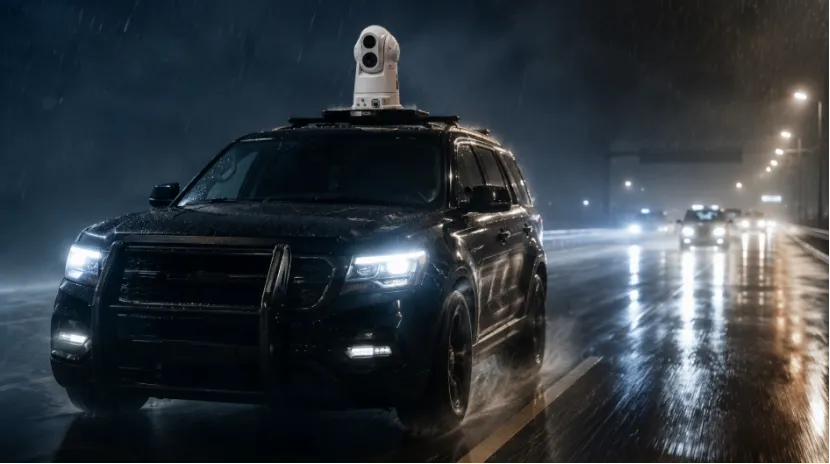
    A bi-spectral thermal imaging dome PTZ camera combines thermal imaging and visible imaging in one unit. For road mobile patrol, that means you can detect a heat source in darkness and then check visible details when light allows. This is useful for stopped vehicles, roadside workers, accident scenes, lane-blocking objects, illegal parking, or people gathering near a roadway.

    Why Does a Road Mobile Patrol Camera Need PTZ?

    A fixed camera watches one direction. Roads do not behave in one direction. Incidents happen in front, behind, at the roadside, across lanes, and sometimes just outside the normal view. PTZ matters because it lets your patrol camera move with the scene.

    360° Rotation Reduces Blind Spots

    PTZ means pan, tilt, and zoom. The knowledge base explains that PTZ cameras support horizontal rotation, vertical rotation, and optical zoom, giving wide and flexible monitoring. A dome PTZ camera can scan lanes, shoulders, ramps, intersections, and accident zones. With 360° endless rotation, a patrol team is not locked into one view. That is very useful when a vehicle stops on the shoulder and the operator needs to check both traffic and the roadside.

    33X Optical Zoom Helps You Check Details From a Safer Distance

    For mobile traffic surveillance, 33X optical zoom is not just a nice spec. It helps you inspect a distant vehicle, smoke source, traffic queue, or roadblock without moving too close too soon. The WL-HT-HD-RCX uses a 5.5-180mm lens, giving a wide view for general road monitoring and a narrow telephoto view for distant detail. Small thing, but on a rainy night, staying a little farther back can feel very sensible.

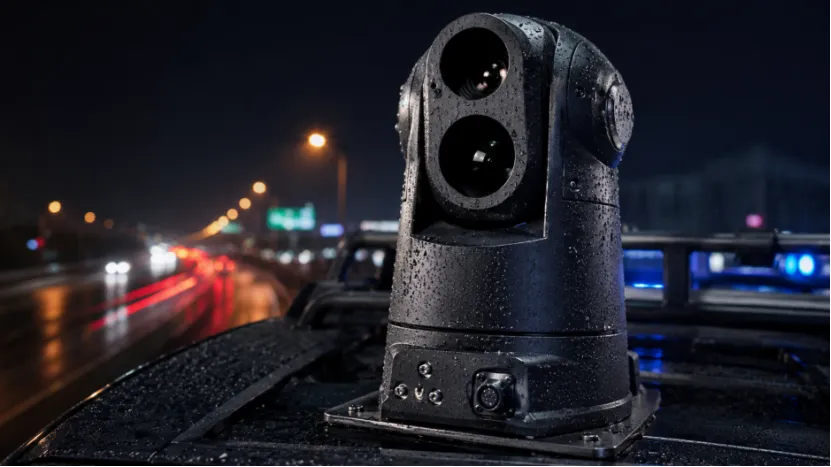
    Close-up of a rugged, vehicle-mounted thermal PTZ camera covered in raindrops at night

    What Should You Check Before Choosing a Vehicle-Mounted PTZ Camera?

    購入 車両搭載型PTZカメラ is not only about resolution. You need the right mix of imaging, control, data transmission, installation fit, and long-term stability. A good product should work when the road is rough, the weather is poor, and the control center needs live video.

    Integration Should Be Easy

    The knowledge base says network cameras encode and compress video for network transmission, and protocols matter when you need PTZ control. ONVIF support helps connect the camera with video platforms, while RS485 control is still useful in many vehicle systems. H.265, H.264, and MJPEG compression also help with video transmission and storage. In short, if the camera cannot talk to your system, good imaging alone is not enough.

    Real Patrol Work Needs a Rugged Design

    For mobile patrol, look for day and night monitoring, thermal imaging, 33X optical zoom, 360° endless rotation, defogging, defrosting, vehicle shock absorber options, smart detection, and stable PTZ movement. Shuoxin is a technology-based manufacturer focused on intelligent security monitoring equipment.

    Its product range covers road, public security, transportation, urban management, environmental protection, electricity, and other professional scenes. For buyers planning a road mobile patrol camera project, シュオシン is a practical choice because its products are built around real field use, not only clean indoor tests.

    よくあるご質問

    Q1: What Is A Road Mobile Patrol Camera?
    A: A road mobile patrol camera is a vehicle-mounted camera used for road inspection, traffic monitoring, incident viewing, and mobile evidence capture during patrol work.

    Q2: Why Is Thermal Imaging Useful For Highway Night Monitoring?
    A: Thermal imaging detects heat signatures, so it can help find people, animals, vehicles, and warm objects when visible cameras struggle in darkness.

    Q3: Can A Thermal Imaging PTZ Camera Improve Fog And Rain Visibility?
    A: Yes, it can improve detection in many low-visibility scenes, especially when paired with visible verification for final confirmation.

    Q4: Why Does Mobile Traffic Surveillance Need 33X Optical Zoom?
    A: 33X optical zoom helps operators inspect distant road incidents, stopped vehicles, shoulders, and traffic hazards from a safer distance.

    Q5: What Features Matter Most For Road Incident Detection?
    A: Key features include thermal detection, visible imaging, 360° PTZ control, 33X optical zoom, smart detection, ONVIF support, RS485 control, defogging, and stable vehicle mounting.


    共有:

    Facebook
    Twitter
    LinkedIn
    前の
    Why Security Robots Need Multi-Spectral PTZ Cameras for 24/7 Perimeter Patrol
    Thermal PTZ Camera for Law Enforcement Vehicles: See Suspects in Darkness, Smoke, and Brush

    相談して問題を見つけます

    便利なコミュニケーションの旅を始めてください。