
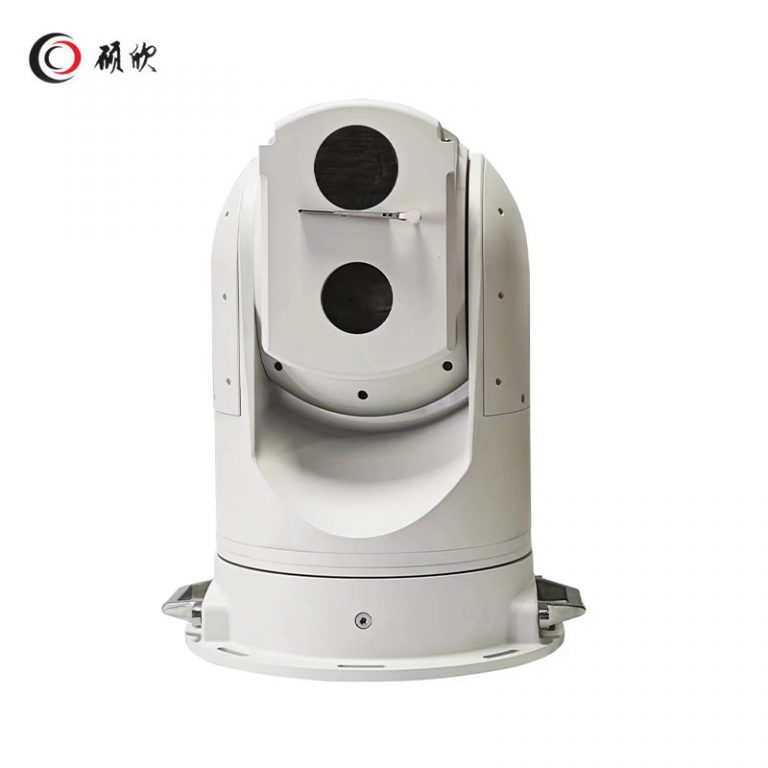
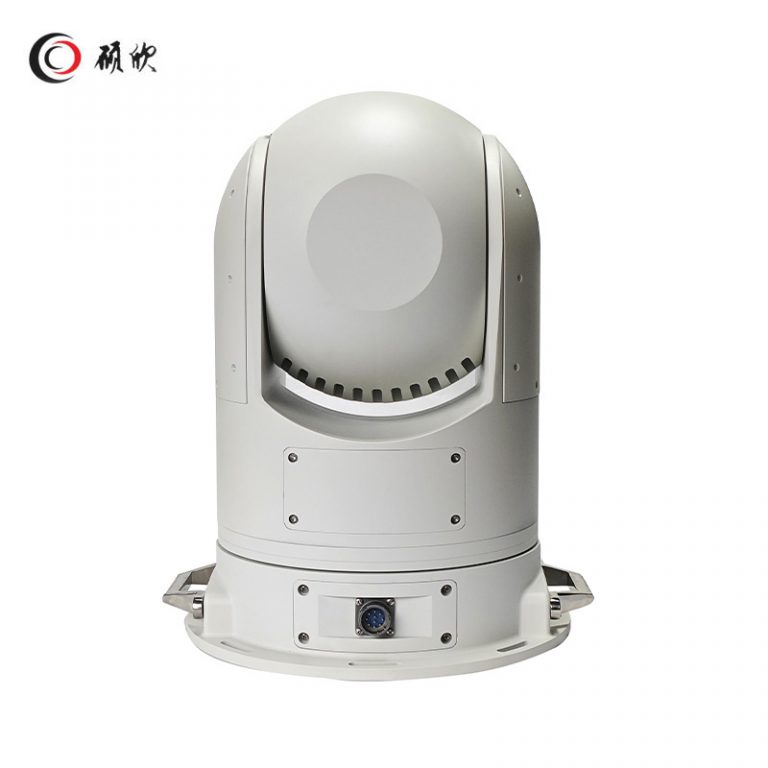
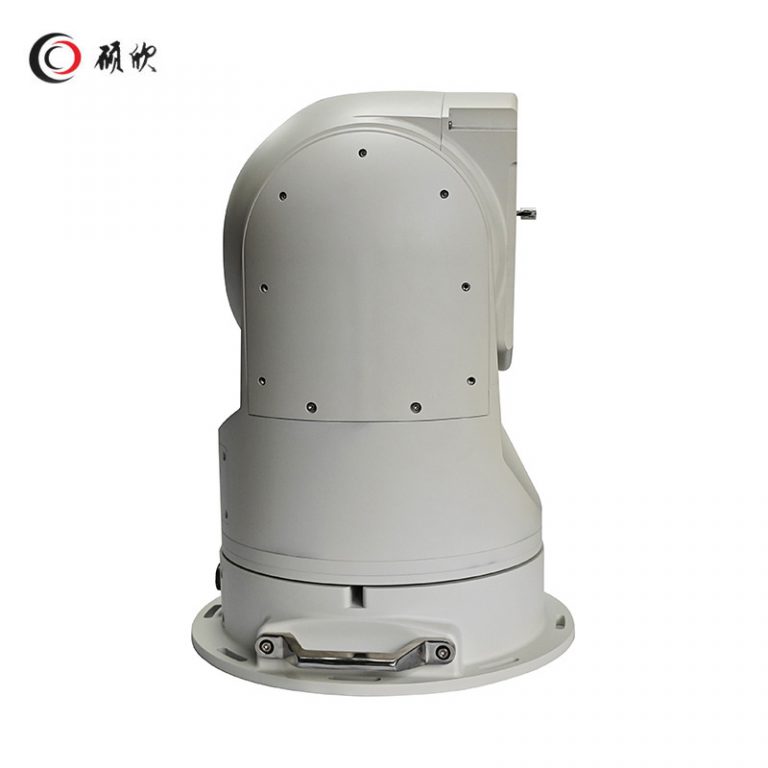
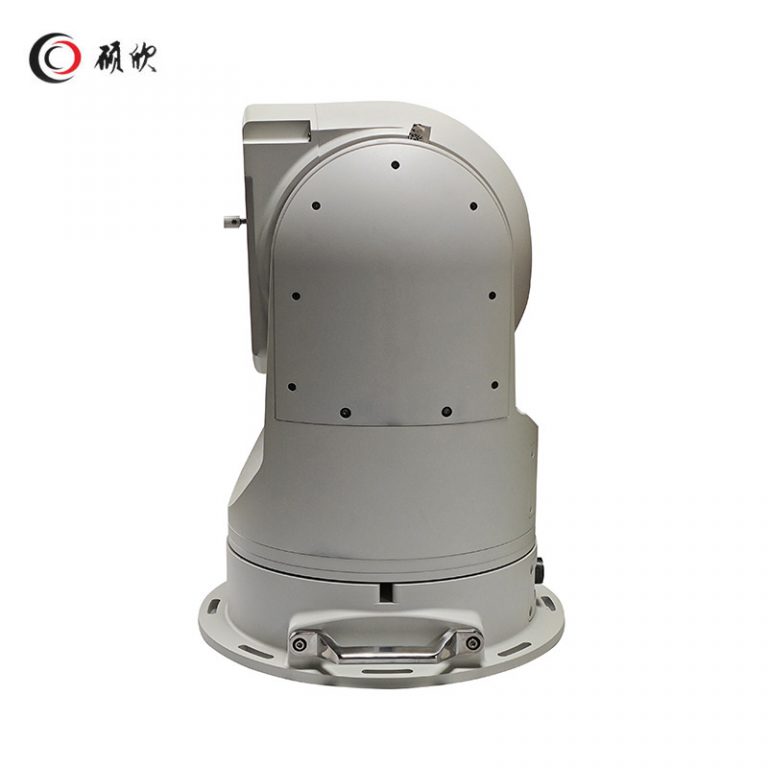
WL-HB988 is a marine dual-spectrum pan-tilt camera with two-axis gyro stabilization. The deck plan, visible-to-thermal workflow and DC 24 V interface schedule should be developed together.
WL-HB988 combines a 2 MP, 52× visible channel with 640 × 480 thermal imaging and a 75 mm thermal lens. Marine operation is supported by two-axis gyro stabilization, continuous pan and -90° to +90° tilt. The page also lists 256 presets, H.265/H.264/MJPEG, GB/T 28181, ONVIF, IP67 and DC 24 V; laser ranging is optional.
Select WL-HB988 marine around vessel motion and dual-channel use. Define that task before comparing options.
Build the operator sequence around vessel motion and dual-channel use; state the view, detail and mode change needed.
Ships and elevated observation platforms are stated applications where platform movement affects camera attitude. Actual deck support, control equipment and observation results remain project matters.
Put 15 kg deck support on the drawing and leave unresolved mechanics pending.
Map DC 24 V, RS422 and ONVIF to host functions one by one rather than relying on names.
Check installed power and cabling; keep optional ranging separate until confirmed.
Send vessel motion and dual-channel use, 15 kg deck support and DC 24 V, RS422 and ONVIF; flag optional ranging for confirmation.
| telecamera di imaging termico | Tipo di sensore | Rivelatore non raffreddato di ossido di vanadio |
| Pixel efficaci | 640*480 | |
| Lunghezza focale | f = 75mm | |
| Apertura | F1.0 | |
| Dimensione dei pixel | 12 μm | |
| Banda di risposta | 8 ~ 14 μm | |
| Netd | <35 mk | |
| Amplificazione elettronica | × 1 , × 2 , × 4 , × 8 | |
| Telecamera leggera visibile | imager | 1 {{url_placeholder_0}} scansione del sensore di immagine CMOS |
| Pixel efficaci | 1920 × 1080p | |
| Lunghezza focale | 6.1-317mm , 52x zoom ottico | |
| illuminanza | Starlight level ultra-low illumination, no fill color 0.0005LUX black and white 0.00001LUX | |
| controllo automatico | Bilancio bianco automatico, guadagno automatico, esposizione automatica | |
| Rapporto segnale -rumore | ≥55db | |
| Ampio dinamico | 120db | |
| Ptz | Range Pan | Rotazione continua a 360 ° |
| Velocità di pan | 0,05 ° ~ 400 °/s | |
| Gamma di inclinazione | -90 ° ~+90 ° ruotare | |
| Velocità di inclinazione | 0,05 ° ~ 200 °/s | |
| Ridimensionamento | supporto | |
| Preimpostazione | 256 | |
| Scansione da crociera | 6 | |
| Tergicristallo | supporto | |
| Funzione di stabilizzazione dell'immagine | Stabilizzazione giroscopica | Biax |
| Precisione allo stato stazionario | 0,1 ° | |
| Carrier massima a seguito di velocità | 100 °/s | |
| Altra funzione | Input e output audio | supporto |
| Ingresso e output di allarme | 1Way | |
| Interfaccia dati esterna | Rs422 | |
| Laser che va | opzionale | |
| Distanza di distanza laser | 1000 m (opzionale) | |
| Precisione che va da laser | 1 m | |
| Energia | DC24V 5A ± 15%, 50Hz | |
| consumare potere | Potenza massima 60w | |
| grado di protezione | IP67 | |
| Compatibilità elettromagnetica | 6KV GB {{url_placeholder_0}} 17626.5 -4 | |
| temperatura operativa | -40 ℃~ 70 ℃ | |
| Umidità funzionante | Umidità inferiore al 90% | |
| peso | 15 kg |
Related products are grouped in the Marine PTZ Camera category. Compare the imaging task, mounting, power and control route together rather than selecting on one distance or zoom figure.
Begin with vessel motion and dual-channel use.
Check DC 24 V, RS422 and ONVIF against required host functions.
Show 15 kg deck support, cables and clearances.
Keep optional ranging unresolved until written confirmation.
Start with the point at which the operator changes between the 52× visible channel and 640 × 480 thermal imaging. Two-axis gyro stabilization supports use on a moving platform, but it does not define the observation result for a particular sea state or target. Keep those project expectations outside the product specification.
The deck plan needs the 15 kg load, the continuous pan circle and the -90° to +90° tilt envelope. Show where the cables enter and how the unit can be reached for service. That drawing should be based on the actual vessel structure rather than a generic marine application.
Provide DC 24 V at the unit and map RS422, ONVIF and the required video formats to the onboard system. GB/T 28181 and the listed codecs are available facts, but only the protocols needed by the project belong in its interface schedule. Laser ranging remains optional.
Check the deck drawing against the chosen visible/thermal workflow and the receiving equipment. The request should identify any optional ranging requirement separately and should not convert stabilization specifications into a guaranteed scene result. Confirm the cable route and supply before installation work begins.
The 256 presets can be organized around the vessel’s operating positions only after the actual fields of view are known. Likewise, H.265, H.264 and MJPEG are available formats rather than instructions to enable all three. Name the format and protocol required by the onboard recorder, then keep the remaining choices outside the immediate integration scope.
IP67 describes the product enclosure, while the deck penetration and cable termination remain part of the vessel installation. Mark those boundaries on the drawing so the camera rating is not used as a substitute for sealing work around the support.
Keep the thermal 75 mm lens and visible 52× channel identified separately in the operator notes, especially where their fields of view serve different watch duties.
Use Contattaci to send vessel motion and dual-channel use, the drawing and required functions. Identify optional ranging as pending and name the onboard receiving protocol.