
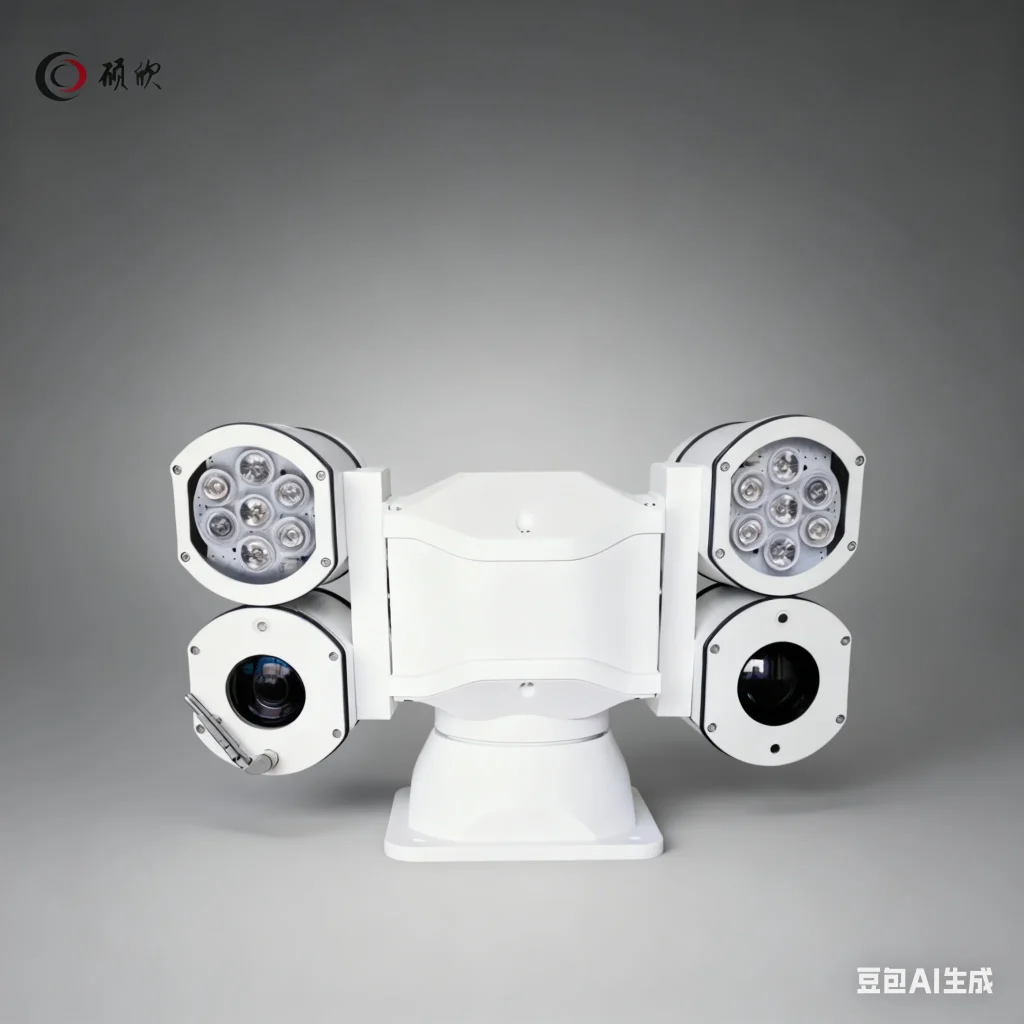
You face vast outdoor areas that demand constant vigilance—power lines stretching across remote valleys, border perimeters under moonlight, forest edges prone to wildfires, or highways where every second counts during pursuits. A PTZ camera system becomes your eyes when human patrols fall short. This guide walks you through every decision point so you select equipment that performs under pressure, not just on paper.
Assess Your Surveillance Scope First
Measure the Exact Distance You Must Cover
Start with a map and a laser rangefinder. Mark the farthest point you need to identify a vehicle or person. Most long-range needs begin at 150 meters and climb to kilometers. For a 500-meter power substation fence, you require thermal detection that resolves a human figure clearly. Anything closer wastes capability and budget.
Factor in Terrain and Obstacles
Hills block line-of-sight. Vegetation scatters infrared. Dust storms on desert borders reduce visibility. Write down every natural barrier between the camera mount and the target zone. Elevation changes also matter—mounting on a 30-meter tower extends reach but demands stronger wind resistance.
List Day and Night Operational Demands
Will the system run 24/7? Do you need color details for license plates at noon and heat signatures at 3 a.m.? Separate daylight visibility from thermal range. One sensor rarely excels at both without compromise.
Evaluate Core PTZ Performance
Demand Precise Pan and Tilt Speeds
You cannot afford lag when a suspect vehicle accelerates along a coastal road. Look for 100°/s pan preset speed and 60°/s tilt. These figures let the camera snap to a new coordinate before the target exits the frame. Slower speeds turn a pursuit tool into a static observer.
Insist on Optical Zoom That Matches Your Distance
A 33x optical zoom lens (5.5-180 mm) delivers recognizable facial details at 300 meters under daylight. Digital zoom only enlarges blurry pixels—avoid it for identification tasks. Pair the visible lens with a 35 mm thermal lens for the same field of view at night.
Require Thermal Resolution of 640×512
Lower resolutions like 384×288 blur heat signatures beyond 200 meters. A 640×512 uncooled vanadium oxide detector with 12 μm pixel pitch resolves a walking person at 800 meters in total darkness. Sensitivity below 35 mK ensures you see through light fog that cripples visible cameras.
Prioritize Environmental Durility
Choose IP66 Housing with Active Defog and Wiper
Rain, snow, and sand hit border installations hard. Die-cast aluminum with IP66 sealing keeps water out. A built-in wiper clears sleet in seconds. Defrost elements prevent ice buildup during sudden Arctic fronts—critical when temperatures drop 20 °C overnight.
Verify Shockproof Ratings for Vehicle Mounts
Police vehicles bounce over potholes at 80 km/h. The camera must survive 10G vibrations without losing alignment. Marine-grade dampers inside the PTZ mechanism absorb shocks that would crack lesser units.
Integrate Intelligent Features That Reduce Operator Fatigue
Activate AI Tracking Across the Full Pan Range
Manual control fails when one operator monitors ten cameras. AI must lock onto a moving heat source, follow it through 360° pan and ±90° tilt, and only alert when the target crosses a geofence. Eight patrol routes with 256 presets cover predictable paths like substation perimeters.
Enable Thermal and Visible Fusion Overlays
Overlay thermal hotspots on the visible feed. A glowing engine block appears on the daylight image even when dust hides the vehicle. This fusion cuts false alarms from wildlife while confirming threats.
Explore Shuoxin’s Proven Solutions
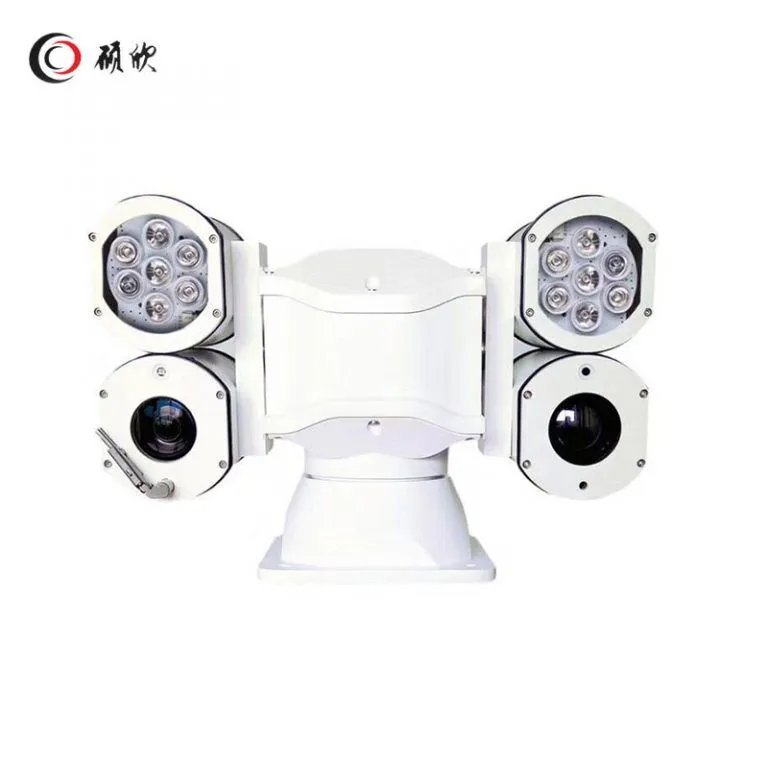
When reliability defines mission success, seasoned security integrators trust Shuoxin for rugged, field-tested optics. With over a decade deploying systems on patrol vehicles, transmission towers, and wildfire watchtowers, the company engineers every component for zero downtime. Their Multi-spectral long range thermal imaging PTZ camera combines a 33x visible lens, 35 mm thermal core, and 808 nm laser illuminator in one IP66 shell. Laser spot adjusts from 1° to 50° to match zoom, illuminating targets at 800 meters without blooming the sensor. Police units along coastal highways praise the defrost cycle that clears frost in under two minutes during winter patrols.
Budget for Performance, Not Just Price
Calculate Total Cost of Ownership
A cheap camera fails in the first sandstorm and requires replacement within a year. Factor in MTBF ratings above 50,000 hours, three-year warranty, and remote firmware updates that prevent obsolescence. Spending 20 % more upfront often saves 50 % over five years.
Plan Scalability from Day One
Border projects expand. Choose PTZ units that daisy-chain via ONVIF without proprietary gateways. A single VMS should ingest 100 cameras today and 500 tomorrow. Pre-wire fiber runs even if you install only ten heads now.
Secure Expert Support Before You Buy
Request a Live Demo on Your Terrain
Ask for a loaner unit mounted on a vehicle or tower at your site. Test thermal range at 2 a.m. during rainfall. Confirm AI tracking locks on a moving ATV at 600 meters. Only real-world proof eliminates surprises.
Demand 24/7 Technical Reach
Substation outages do not wait for business hours. Your supplier must answer calls at 3 a.m. and ship replacement parts overnight. Global stocking locations cut downtime from weeks to hours.
Professional Service and Contact
Engineers with border and utility experience guide you from site survey to final commissioning. They model lens throw distances, recommend mast heights, and pre-configure geofences so the system works the moment power connects. Maintenance contracts include annual calibration and firmware upgrades. For a custom quote tailored to your perimeter, contact the team via the official website. Tell them your farthest target distance and environmental extremes—they will match optics and mounts precisely.
FAQ
Q: Will rain or heavy fog block my thermal view at 500 meters?
A: Quality 35 mm thermal lenses with <35 mK sensitivity cut through light rain and fog. For dense fog banks common in coastal areas, add the optional 808 nm laser to pierce up to 800 meters and trigger visible capture when particles thin.
Q: Can one operator really manage multiple PTZ cameras along a 10 km border?
A: Yes, when AI handles tracking and presets cover patrol routes. Set eight cruise paths with 256 presets total. The system only pages the operator when a target crosses a virtual tripwire or loiters inside a restricted zone.
Q: Do I need a separate NVR for thermal streams?
A: No. H.265 compression keeps 640×512 thermal streams under 2 Mbps. Standard ONVIF-compliant NVRs store both visible and thermal video on the same timeline, letting you overlay heat signatures during playback for court evidence.



 English
  Russian
  French
  Japanese
  Korean
  Arabic
  German
  Italian