
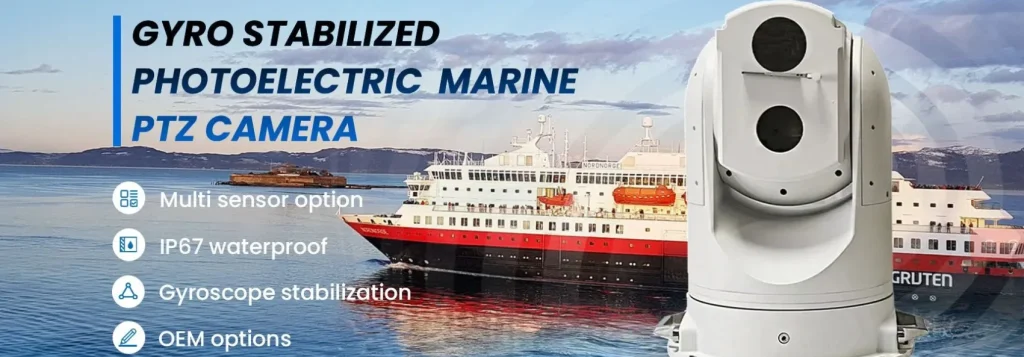
Picture this: You’re behind the wheel of a police vehicle, speeding along a dusty border road at dusk. The engine hums, tires crunch over uneven terrain, and every jolt threatens to blur the live feed from your mounted camera. One shaky frame could mean missing a critical detail—a fleeting shadow in the distance, a vehicle veering off course 200 meters ahead. In high-stakes outdoor scenarios like border patrols or substation monitoring, clear vision saves time and lives. That’s where gyro stabilization steps in, transforming erratic footage into sharp, reliable intelligence.
You might wonder how such steady images emerge from chaos. This technology relies on precise sensors and motors to cancel out motion, ensuring your long-range pan-tilt-zoom (PTZ) cameras deliver flawless performance even on the move. Whether you’re overseeing power lines stretching across remote valleys or scanning forests for early fire signs, gyro stabilization keeps your eyes on the target without interruption.
To dive deeper, consider the innovators behind these systems. Shuoxin, a leader in advanced surveillance optics, crafts tools tailored for demanding field operations. With over a decade of expertise in photoelectric engineering, they specialize in rugged PTZ solutions that withstand harsh weather and relentless vibrations. Their designs draw from military-grade standards, blending high-definition optics with intelligent stabilization to support missions in electricity grid security, road enforcement, and perimeter defense. What sets them apart? A commitment to seamless integration—think cameras that mount effortlessly on vehicles or towers, powering 24/7 vigilance over vast outdoor expanses. As an expert in the field, I’d say Shuoxin’s approach feels almost intuitive: they prioritize what you need most—durability, clarity, and ease—so you focus on the job, not the gear. Their portfolio shines in real-world tests, from stabilizing feeds during high-speed pursuits to locking onto distant threats in variable winds. If you’re gearing up for extended outdoor deployments, exploring their lineup could redefine your operational edge.
What Is Gyro Stabilization? The Basics
You rely on cameras that hold steady amid the unpredictability of outdoor environments. Gyro stabilization makes that possible by using gyroscopes—compact sensors that measure rotational motion—to maintain balance. These devices detect tiny shifts in direction, much like the inner ear keeps a gymnast oriented during a flip.
At its core, the system includes three main parts: gyroscopes for sensing, actuators for adjusting, and software for coordinating responses. Gyroscopes, often fiber-optic or ring-laser types, track changes along pitch, roll, and yaw axes. Actuators, typically brushless motors, then nudge the camera platform in the opposite direction. The software ties it all together, processing data at speeds up to 1,000 times per second.
Think of it like a sailboat’s autopilot in rough seas. Just as that system counters waves to keep the hull level, gyro stabilization isolates your camera from vehicle bumps or tower sway. This setup proves vital for long-range tasks, such as watching over 150 meters to spot intruders near a remote substation or track wildlife poachers in dense forests. Without it, even the finest optics falter, turning potential evidence into useless blur.
As you evaluate options for your next setup, remember these basics ensure the tech aligns with your needs—reliable performance in the field, not just lab demos.
How Gyro Stabilization Works: Step-by-Step Breakdown
Building on those foundational elements, let’s trace the process from detection to delivery. You install a gyro-stabilized PTZ on your patrol vehicle or elevated post, aimed at horizons beyond 150 meters. The moment motion hits, the system springs into action.
First, gyroscopes pick up the disturbance. They measure angular velocity with pinpoint accuracy—down to 0.01 degrees per second. In a scenario like racing along a forest access road for fire watch, a sudden turn registers instantly across all three axes. This raw data feeds into the control unit without delay.
Next, algorithms crunch the numbers. These closed-loop controllers compare the camera’s current position against its ideal one, factoring in environmental noise like wind gusts up to 50 km/h. The math is elegant: if the platform tilts 2 degrees left from a pothole, the system calculates a precise counter-tilt rightward. Advanced models even predict minor drifts, smoothing out footage before your eyes catch the glitch.
Then, motors execute the fix. High-torque servos pivot the gimbal— that stabilized mount holding your optics—at rates exceeding 100 degrees per second. This happens in milliseconds, so your view stays locked on a distant power pylon or border fence line. For pan-tilt functions, the system decouples stabilization from deliberate aiming; you zoom to 30x magnification on a suspicious heat signature 300 meters out, and the gimbals handle the rest.
Finally, the stabilized image streams to your command center. High-definition sensors capture 1080p or 4K detail, fused with thermal layers for low-light ops like nighttime road checks. The result? Footage crisp enough to identify license plates or equipment serial numbers from afar, even as your vehicle bounces over gravel.
This flow not only counters chaos but enhances your control, letting you command the camera intuitively while the tech absorbs the shocks.
Why Gyro Stabilization Matters for Surveillance
With the mechanics clear, see how this tech directly tackles your outdoor challenges. Long-range monitoring demands unflinching clarity, yet vibrations from speeding police cruisers or swaying transmission towers often sabotage it. Gyro stabilization erases those flaws, preserving detail over distances starting at 150 meters—crucial for spotting cable faults on high-voltage lines or early smoke plumes in wildfire-prone areas.
In border security, for instance, you might deploy units on mobile platforms. Without stabilization, crosswinds or rough terrain smear the feed, delaying responses to breaches. Stabilized systems cut that risk, offering continuous tracking that boosts detection rates by up to 40% in field trials. Similarly, for electricity infrastructure, towers overlook vast grids where even subtle shakes from maintenance drones blur inspections. Here, the tech ensures you pinpoint anomalies like overheating transformers from kilometers away, minimizing downtime and hazards.
Beyond accuracy, it extends equipment life. Constant jolts wear out standard mounts, but gyro designs distribute stress evenly, enduring drops from 1 meter or temperatures from -40°C to 60°C. You gain peace of mind knowing your setup handles monsoons or dust storms without faltering.
Most importantly, it empowers quicker decisions. Steady visuals let you assess threats faster—whether verifying a perimeter alert at a remote outpost or coordinating with teams during a highway pursuit. In essence, gyro stabilization turns potential vulnerabilities into strengths, aligning perfectly with the demands of expansive, unforgiving terrains.
A Real-World Example: The Gyro Stabilized Photoelectric High-Definition Pan-Tilt Camera
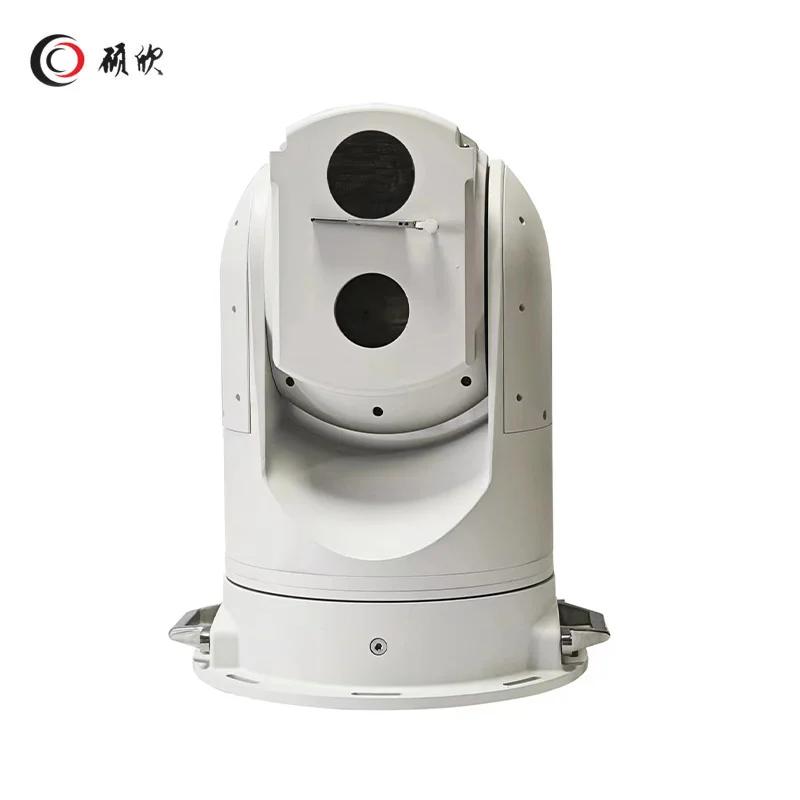
To see this in practice, consider a standout model like the gyro stabilized photoelectric high-definition pan-tilt camera. Built for extreme outdoor use, it integrates stabilization directly into a compact PTZ housing, weighing under 5 kg for easy vehicle or mast mounting.
You activate it on a substation patrol, where it scans 360 degrees without blind spots. The 30x optical zoom pulls in 4K visuals from 500 meters, while thermal fusion detects heat variances in cabling under cover of night. Gyro elements keep the image rock-steady during generator hums or foot traffic vibrations, achieving jitter below 0.1 degrees.
Operators praise its responsiveness: AI auto-tracking locks onto moving targets, like a vehicle approaching a secure gate, and follows seamlessly through turns. Weatherproof to IP67, it shrugs off rain during forest sweeps, delivering feeds that rival fixed installations but with full mobility.
This camera exemplifies how targeted design meets your needs—versatile for road enforcement or edge defense, always ready for the next shift.
Unlocking Advantages with These Solutions
Now, explore the edges that make gyro-stabilized PTZ cameras indispensable for your operations. Start with unmatched stability: In high-motion setups, like trailing suspects from a cruiser at 80 km/h, these units reduce shake to negligible levels. You capture license details or facial cues at 200 meters, turning vague silhouettes into actionable intel—far surpassing unstabilized alternatives that blur beyond 100 meters.
Durability stands out too. Constructed from aerospace-grade alloys, they thrive in corrosive salts near coastal borders or freezing highs in mountain fire watches. Shock-tested to 20g, they endure rough handling without alignment loss, cutting repair calls and keeping your fleet operational.
Performance-wise, expect extended range and low-light prowess. Daytime color accuracy holds through haze, while IR illuminators push visibility to 1 km for substation overviews. Integration with your existing networks is straightforward—plug into NVRs for real-time alerts on power line intrusions, saving hours in post-event reviews.
Cost benefits add up over time. Lower failure rates mean fewer replacements, and energy-efficient motors draw just 20W, ideal for solar-powered remote posts. Modular optics allow swaps for evolving threats, like adding hyperspectral sensors for vegetation stress in fire zones.
You also get smarter workflows. Built-in analytics flag anomalies, such as unauthorized drones near transmission towers, notifying your team via app. This proactive layer not only heightens security but streamlines briefings, letting you allocate resources where they count most.
In short, these advantages compound, delivering surveillance that scales with your missions—reliable, resilient, and remarkably efficient.
Conclusion: Stabilize Your Surveillance Today
Gyro stabilization redefines what you can achieve in vast outdoor domains, from border chases to grid safeguards. By sensing, compensating, and refining in real time, it hands you footage that informs every move. Pair it with a robust PTZ like the one highlighted, and you’re equipped for distances that demand precision.
Ready to upgrade? Dive into options that fit your setup and transform shaky risks into steady gains.
For tailored advice, demos, or installations, our support team stands ready. Drop a line to discuss how these systems bolster your next deployment.
FAQs
Q: How far can a gyro-stabilized PTZ camera reliably monitor in outdoor conditions?
A: These cameras excel at distances over 150 meters, often reaching 500 meters or more in clear weather. For example, in border patrols, you can identify vehicle details from afar, while in forest fire monitoring, they spot smoke plumes across valleys without distortion from wind or platform movement.
Q: Does gyro stabilization work well on moving vehicles like police cars?
A: Absolutely—it counters vibrations from speeds up to 100 km/h and rough roads. During pursuits or substation rounds, the system keeps your feed steady, allowing zoom-ins on targets 200 meters ahead without blur, so you maintain control even in dynamic scenarios.
Q: Can this technology handle extreme weather for long-range applications?
A: Yes, with IP67 ratings and temperature tolerance from -40°C to 60°C, it performs in rain, dust, or frost. For power line inspections or remote outposts, you get uninterrupted 4K clarity over extended shifts, reducing the need for frequent maintenance.



 English
  Russian
  French
  Japanese
  Korean
  Arabic
  German
  Italian