
In the demanding world of high-end outdoor monitoring, the actual environment is frequently a much tougher rival than any human intruder. Whether you are guarding a remote coastal border, watching over a massive power substation, or putting mobile command tools on the roof of police cars, your gear faces a non-stop attack from physical and chemical forces. Common security tools, built for the steady and mild weather of city office parks, almost always break down when they hit the brutal salt air of the Mediterranean or the freezing, wet air of the Arctic.
To bridge this huge gap between basic watching and mission-critical toughness, you need a partner that works at the crossroad of material science and visual accuracy. This is where ShuoXin comes into the picture—not just as a factory, but as a clever engineering team that treats every single camera box like a tough suit of armor meant to save lives. Their way of doing things goes way past just the surface level. They focus on very strong aluminum alloys and smart heat control to make sure your “eyes on the ground” never stop working, no matter how wild the weather gets. By putting structural strength and chemical safety first, they provide a level of trust that turns security from a constant, annoying repair job into a solid, long-term win for your project.
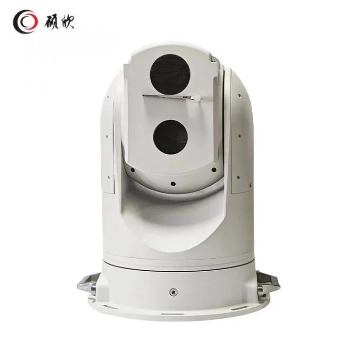
The Chemistry of Protection: C5-M Marine Grade Defense
When you put a camera along a beach or on a big ship, you are basically dropping it into a giant tub of chemicals. Salt air is amazingly mean to metal; it can eat through normal steel and cheap plastics in just a few months. This leads to broken seals, blurry lenses, and in the end, the whole electronic system just dies.
To fight this, the industry uses what is called the C5-M (Marine Grade) rule. This is not just a thick layer of shiny paint; it is a smart, multi-layered plan for defense. It all starts with choosing the right base material. By using high-strength aluminum alloys instead of the usual cheap metals, the very bones of the camera are naturally better at fighting off wear and tear. These alloys are then covered with special coats—usually fluorocarbon or very tough powder layers—that build a wall that salt water and acidic industrial smog cannot get through.
This high level of safety is super important for tools like the Gyro-stabilized photoelectric marine PTZ camera, which has to stay perfectly still and move smoothly while being hit by ocean waves and super fast winds. Without that C5-M shield, the tiny, moving parts inside would get stuck, making the stabilization feature totally useless. By focusing on the science of the outer shell, the expensive parts inside stay safe. This makes sure your view of the far-off horizon stays sharp and clear for miles and miles, even during a storm.
Controlling the Heat: Active Cooling and Warming Systems
Rust is a slow way for a camera to die, but a sudden change in heat can kill it instantly. If you are working in the hot sun of the Middle East, the inside of a camera box can get hotter than 70°C. This heat causes “noise” in the picture, making it look grainy and bad, and it also burns out the computer parts inside much faster. On the other side, in places where you are watching for forest fires or guarding a snowy border, freezing weather can make the moving joints get stuck or even crack the glass lens.
The smart fix is active heat control. Instead of just hoping the wind blows through, high-power systems use internal sensors to create a tiny, controlled climate inside the box.
Beating the Scorching Heat
In very hot places, built-in heat sinks and fast internal fans push the hot air away from the main electronics. Some of the best designs even use a “double-shell” shape. This leaves a gap of air between the outer sun cover and the main camera body. This gap acts like a shield, greatly cutting down the amount of sun heat that reaches the fragile parts inside. This is extra important for long-distance work where the camera has to use a lot of power to show clear pictures of things that are several kilometers away.
Winning Against the Deep Freeze
When the temperature falls way below zero, the system has to work hard to keep the lens from icing over. Specific heaters and de-fogging parts are placed right near the front glass. This makes sure that even in a thick snowstorm, the camera can still “see” through the ice. For your mobile kits on police cars or rescue trucks, this means the camera is ready to work the second the car starts. You do not have to sit around waiting for the fog on the lens to melt away.
Seeing Clearly from Far Away: The Logic of Bi-Spectral Views
Toughness is only good if the camera can actually give you helpful information. In jobs like border patrol, watching power plants, or spotting forest fires, you aren’t looking at something just across the street. You are scanning areas that are at least 150 meters away, and often much further. This needs a very smart mix of normal camera tech and heat-sensing tech.
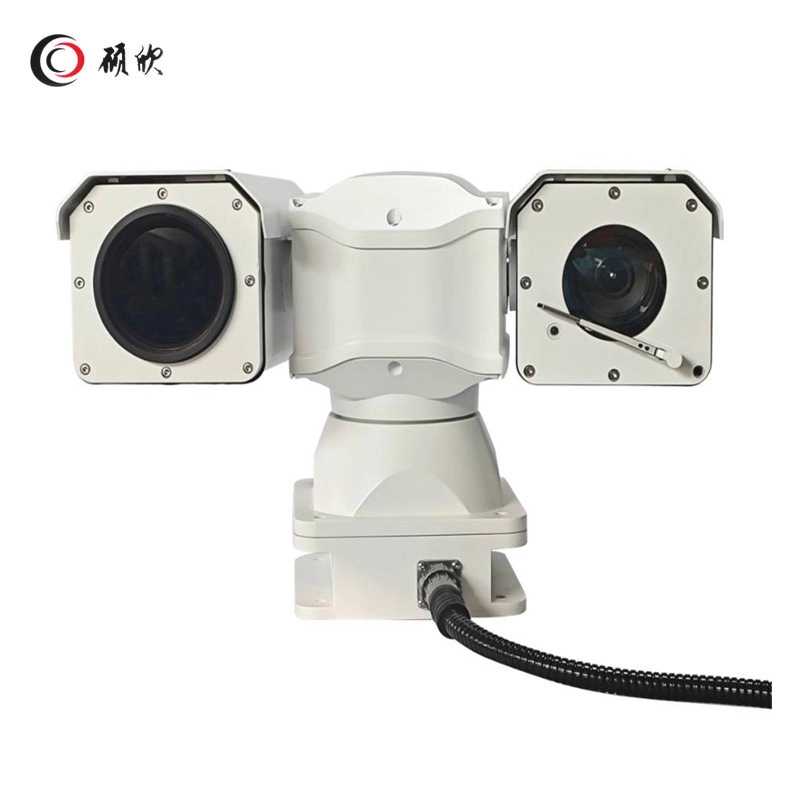
The Bi-spectral long range thermal imaging PTZ camera is the top choice for this kind of two-layered detection. By putting a high-quality normal lens and a heat-sensing (thermal) lens together, you can see through smoke, light fog, and total darkness.
In a forest fire job, the thermal sensor sees the “hot spot” long before any human eye can see smoke. In border security, the normal lens helps you identify exactly what you are looking at—like a face or a license plate—while the thermal lens helps you find someone hiding in the dark bushes in the first place. Because these units are kept inside the special aluminum shells we talked about, the way the metal grows or shrinks in the heat is very small. This keeps both the normal and thermal pictures perfectly lined up, even when the outside weather changes from hot to cold very quickly.
Where These Cameras Work: Real Life Needs Tough Gear
To really get why these engineering choices matter, you have to look at where these tools are actually used. These aren’t cameras for a small shop or a home; they are heavy-duty tools for the world’s toughest spots.
Power Plants & Substations: These places have lots of electricity in the air, which can mess with electronics. They also get very dusty. The special non-rusting box and strong alloy protect the guts of the camera from both the bad weather and the invisible electrical fields.
Police & Command Vehicles: When a camera is bolted to the top of a fast car, it shakes a lot and hits the wind very hard. The tough mounting and stabilization systems make sure the video stays steady and doesn’t shake, even during a fast chase or when driving on a bumpy dirt road.
Borders & Coastlines: In these spots, the camera is your first line of safety. Being able to live for years in salty air without the joints rusting shut is the difference between a safe border and a broken system that sees nothing.
By picking gear that puts the science of materials first, you aren’t just buying a piece of tech. You are making a smart plan for the future. The high cost of driving out to fix a broken camera in the middle of nowhere is much higher than just buying a high-quality, rust-proof system at the start.
A Strong Partnership Built on Great Service
Picking the right gear is only half the work; the other half is making sure that gear stays running for a long time. When you move away from cheap gadgets and into the world of industrial PTZ systems, the help you get from the company must be just as good as the product itself.
You deserve a service plan that includes expert advice to match the right metal and coating to your specific local weather. Whether you need a special way to bolt the camera to a Navy ship or special software to find heat signatures from very far away, the goal is to make it all work together perfectly. Technical help should not be a person reading from a script; it should be a direct talk with engineers who truly know how to solve your hard problems.
By focusing on these three big ideas—advanced material science, smart heat control, and great professional help—you make sure your security stays as strong as the important work you do every day.
FAQ
Q: Why do I need a C5-M coat if my project is 5 kilometers away from the ocean?
A: Salt and wet air can travel a long way inland, especially when the wind is blowing. Normal paint will still start to peel and rust in these “near-ocean” areas. The C5-M coating gives you a big safety gap, making sure the camera box stays perfect for 10 to 15 years instead of breaking in just 3 years.
Q: Can the heat system handle fast changes, like a police car moving from a warm garage out into -20°C snow? A: Yes, it can. The active heat system has a “cold start” mode. It warms up the inside parts and the lens glass before the motors even start to move. This stops the glass from cracking and makes sure the oil in the moving joints is thin enough to move smoothly right away.
Q: Does the stabilization feature make the motors wear out faster?
A: Actually, it is the opposite. While the motors are working, the stabilization system actually helps by soaking up the “shocks” and bumps from waves or bumpy roads. By making these movements smooth, the tiny gears inside often last longer than a camera that just sits there and gets shaken around all day.



 English
  Russian
  French
  Japanese
  Korean
  Arabic
  German
  Italian