
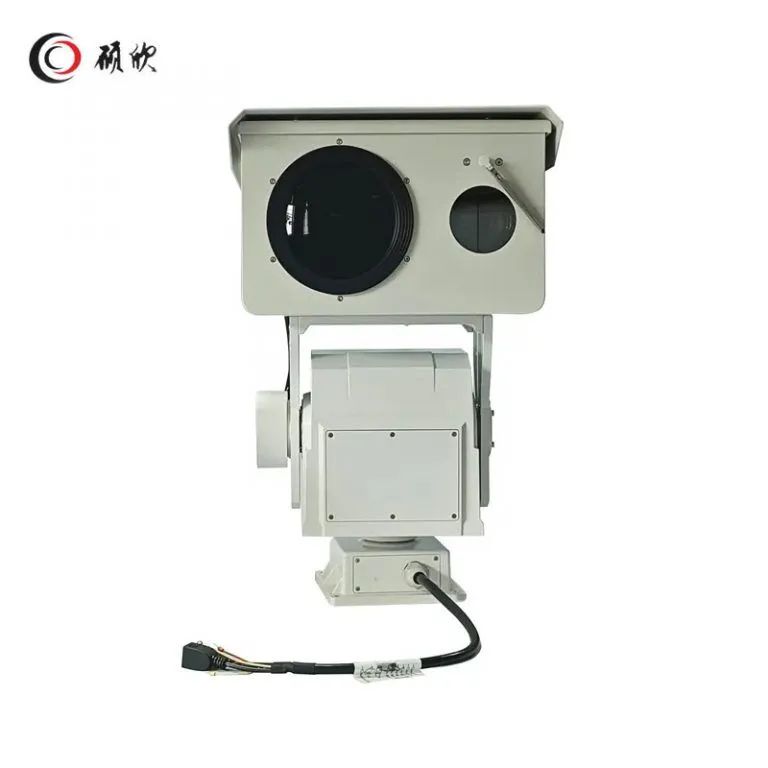
The game of protecting vast outdoor spaces has changed. In risky spots where a missed spark could burn a massive forest or a small heat jump could break a city’s power grid, using just basic cameras is a gamble you should not take. These days, the industry has moved past simple watching. It is all about bi-spectral intelligence now. This clever method mixes the hidden data of heat signatures with the sharp details of strong zoom lenses. This makes sure your outdoor fences and borders stay safe every minute of the day and night. It gives you a set of eyes that never gets tired, even when the sun goes down or the weather turns ugly.
A Partner in Precision: Introducing ShuoXin
Before we get into the details of how these sensors work together, you need a partner who sees safety through a lens of total toughness. If you are in charge of big things like power lines or long border walls, you likely already know that cheap gear just quits when the weather gets nasty or the land gets rough. That is exactly where ShuoXin fits in. As someone who has spent years in this field, I have seen many brands promise “long-range” views, but this team actually builds the heavy-duty hardware needed for real-world jobs like border safety, forest fire spotting, and police work. They are true experts in high-performance PTZ (Pan-Tilt-Zoom) tools that work perfectly even in the coldest or dirtiest outdoor spots. Their gear isn’t just a simple camera; it is a tough, smart brain designed to give you a full picture of what’s happening when things get dangerous. By picking their tools, you are putting your money into a history of great glass and heat-sensing accuracy. This turns raw data into clear choices you can act on right away.
The Core of 24/7 Perimeter Security: Why Thermal and Optical Must Merge
When you watch giant outdoor areas, the problems with normal cameras show up the second the sun goes down or smoke fills the air. If you are guarding a big power station or a long border line, regular cameras are basically useless without huge, expensive lights everywhere. This is usually not possible when you cover miles of open land. The physical limits of visible light mean even the best traditional sensor cannot see through a thick cloud of dust or a pitch-black forest at midnight. You end up staring at a black screen, hoping nothing is moving in the dark.
Bi-spectral technology fixes this problem by putting two different sensors on one moving PTZ base. The thermal sensor finds heat waves coming off objects. It “sees” heat instead of just light. This lets you spot a person or a truck miles away in total darkness or through thick fog. However, thermal pictures often lack the small details you need to know exactly who or what you are looking at. This is where the big optical zoom lens steps up. By mixing these two feeds, the system gives you the whole story. The thermal sensor wakes you up to a stranger or a fire, while the optical camera zooms in to show you high-definition proof. This fusion ensures you are never guessing about what set off the alarm. You get the speed of heat detection with the clarity of a high-power lens.
Mastering Distance with Bi-spectral Long Range Thermal Imaging PTZ Cameras
When your job is to protect giant spaces like national forests or huge power networks, distance is your biggest enemy. You need gear that can spot a threat long before it gets close to your fence. You cannot afford to wait until a trespasser is at the gate. You need to see them when they are still kilometers away across a field. This is why the Bi-spectral long range thermal imaging PTZ camera is becoming the new favorite for pros who handle critical infrastructure every day.
These systems are built to work at distances way beyond 150 meters, often reaching many miles away across valleys. The heavy-duty motor inside the PTZ allows for smooth, very steady movement. This makes sure that even when you zoom in all the way, the picture doesn’t shake or blur. For checking power grids, these cameras let you watch transformers and wires from a safe distance. You can spot “hot spots” that mean a machine is about to break or melt down. Because both sensors live in one box, they are perfectly lined up with each other. When the heat sensor finds something that is getting too hot, the optical camera knows exactly where to look to give you a clear view of the trouble. This coordination is what makes long-range monitoring actually useful for a solo operator in a distant control room. It takes the guesswork out of the job and lets the technology scan the horizon.
Enhancing Reliability Through Multi-spectral Intelligence
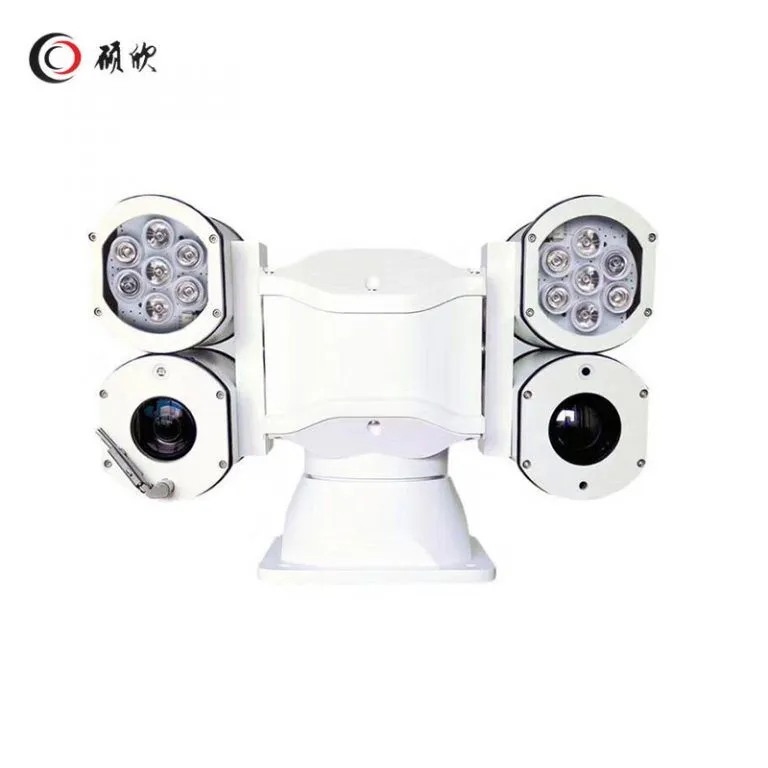
While bi-spectral systems are the go-to choice, some situations need even more information to stay safe. Advanced systems often add extra gadgets like laser distance hunters or special infrared lights. If you are driving a police truck or working a border patrol unit, knowing exactly how many meters away a target sits is just as vital as being able to see them. Knowing that distance helps you decide how much time you have to react before the situation gets out of hand.
These top-tier units are truly built for the long haul. The Multi-spectral long range thermal imaging PTZ camera uses high-quality glass that can look through dusty air, paired with very sensitive heat-sensing cores. This teamwork makes sure that whether you chase a runner across a dark field or watch a far-off mountain top for the first puff of smoke, you have the best chance of seeing it. The whole point is to get rid of the “blind spots” that happen when the weather changes fast. You want a system that stays sharp whether it is noon or midnight, regardless of whether the air is clear or filled with summer haze or falling snow. It is about having a reliable tool that works exactly the same way every time you turn it on.
Intelligent Detection: Filtering the Noise in Forest Fire Prevention
One of the hardest parts of watching the outdoors from far away is the “false alarm.” In a forest, the sun hitting a lake or a shiny metal roof can easily fool a basic heat sensor into thinking there is a fire starting. If your system pings your phone every time the sun moves a little, your team will eventually stop checking the alerts. That is exactly when a real fire will start and grow while everyone ignores the sirens because they think it’s just another mistake.
Modern AI brains built into these systems are trained to ignore these annoying distractions. By looking at how a heat source moves, its specific shape, and how fast it gets hot, the computer inside can tell the difference between a sun glint on a pond and the scary heat of a real forest fire. It looks for the specific patterns of a rising plume of heat rather than a static reflection from a piece of glass.
When the system finds a real danger, it starts a fast “double-check” process on its own. The PTZ head quickly spins to the exact spot where the heat was found and uses the optical zoom to get a close-up. This lets a worker in a control room see the smoke or the flames right away without having to move a joystick. This kind of automatic speed is super important for stopping forest fires, where the first few minutes decide if you can put it out or if it will burn out of control. It turns the camera from a passive observer into an active scout that directs your attention only when it truly matters.
Applications in Law Enforcement and Critical Infrastructure
Besides fire safety, these cameras are huge tools for police and big utility companies. For a police car, a bi-spectral PTZ on the roof lets officers scan dark alleys or huge empty fields while staying safe inside their vehicle. They can see the heat from a hidden suspect’s body even if they wear camouflage or hide behind a thin wall of tall grass. This gives the officer a massive tactical advantage during night patrols, as they can see everything while remaining hidden in the dark.
In the world of power grids and electric stations, these cameras provide a way to check equipment health without ever having to touch a dangerous wire. Instead of making a worker drive hours to a far-off site for a manual check-up, you can set the PTZ to go on “auto-patrol.” The camera will move to specific spots on its own, check the temperature of the gear, and save the data. If any part gets too hot, the system sends an alarm immediately. This smart planning saves a lot of money on repairs and stops big power outages before they happen. It turns a reactive job into a proactive one where you fix the problem while it’s still small and cheap to handle.
Robust Engineering for the Great Outdoors
Long-range PTZ cameras are a big investment. They must survive years of being stuck outside in the wind, rain, and heat. Whether it is the salty air by the ocean or the freezing snow on a mountain top, the metal and glass must be incredibly tough. These units use special paint to stop rust and very strong motors to keep moving even if they are covered in thick ice. They are designed for the middle of nowhere, where a repair crew might take days to arrive if something breaks.
Keeping the picture still is just as vital for these systems. When you look at a truck two miles away, even a tiny shake from a breeze can make the video look like a blurry mess. Advanced stabilization tech works inside the camera to keep the video steady as a rock. This makes sure the AI can keep doing its job without getting confused by a shaking frame. This focus on being “tough as nails” ensures your warning system stays running when you need it most. It gives you peace of mind regardless of what the weather is doing outside.
Conclusion: Setting the Bar for Safety
Protecting big outdoor spaces requires more than just a standard lens. You need the combined power of heat detection and high-resolution zooming to stay ahead of trouble. By using these advanced tools, you are not just watching the world—you are gaining a deep awareness of it in a way that keeps people and infrastructure safe. Whether it is a border, a forest, or a power plant, this is the new way to ensure nothing goes unnoticed. The fusion of thermal and optical technology is no longer a luxury. For those in charge of critical security, it is the new global standard for excellence.
FAQ
Q: How does a bi-spectral camera work when there is heavy rain or really thick fog outside?
A: Heat sensors are much better than regular ones in bad weather because they don’t rely on light. Heat waves can travel through fog, dust, or light rain that usually block normal light. While the regular color picture might look blurry in a storm, the thermal sensor will still pick up the heat from people, cars, or fires clearly. This means you can keep things secure even when you can’t see anything with your own eyes.
Q: Can I connect these cameras to the software I already use in my security control room?
A: Yes, you can. These professional PTZ systems work well with other equipment. They use standard industry languages like ONVIF, which means they can send their video and heat data straight into the management software you already have. You can watch both the heat feed and the color feed at the same time and control the camera’s movement using your existing desk controls.
Q: Why should I get a moving PTZ camera instead of just buying a few fixed heat cameras for a forest?
A: A fixed camera only looks in one direction, so you would need many of them to see everything, which gets expensive. A PTZ camera can spin in a full circle and look up and down, so one single unit can guard a huge amount of land. Also, being able to zoom in is the most important part. A fixed camera might show a tiny hot dot, but the PTZ lets you zoom in close to see if it’s a campfire or just a hot rock, which saves you from sending out fire trucks for no reason.



 English
  Russian
  French
  Japanese
  Korean
  Arabic
  German
  Italian