
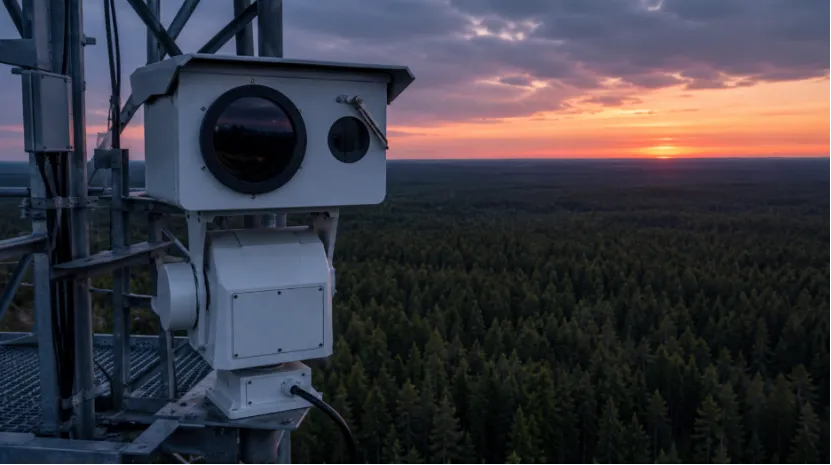
A كاميرا حرارية متحركة (PTZ) للوقاية من حرائق الغابات لا يُشترى هذا الجهاز لمجرد "مشاهدة فيديو جميل". بل يُشترى لأن أي نقطة ساخنة يتم إغفالها قد تتحول إلى حالة طوارئ في الغابة. يصعب تسيير دوريات في مساحات الغابات الشاسعة سيرًا على الأقدام، خاصة في الليل، أو في الضباب، أو عبر الطرق الجبلية التي لا تستطيع الشاحنات الوصول إليها دائمًا.
ينبغي أن تساعدك كاميرا جيدة للوقاية من حرائق الغابات على رؤية الحرارة مبكراً، والتأكد من المشهد بسرعة، ومنح فريقك الوقت الكافي للتصرف قبل انتشار النيران.
لماذا يحتاج الكشف المبكر عن حرائق الغابات إلى التصوير الحراري؟
يُعدّ الكشف المبكر عن حرائق الغابات أمرًا صعبًا، لأنّ الخطر الأول غالبًا لا يكمن في لهب ضخم، بل قد يكون نقطة حرارة صغيرة، أو عمود دخان ضعيف، أو نار مخيم مهملة، أو عطل كهربائي حاد بالقرب من نباتات جافة. أما الكاميرات العادية فتنتظر حتى يصبح المشهد مرئيًا، وهو ما يكون غالبًا متأخرًا جدًا.
تعتمد الكاميرات المرئية على الضوء
تستطيع الكاميرا المرئية رصد اتجاه الدخان، والمركبات، والأشخاص، وتفاصيل التضاريس، لكنها تحتاج إلى تباين بصري كافٍ. في الليل، أو في الضباب، أو خلف دخان خفيف، قد لا تتمكن الكاميرا من رصد الخطر الحقيقي. وتشير قاعدة بيانات كاميرات المراقبة إلى أن أداء الكاميرا في الإضاءة المنخفضة، والبعد البؤري، ومجال الرؤية، والدقة، كلها عوامل تؤثر على كمية التفاصيل التي يمكن للكاميرا التقاطها في مختلف المشاهد.
التصوير الحراري يكتشف الحرارة أولاً
تعتمد الكاميرا الحرارية المستخدمة في كشف حرائق الغابات على قياس الفروقات الحرارية بدلاً من الاعتماد على الضوء المرئي فقط، مما يجعلها مفيدة قبل أن تصبح ألسنة اللهب واضحة. بالنسبة لهيئات الغابات وفرق الطوارئ ومقاولي الغابات المحترفين، يكمن الهدف الأساسي في تحديد مصدر الحرارة غير الطبيعي في مراحله الأولى.
ما هي كاميرا PTZ الحرارية للوقاية من حرائق الغابات؟
تجمع كاميرا PTZ الحرارية للوقاية من حرائق الغابات بين التصوير الحراري والتكبير البصري. وتتميز بإمكانية تحريكها أفقياً وعمودياً والتحكم بها عن بُعد. فهي لا تراقب بقعة صغيرة فحسب، بل تفحص مساحات شاسعة، كما أنها تُكبّر على المناطق غير المألوفة.
تعني تقنية PTZ تغطية واسعة ومرنة
يشير اختصار PTZ إلى التحريك والإمالة والتكبير. تتحرك الوحدة من جانب إلى آخر، ومن أعلى إلى أسفل. وتُقرب العدسة الصورة. يتم تشغيلها باستخدام بروتوكولات الشبكة مثل ONVIF. بالنسبة للغابات، يقوم برج واحد بمسح الوديان وممرات النار. كما يفحص المواقع السياحية والطرق والأحراش الجافة.
التحقق المرئي الحراري بلس
A كاميرا تصوير حراري ثنائية الطيف PTZ يُقدّم لك نوعين من الأدلة. تُساعد القناة الحرارية في تحديد موقع مصدر الحرارة، بينما تُساعد القناة المرئية في تأكيد ما إذا كان المصدر دخانًا، أو مركبة، أو عاملًا، أو كوخًا، أو خطر حريق حقيقي. يُشير طراز Shuoxin إلى كاميرا مرئية بدقة 1920×1080، وتقريب بصري 52x، ودقة حرارية 640×512، وعدسة حرارية بمدى من 30 مم إلى 150 مم، ودوران لا نهائي 360 درجة.
لماذا تعتبر كاميرا التصوير الحراري ثنائية الطيف PTZ أفضل من الكاميرا المرئية؟
تُعدّ كاميرا التصوير الحراري ثنائية الطيف المتحركة (PTZ) خيارًا أفضل للإنذار المبكر بالحرائق، لأنها لا تُجبر المشغلين على الاختيار بين رصد الحرارة وتفاصيل المشهد، بل تتطلب كليهما. فالاستجابة لحرائق الغابات لا تقتصر على مجرد رصد الحرارة، بل تشمل أيضًا تحديد موقعها وحجمها وكيفية وصول فرق الإطفاء إليها.
يكشف حرارياً، ويؤكد مرئياً
تساعد كاميرا التصوير الحراري بعيدة المدى في رصد الحرارة غير الطبيعية مبكراً عبر مساحات واسعة. بعد ذلك، يمكن للكاميرا المرئية التكبير لفحص الدخان، ومداخل الطرق، والمباني المجاورة، والنباتات المحيطة. إنها آلية عمل عملية، وليست ميزة إضافية.
يساعد الذكاء الاصطناعي في تقليل الإنذارات الكاذبة
تدعم كاميرات كشف الحرائق المزودة بتقنية الذكاء الاصطناعي خاصية تصفية الإنذارات. في مواقع الغابات الحقيقية، قد تنشأ الإنذارات الكاذبة من الصخور الساخنة بفعل الشمس، أو المركبات، أو الحيوانات، أو الأسطح العاكسة. تشير صفحة التطبيق المرجعية إلى أن أنظمة PTZ الحرارية يمكنها استخدام تحليل الذكاء الاصطناعي للكشف المبكر عن حرائق الغابات، كما يمكنها العمل في ظروف الرؤية الصعبة كالضباب والدخان والظلام. لا أحد يرغب في غرفة تحكم مليئة بالإنذارات غير المجدية في الساعة الثانية صباحًا.
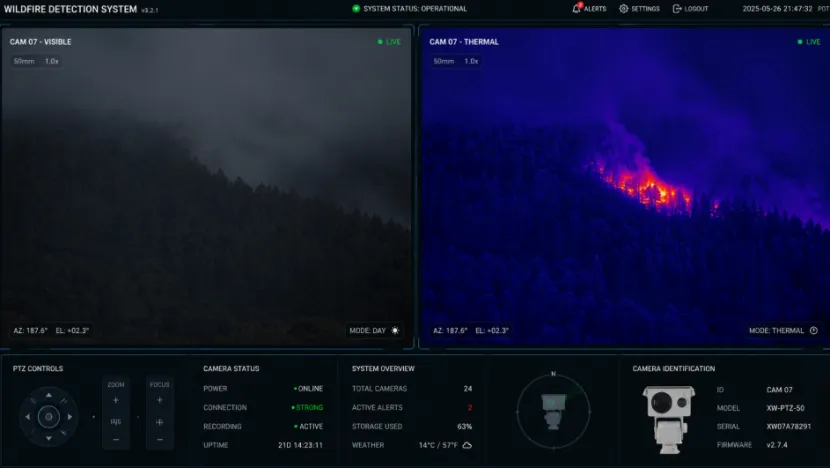
ما هي الميزات التي يجب أن تتوافر في كاميرا الوقاية من حرائق الغابات؟
ينبغي تقييم أفضل كاميرا للوقاية من حرائق الغابات بناءً على قيمة المشروع، وليس فقط على سعر الكاميرا. اسأل عن المنطقة التي تغطيها، وكيفية تعاملها مع الظروف الجوية، وكيفية اتصالها بمنصتك، وسرعة استجابة فريقك للإنذار.
دورية بكاميرا حرارية متحركة بزاوية 360 درجة
A كاميرا حرارية متحركة بزاوية 360 درجة يمكن تشغيل دوريات مُعدة مسبقًا حول أبراج المراقبة، وسلاسل التلال، والخزانات، والغابات الحدودية، ومناطق التخييم، وممرات الطاقة. يدعم منتج Shuoxin 256 موقعًا مُعدًا مسبقًا و8 مسارات تتبع، مما يساعد على بناء منطق دوريات قابل للتكرار لمواقع الغابات الكبيرة.
حماية خارجية بمعيار IP66
تُعدّ كاميرا PTZ الحرارية بمعيار IP66 خيارًا مثاليًا للمواقع الحرجية النائية، نظرًا لتعرضها اليومي لعوامل مثل المطر والغبار والرطوبة والحشرات وتقلبات درجات الحرارة. تُشير شركة Shuoxin إلى أن الكاميرا مزودة بحماية IP66، وماسحة، وزجاج مُدفأ، وخاصية إزالة الصقيع والضباب، ونطاق درجة حرارة تشغيل يتراوح بين -35 درجة مئوية و+55 درجة مئوية. تُعدّ أدق تفاصيل الصيانة بالغة الأهمية عندما يكون أقرب برج مراقبة على بُعد ساعتين.
كيف يمكن لشركة شوكسين دعم نظام مراقبة حرائق الغابات؟
يحتاج نظام مراقبة حرائق الغابات إلى أكثر من مجرد كاميرا واحدة مثبتة على عمود. أنت بحاجة إلى معدات موثوقة، وإمكانية الوصول إلى المنصة، ودعم التحكم، وتكوين جاهز للمشروع. وهنا تبرز أهمية خبرة المورد.
التصنيع العملي وملاءمة المشروع
شركة شوكسين هي شركة تصنيع تعتمد على التكنولوجيا وتركز على معدات أنظمة المراقبة الأمنية الذكية. تشمل مجموعة منتجاتها كاميرات PTZ، وأنظمة التصوير الحراري، وكاميرات PTZ للمركبات، وكاميرات PTZ البحرية، ومنتجات المراقبة بعيدة المدى.
تُبرز الشركة قدراتها التصميمية، وإدارة الإنتاج، ومعدات الاختبار، واستقرار منتجاتها، مع تطبيقات في مجالات الطرق، والمطارات، والأمن العام، وحماية الحدود، والشؤون البحرية، والوقاية من حرائق الغابات، والنقل، وحماية البيئة، والطاقة الكهربائية. بالنسبة لك، هذا يعني أن النقاش يمكن أن ينتقل من "أي كاميرا تبدو جيدة" إلى "أي تكوين يناسب الجبل، والشبكة، والطاقة، ومسار الدورية، ومنصة الإنذار".
التكامل مهم
ينبغي أن يقدم مورد كاميرات PTZ الحرارية الموثوق به خيارات ONVIF وSDK والتحكم عبر الويب والتحكم عبر RS485 وخيارات العدسات الشفافة. شوكسينتدعم وحدة الطيف الثنائي الخاصة بـ ONVIF و SDK و WEB أو RS485 للتحكم، وضغط الفيديو H.265/H.264/MJPEG، ووظائف الكشف الذكي، مما يساعد مكاملين النظام على ربطها بمراكز القيادة أو منصات الغابات.
الأسئلة الشائعة
س1: ما هي الفائدة الرئيسية لكاميرا PTZ الحرارية للوقاية من حرائق الغابات؟
ج: يساعد ذلك في اكتشاف الحرارة غير الطبيعية في وقت أبكر من الكاميرا المرئية فقط، ويمنح المشغلين طريقة لتأكيد المشهد من خلال دورية PTZ والتكبير المرئي.
س2: هل يمكن لكاميرا حرارية للكشف عن حرائق الغابات أن تعمل ليلاً؟
ج: نعم. التصوير الحراري يكشف اختلافات الحرارة، لذا يمكنه العمل في الظلام وظروف الرؤية المنخفضة حيث تكافح الكاميرات المرئية.
س3: لماذا تختار كاميرا PTZ للتصوير الحراري ثنائي الطيف؟
ج: يجمع هذا النظام بين الكشف الحراري والفيديو المرئي. يكتشف فريقك الحرارة مبكراً، ثم يتحققون من الموقع الفعلي.
س4: هل كاميرا PTZ الحرارية IP66 مناسبة للمواقع الحرجية النائية؟
ج: نعم. الحماية بمعيار IP66، ودعم المساحات، والزجاج المُدفأ، وإزالة الصقيع، وإزالة الضباب تجعلها أكثر ملاءمة للبيئات الحرجية الخارجية.
س5: كيف تختار مورد كاميرات PTZ الحرارية؟
أ: قارن بين الدقة الحرارية، والتكبير المرئي، والإعدادات المسبقة لكاميرات PTZ، والتحذير من الحرائق بالذكاء الاصطناعي، ودرجة حرارة التشغيل، وتصنيف IP، ودعم البروتوكول، وتجربة تطبيق المشروع الحقيقي.