
When you handle the protection of an important boundary such as a national border, a large power station, or a thick woodland area that often sees forest fires, the coming of night shifts the whole situation. Regular watching cameras that work well in daylight usually turn ineffective as soon as the sun goes down or when weather issues like thick mist and smoke appear. You require something better than a basic camera; you need tools that can spot things the human eye misses.
Picking the correct gear calls for a solid understanding of how various “night vision” methods operate in real settings. Although lots of folks mix up the words “infrared” and “thermal,” they point to two separate ways physics works. One depends on light that bounces back, while the other picks up warmth. For far-off outside watching, where your subjects sit hundreds of meters or even kilometers distant, the difference between these two decides if you spot a danger or let it slip by.
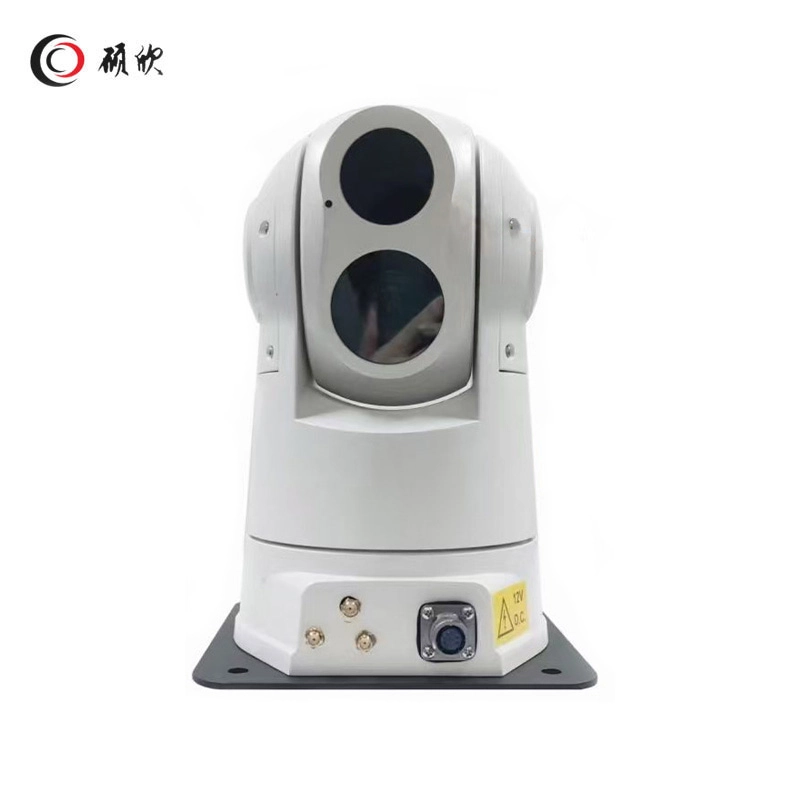
The Mechanics of Active Infrared Night Vision
Active Infrared (IR) stands as the usual type of night vision you probably run into for medium-distance safety. It runs on a basic idea: the camera serves as its own light source. Since people can’t see rays in the infrared range, the camera employs inner IR lights to cover the space with unseen rays. This light hits objects and comes back to the camera’s pickup, forming a grayscale picture that feels much like what our eyes know.
Still, when you work in huge open areas, active IR runs into big problems. Since it counts on light that reflects, its power gets ruled by the “Inverse Square Law.” To put it plainly, as the space to your subject doubles, you must use four times more light to view it sharply. For law enforcement cars driving on dim roads or guard groups checking a far-off barrier, depending only on IR lights often leads to a “flashlight effect” where the close area looks too bright while the far area stays totally dark.
Atmospheric Interference in Active Systems
Past the issue of distance, active IR proves very open to weather effects. If you manage a seaside boundary or a high path in mountains, you face mist, showers, or dirt in the air. Infrared rays bounce off tiny water bits and dust grains as readily as they do off a firm object. This brings a “white-out” look, much like switching on your bright headlights during a strong snow fall. To fix these troubles for top-level outside safety, 슈오신 builds systems that go further than simple lighting, adding smart pickups that can push through these sight blocks.
Thermal Imaging: Seeing the Heat Signature
Thermal imaging works through a whole different set of physics rules. Unlike IR cameras, a thermal pickup does not require a light source—whether active or not. Every item with a heat level above the lowest possible point gives off infrared waves. Thermal cameras catch this warmth. When you watch a power changer in an energy station or a person walking in woods during the night, you view the heat gap between the main thing and what surrounds it.
This turns thermal tech into the top choice for “total dark” spots. No matter if you stay in a passage with no natural light or a far-off edge area under a dark moon phase, the thermal pickup stays untouched. It makes no difference if the subject sits 500 meters or 2 kilometers away; if a warmth difference exists, the camera will locate it. This explains why thermal serves as the main aid for stopping woods fires; it can find a small “warm point” well before a clear fire or smoke grows big enough for a normal camera to notice.
Why Thermal is Essential for Long-Range Detection
In tough spots like keeping power networks running, thermal imaging gives facts that light you can see cannot match. You can point out a breaking electrical part because it shines more (warmer) than the good sections nearby. For far-off outside safety, thermal imaging lets you see the shape of a person or car against a cool backdrop with close to full sureness, even past thick plants or light leaves. Since it does not lean on light, it avoids getting “blinded” by strong beams or the climbing sun, making sure your watching stays steady around the clock.
The Power of Bi-Spectral Technology
If IR gives the fine points and Thermal gives the finding power, the best fix comes from joining them. People call this Bi-spectral imaging. Rather than picking between viewing a face and viewing a warmth mark, you receive both at the same time. Shuoxin has gotten good at this joining, letting you place thermal facts over clear visible streams. This holds special value for law officers and quick help cars that must move and name subjects in changing open land.
When you pick a 양적 장거리 열 이미징 PTZ 카메라, you earn a huge edge in tactics. The thermal pickup works as your “lookout,” marking any person or car inside a range of many kilometers. Once a warmth mark shows up, the strong close-up visible lens moves in to offer the exact details needed for proof. This team-up cuts out the “wrong alerts” that often hit single-pickup setups and makes sure you keep track of a subject once you spot it.
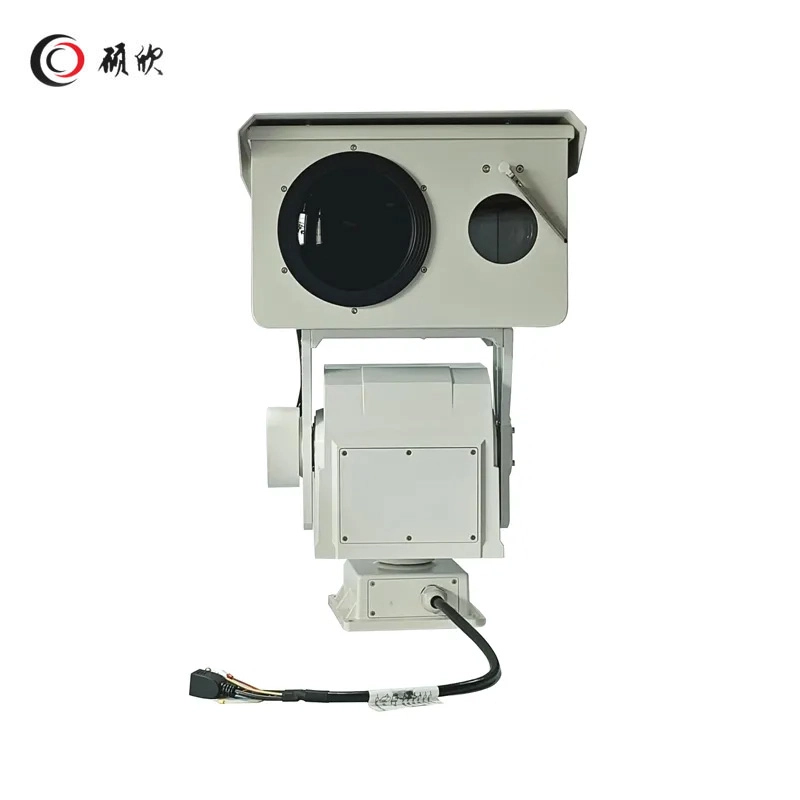
Stability in Extreme Outdoor Conditions
Outside watching involves more than just the pickup; it covers the cover and the motion too. For edge safety and big structure projects, your tools must stand up to strong winds and wild heat levels. A solid PTZ (Pan-Tilt-Zoom) setup makes certain you can cover wide zones of a power station or a shore without parts breaking down. By placing both pickups in a tough, steady base, Shuoxin makes the switch between warmth finding and sight naming smooth, giving a single flow of smart info to the main control spot.
Specialized Applications for Long-Range PTZ Systems
Everyday cameras drop off when the space goes over 100 meters. For your exact wants—such as guarding a power unit at a station or checking a fire line in woods—you need “far-reaching” lenses. A far-reaching PTZ system gets built to hold a steady picture even at 30x or 50x clear zoom. This lets you read a car tag or name a certain gear number from a safe, far spot, keeping your workers away from risks.
In the area of law and moving watching, the 새로운 이중 스펙트럼 열 이미징 돔 PTZ 카메라 brings a small but strong answer for car fitting. When a watch car parks in a dim country spot, the thermal pickup can look through the dark to find suspects hiding in open fields or tree areas, while the visible light pickup supplies the key proof for court use. This two-lens way stands as the top pick right now for key outside tasks.
Precision in Forestry and Infrastructure
Woods groups count on these setups to watch long stretches of tree land. A thermal-ready PTZ can get set to look over the far line on its own. If the heat in a certain spot goes over a planned limit, the setup starts a quick warning. This fast reply works only because thermal imaging does not “think” from colors; it works out from live heat waves. In the same way, in the energy field, these cameras offer full-time checking of high-power lines, finding “spark” happenings or too-hot covers before they cause a big power loss.
Global Service and Expert Support
Putting money into far-reaching thermal and bi-spectral tech marks a big move toward full place safety. It needs a teammate who offers more than just parts. Shuoxin stays set to back your work with full tech help, making sure the setup you place fits just right for your land type and air setup.
No matter if you plan a watching net for a fresh power building or update a group of quick help cars, pro backing waits to guide you through the hard parts of thermal lenses and link setups. From the first land check to ongoing care, our group makes certain your “eyes” out there always stay alert.
Contact Us for Professional Solutions
If you stand ready to remove the dark areas in your outside safety plan, get in touch with our tech experts. We can share full details, task talks, and made-to-fit prices for your far-reaching watching wants. Guard your boundary with the sharp warmth finding of thermal and the clear view of high-detail optical close-up.
자주 묻는 질문
Q: Can a thermal camera see through solid glass windows at a substation?
A: No. Thermal radiation does not pass through glass; instead, the glass reflects the heat of the camera or the environment back at the sensor. For substation or outdoor monitoring, thermal cameras are designed with specialized Germanium lenses and are placed with a direct line of sight to the equipment they are monitoring to ensure accurate heat readings.
Q: How far can a Shuoxin Bi-spectral PTZ camera actually detect a human at night?
A: Detection distance depends on the lens focal length and the sensor resolution. However, for long-range models, you can typically detect a human heat signature at distances exceeding 1.5 kilometers and identify specific optical details at several hundred meters, depending on the weather conditions and the magnification power of the visible lens.
Q: Does heavy rain or thick fog stop a thermal camera from working?
A: While very dense rain or thick fog can “scatter” thermal radiation and slightly reduce the effective range, thermal imaging still performs significantly better than visible light or IR cameras in these conditions. Because heat radiation has a longer wavelength, it can penetrate atmospheric moisture that would completely block a standard camera’s view.



 Korean
  English
  Russian
  French
  Japanese
  Arabic
  German
  Italian